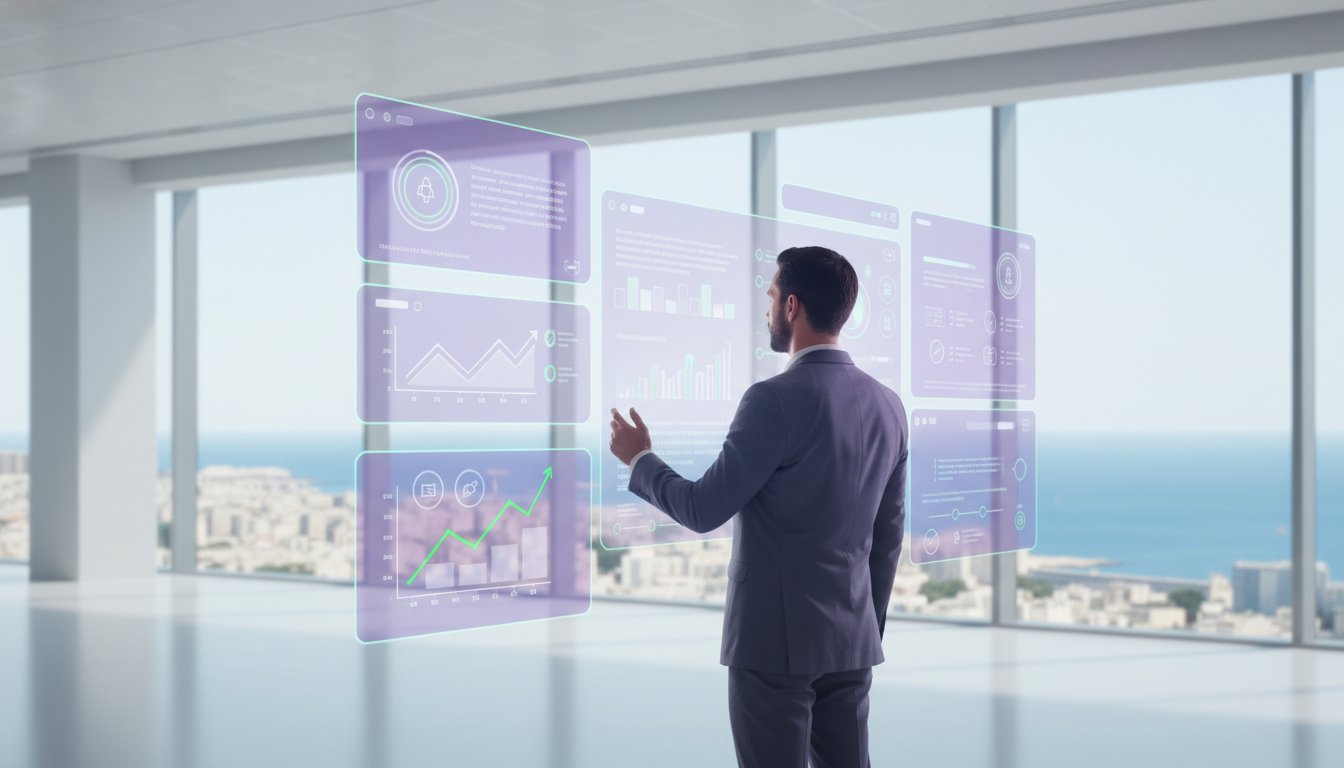
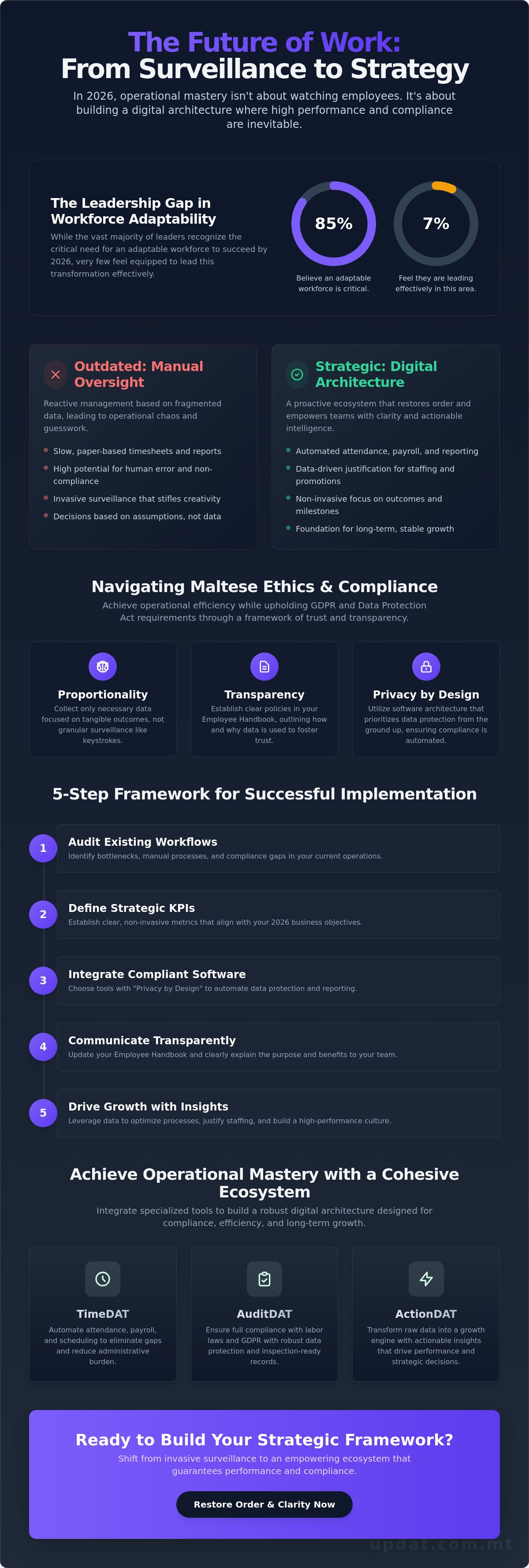
What if the key to mastering your operational environment isn't watching your employees more closely, but building a digital architecture that makes high performance inevitable? In 2026, 85% of leaders believe building an adaptable workforce is critical, yet only 7% feel they're leading effectively in this area. Managing hybrid teams across the islands often feels like a battle against administrative chaos and the constant fear of non-compliance with DIER regulations or GDPR. Implementing the strategic employee productivity tracking software malta organizations need is no longer about surveillance; it's about the restoration of order and clarity.
You likely agree that manual timesheets and reporting guesswork are draining your resources and slowing your response to market shifts. This article shows you how to transition from invasive surveillance to strategic productivity tracking that drives business growth. You'll learn how to automate hours of weekly admin and use data-driven insights to justify staffing levels and promotions. We'll preview the 2026 trends in HRST and explain how to align your operations with the latest EU Pay Transparency Directive requirements to ensure your firm remains a steady, reliable foundation for long-term growth.
Key Takeaways
• Shift from invasive surveillance to a strategic workforce ecosystem that empowers high performance and restores operational order.
• Ensure full compliance with Maltese labor laws and GDPR by establishing transparent digital policies and robust data protection impact assessments.
• Leverage employee productivity tracking software malta to automate attendance and payroll, eliminating scheduling gaps and reducing manual administrative burdens.
• Follow a structured 5-step implementation framework to audit existing workflows and define KPIs that align with your 2026 business objectives.
• Integrate specialized tools like TimeDAT, AuditDAT, and ActionDAT to build a cohesive digital architecture designed for long-term growth.
Beyond Surveillance: The Strategic Evolution of Productivity Tracking in 2026
In 2026, the definition of productivity has undergone a fundamental transformation. It's no longer about simply clocking hours; it's about the precision of output. Modern employee productivity tracking software malta leaders utilize is far more than a digital stopwatch. It's a sophisticated workforce management ecosystem. This system acts as the central nervous system of an organization, providing the visibility needed to align individual efforts with high-level corporate goals. When implemented correctly, it removes the guesswork from management and replaces it with a steady, reliable stream of actionable intelligence.
Maltese business culture is rapidly outgrowing the outdated concept of "watching" employees. The focus has shifted toward "enabling" them. While traditional employee monitoring often prioritized risk mitigation and security, the new strategic approach treats data as a tool for empowerment. When you provide teams with clear metrics and automated workflows, you remove the friction that stifles creativity and speed. You aren't just looking over their shoulders; you're handing them the keys to master their own performance environment.
The Decline of Manual Oversight
Relying on paper-based systems or disconnected spreadsheets creates a dangerous level of operational chaos. These manual methods are inherently slow and prone to human error. When data is fragmented across different departments, executive decision-making becomes a guessing game rather than a calculated strategy. Reactive management, where leaders only address problems after they've peaked, is a direct result of this lack of real-time visibility. Automated systems restore order by replacing these broken processes with a proactive flow of information that highlights bottlenecks before they become crises.
Tracking as a Strategic Architecture
Data is the digital architecture upon which business scaling is built. Without reliable metrics, you can't justify staffing levels or promote top performers with confidence. Strategic tracking creates a culture of accountability where every team member understands their impact on the bottom line. This level of clarity is the foundation of operational excellence. By moving beyond simple oversight, you turn raw data into a growth engine. It's about building a system where high performance is the inevitable result of a well-organized structure.
The end goal of this data collection isn't just a full report. It's Operational Mastery. This state allows you to master your own environment, removing complexity and ensuring that your business remains a steady foundation for long-term growth. Stability and clarity are the tangible impacts of these well-organized systems, allowing Maltese firms to compete with agility on a global stage.
Navigating Ethics and Compliance: The Maltese Regulatory Landscape
Operating a business in Malta requires a precise understanding of the intersection between operational efficiency and the Data Protection Act. Implementing employee productivity tracking software malta organizations trust means balancing the need for data with the strict requirements of GDPR. In 2026, the Office of the Information and Data Protection Commissioner (IDPC) emphasizes that monitoring must be proportionate and transparent. This isn't just a legal hurdle; it's an opportunity to build a framework for governance, risk, and compliance that protects both the employer and the employee.
Transparency is the steady foundation of this framework. A well-defined "Employee Handbook" that outlines how software is used eliminates ambiguity and fosters a culture of professional respect. Modern software architecture now prioritizes "Privacy by Design," ensuring that data collection is limited to what's necessary for business growth. By automating these compliance checks, you remove the administrative burden and ensure your records are always ready for inspection.
Non-Invasive vs. Invasive Tracking
The strategic shift in 2026 favors non-invasive tracking. This method focuses on tangible outcomes and high-level milestones rather than granular metrics like keystrokes or screen captures. Invasive monitoring often backfires, creating a culture of "productivity theatre" where employees perform for the software rather than focusing on quality work. Research into the strategic implications of monitoring suggests that heavy-handed surveillance can actually diminish trust and lead to rule-breaking. Trust-based systems, conversely, empower staff to master their own schedules, leading to higher engagement and better financial results.
Automating Compliance Trails
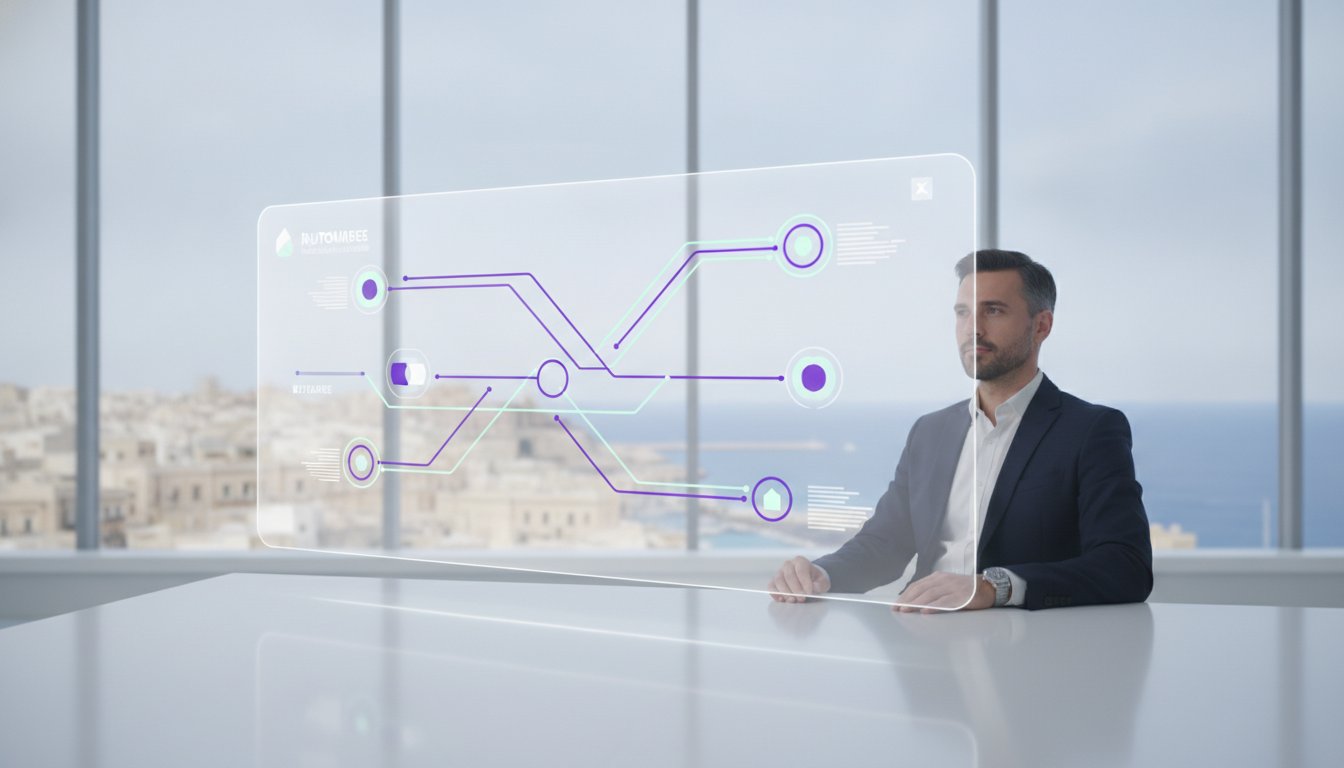
Maintaining accurate records is mandatory under Maltese labour laws, especially following the transposition of the EU Pay Transparency Directive via Legal Notice 112 of 2025. By June 7, 2026, companies must be fully compliant with new reporting standards. Automated systems create a digital audit trail that simplifies DIER compliance. Using tools like AuditDAT allows you to maintain operational standards without manual intervention. These systems capture real-time data that justifies promotions and staffing levels, providing a clear defense during any regulatory review. If you're ready to bring this level of order to your firm, you can start building your digital architecture today.
Essential Features for Operational Precision in 2026
Mastering the digital architecture of a modern firm requires more than basic oversight. It demands a suite of features that work in harmony to remove complexity. In 2026, the most effective employee productivity tracking software malta has to offer isn't just a recording tool. It's a strategic engine. High-performing organizations prioritize real-time attendance and roster management to eliminate scheduling gaps. This ensures that resources are always allocated where they're needed most. It prevents the operational drag of understaffed shifts or overlapping duties, creating a steady and predictable workflow.
Automated payroll integration is another pillar of this efficiency. By linking time data directly to payroll systems, businesses can reduce administrative overhead by up to 80%. This massive reduction in manual entry allows your leadership team to focus on high-level growth rather than chasing paper trails. When raw data is fed into workforce analytics dashboards, it transforms into strategic insights. You gain the ability to identify trends, justify staffing levels, and reward high performers based on objective metrics. Task prioritization tools complete this ecosystem by ensuring that critical items never fall through the cracks.
Unifying Time and Task Management
Operational mastery is achieved when you bridge the gap between time spent and work produced. Utilizing tools like TimeDAT allows you to track hours against specific projects with surgical precision. This synergy is vital for improving client billing accuracy and project profitability. It moves the conversation from "how long did they work?" to "what did they achieve?" You can explore the full benefits of this approach in our guide on accurate time tracking for employees. Clear metrics foster a culture of accountability, where every team member understands their role in the firm's success.
The Power of Integrated Reporting
Manual reporting is a relic of the past that drains valuable resources. Automated reporting systems replace hours of tedious data entry with instant, accurate summaries. This shift enables "Management by Exception," a strategy where leaders only intervene when data indicates a deviation from the norm. It allows you to identify potential issues before they escalate into crises. By streamlining business operations with software, you create a competitive edge that is difficult for less organized firms to match. This integrated approach ensures that your employee productivity tracking software malta solution serves as a steady, reliable foundation for long-term scalability.
Implementing Productivity Software: A 5-Step Framework for Success
Transitioning to a high-performance environment requires a structured approach. Implementing the right employee productivity tracking software malta organizations rely on is a five-step journey toward operational mastery. It begins with a comprehensive workflow audit. You must identify existing bottlenecks, such as manual handoffs or redundant approvals, that stifle growth. Next, define clear KPIs that align with your 2026 business objectives. Focus on metrics like project utilization rates or time-to-completion for key deliverables. Choosing a platform that balances deep functionality with user ease is the third pillar. Communication follows; explain the "why" to your team to build trust and ensure buy-in. Finally, use the collected data to iterate and refine your operational architecture every quarter.
Step 1
Map your current processes to find where time is lost.
Step 2
Set measurable goals that reflect your firm's strategic growth.
Step 3
Select a system that integrates with your existing tech stack.
Step 4
Launch with transparency to foster a culture of accountability.
Step 5
Review data quarterly to eliminate new inefficiencies as they arise.
Building the Digital Infrastructure
Establishing a baseline is essential before scaling your operations. Starting with a digital audit solution provides the necessary visibility to understand your current state. A scalable, cloud-based platform ensures your system grows alongside your firm, whether you're managing a small team in Valletta or a distributed workforce across the islands. In the Maltese market, national support and implementation expertise are invaluable. Local specialists understand the specific nuances of the DIER landscape and can help you avoid common integration pitfalls. This digital foundation turns fragmented data into a steady, reliable stream of intelligence.
Training for Empowerment
Data should serve as a bridge, not a barrier. Train your managers to use analytics as a coaching tool rather than a weapon. When leadership uses data to identify where a team member needs support or additional resources, it fosters a culture of professional growth. Transparent dashboards play a critical role here. They allow employees to see their own progress in real-time, which significantly improves team morale. The primary goal of any rollout is the removal of complexity. By simplifying daily reporting and automating attendance, you empower your workforce to focus on high-value tasks that drive revenue. If you're ready to master your operational environment, register your account to begin building your strategic architecture.
Achieving Operational Mastery with UPDAT: Beyond Off-the-Shelf
UPDAT acts as the strategic architect for your business operations. While generic SaaS tools offer a "one size fits all" approach, we recognize that Maltese firms require a more nuanced digital architecture. Implementing the right employee productivity tracking software malta requires a partner who understands local labor nuances and industry-specific bottlenecks. We don't just provide tracking; we restore operational order. By integrating TimeDAT, AuditDAT, and ActionDAT, you create a cohesive ecosystem where data flows seamlessly from the front line to the executive suite. This integrated approach ensures total order and removes the friction that often hinders scalability.
Bespoke Software Development is the cornerstone of our approach. Many businesses face unique pain points that off-the-shelf products simply can't address. Whether you're managing complex shifts in a manufacturing plant or overseeing quality standards in a high-pressure health environment, we build the digital tools that fit your specific workflow. This level of customization ensures that your systems adapt to your business, not the other way around. It's about achieving a state of fluidity and mastery over your professional environment. When selecting employee productivity tracking software malta, the choice of a local architect who can tailor the solution to your needs is what drives true business growth.
The TimeDAT Advantage for National Teams
Maltese national teams face localized challenges that global software often ignores. TimeDAT addresses these by automating the bridge between attendance and payroll. In sectors like hospitality compliance, where shift patterns are volatile, this automation is critical for maintaining operational standards. Similarly, in manufacturing, precision in time tracking directly impacts the bottom line and resource allocation. Leadership teams regain hours of lost time every week when reporting becomes an automated byproduct of the workday. This restored time allows you to focus on high-level strategy rather than administrative minutiae.
Your Strategic Partner in Growth
The journey from administrative chaos to operational precision is a strategic transformation. You're building a foundation for long-term growth, stability, and clarity. UPDAT provides the keys to this mastery, ensuring your firm remains an adaptable innovator in a competitive market. We stand as a steady, reliable foundation for your business, helping you navigate the complexities of 2026 and beyond. It's time to move beyond simple tracking and embrace a full digital transformation of your workforce management. Register for a TimeDAT trial to restore order to your workforce and start your path to operational excellence today.
Master Your Operational Environment
Mastering your operational environment in 2026 requires a shift from simple surveillance to a strategic digital architecture. You've seen how the right employee productivity tracking software malta organizations deploy can transform administrative chaos into a steady foundation for growth. By focusing on non-invasive tracking and automated compliance, you empower your team while ensuring full adherence to Maltese labour laws. This transition restores order, eliminates scheduling gaps, and provides the clarity needed for executive decision-making.
Since 2019, UPDAT has specialised in Maltese operational automation, delivering proven results across the hospitality, security, and manufacturing sectors. Our comprehensive suite, including AuditDAT, TimeDAT, and ActionDAT, is designed to remove complexity and hand you the keys to your professional landscape. It's time to move beyond fragmented data and embrace the precision of a well-organized system. Master your operations; register for your TimeDAT account today. Your journey toward operational mastery starts with a single, strategic step.
Frequently Asked Questions
Is employee productivity tracking software legal in Malta?
Yes, it's legal when implemented within the framework of the Data Protection Act and GDPR. Employers must establish a lawful basis for processing data and conduct a Data Protection Impact Assessment (DPIA). Transparency is mandatory; you must inform staff about what data is collected and why. Avoid invasive surveillance that lacks a clear business purpose to remain compliant with IDPC standards.
How does productivity tracking software improve ROI for businesses?
ROI improves through the removal of administrative friction and the precision of resource allocation. Automated reporting saves hours of manual labor, while accurate data justifies staffing levels and promotions. By identifying bottlenecks in real-time, you can pivot resources to high-value tasks. This strategic use of employee productivity tracking software malta ensures your firm operates at peak efficiency with measurable financial returns.
Can productivity software integrate with Maltese payroll systems?
Yes, modern solutions are built to integrate directly with the payroll systems used by local firms. This connectivity eliminates the need for manual data entry from paper timesheets, which significantly reduces human error. Automating this bridge ensures employees are paid accurately and on time while freeing your HR team to focus on strategic workforce development and people experience.
What is the difference between employee monitoring and workforce analytics?
Monitoring focuses on real-time observation of specific actions, while workforce analytics provides a high-level view of operational trends. Monitoring often involves granular data like active window tracking. Workforce analytics uses aggregated data to identify long-term patterns, helping you build a digital architecture that supports scaling. The goal is to move from "watching" to "enabling" through strategic insights.
How do I introduce productivity tracking to my team without losing trust?
Transparency is the foundation of trust. Introduce the software as a tool designed to remove administrative complexity, such as the burden of manual reporting. Show your team how they can use their own data to master their schedules and prove their impact. When employees see the software as a support system rather than a surveillance tool, buy-in increases and morale remains high.
What are the GDPR requirements for tracking employees in Malta?
GDPR requires that data collection be proportionate, necessary, and transparently communicated. You must have a clear policy in your employee handbook and ensure data is stored securely. Since the IDPC oversees these regulations, conducting a DPIA is a critical step. Remember that employee consent isn't typically a valid legal basis in a workplace context, so rely on legitimate interest or contractual necessity.
Does productivity software work for remote or hybrid teams?
It's specifically designed to bridge the gap between office-based and remote staff. A unified employee productivity tracking software malta platform provides identical visibility for all team members, regardless of their physical location. This ensures that hybrid teams remain aligned with company KPIs and that remote workers receive the same recognition for their output as their on-site colleagues.
How much administrative time can be saved with automated tracking?
Automated tracking can reduce the time spent on manual payroll and attendance reporting by up to 80%. This massive reduction in administrative overhead restores valuable hours to your leadership team every week. Instead of chasing missing timesheets, managers can focus on high-level coaching and business growth. It's about replacing operational chaos with a steady, predictable rhythm of work.



%201.svg)
