
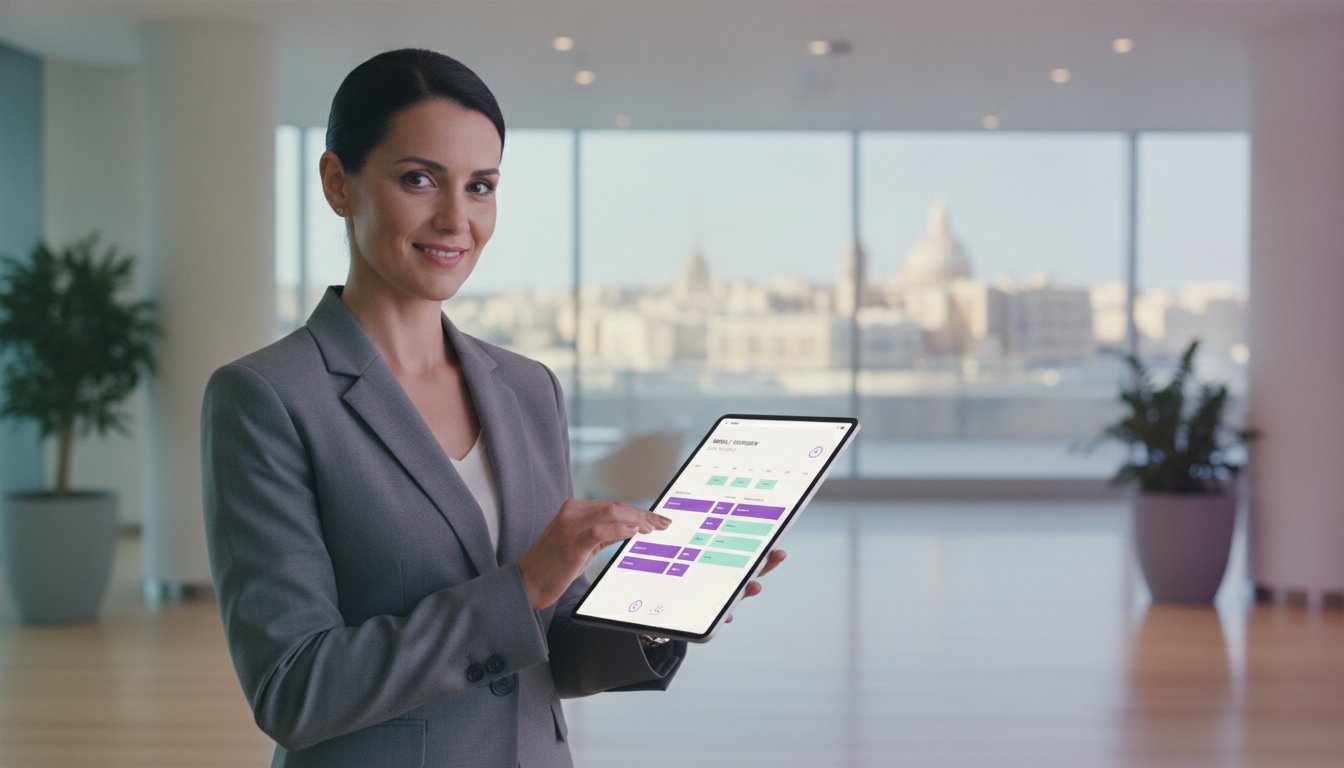
82% of hospitality technology decision-makers are expanding their AI investment this year to solve the industry’s most persistent headache: the schedule. You likely recognize the frustration of losing hours to manual spreadsheets, only to face the high costs of overstaffing or the stress of a peak-hour labor shortage. It's a cycle that drains management resources and makes tracking compliance with the Employment Rights Act 2025 nearly impossible.
This guide provides a blueprint for mastering automated shift planning for hospitality to restore operational order. You'll discover how to eliminate scheduling chaos, cut labor hours by up to 45%, and leverage intelligent tools like TimeDAT to create a self-running environment. We'll examine the transition from reactive rosters to a strategic workforce architecture that protects your margins and empowers your team.
Key Takeaways
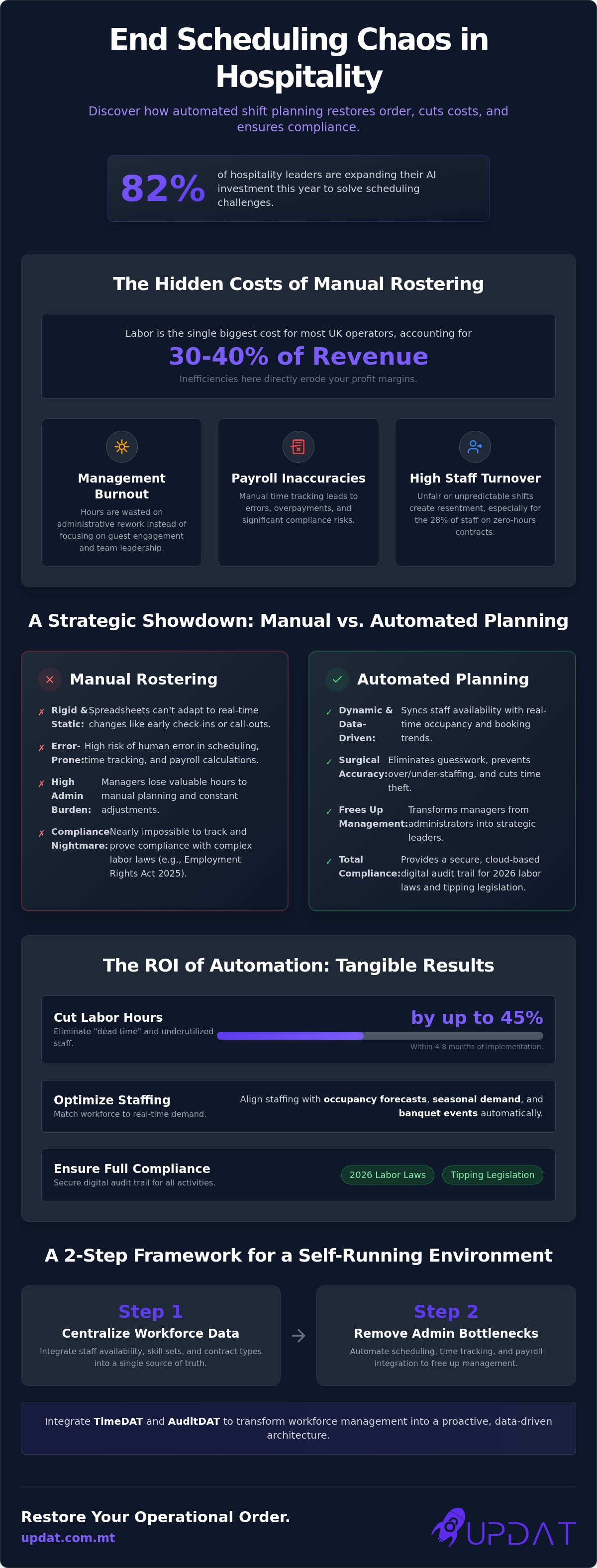
• Identify the hidden costs of manual scheduling and learn how dynamic systems restore operational order.
• Master the mechanics of demand-based scheduling to eliminate time theft and align staffing with real-time occupancy.
• Leverage automated shift planning for hospitality to maintain total compliance with complex 2026 labor laws and tipping legislation.
• Execute a two-step implementation framework to centralize workforce data and remove administrative bottlenecks.
• Integrate TimeDAT and AuditDAT to transform your workforce management into a proactive, data-driven architecture.
The Complexity of 24/7 Hospitality Operations: Beyond the Spreadsheet
Traditional scheduling relies on static documents that fail the moment a guest checks in early or a staff member calls out. In contrast, automated shift planning for hospitality serves as a dynamic architecture that synchronizes staff availability with real-time demand. It moves beyond the limitations of a simple grid. This technology acts as a central nervous system for your property, ensuring that every department operates with precision. By integrating data from various touchpoints, managers transition from reactive fire-fighting to becoming strategic architects of their own operational environment.
Static spreadsheets create what we call operational friction. They're rigid, prone to human error, and invisible to the team until they're printed and posted. Modern employee scheduling software provides the digital audit trail necessary for 2026 compliance. It replaces the vulnerability of paper records with a secure, cloud-based source of truth. When you move beyond "paper-based" thinking, you replace scheduling chaos with operational order, a state where every shift is optimized for both cost and service quality.
Why Hospitality Scheduling is Uniquely Complex
Hospitality doesn't stop. A manager must balance the distinct needs of Housekeeping, F&B, and the Front Desk simultaneously. Manual systems cannot account for the volatility of seasonal demand or sudden occupancy spikes. When a large group arrives unexpectedly, a paper-based plan lacks the fluidity to adapt. Maintaining high service standards during overnight shifts requires more than just a name on a page; it requires a system that understands specific skill sets and contract types in real-time. This is why hospitality leaders are moving toward unified digital platforms.
The Hidden Costs of Manual Rostering
Manual systems don't just take time; they cost money in ways that aren't always visible on a balance sheet. Labor remains the single biggest cost for most UK hospitality operators, typically accounting for 30-40% of revenue. Inefficiencies in this area directly erode your margins. Consider these common friction points:
Management Burnout
Managers spend hours on administrative rework rather than guest engagement.
Payroll Inaccuracies
Errors often stem from manual time tracking, leading to overpayment or compliance risks.
Staff Turnover
Unpredictable or unfair shift distribution creates resentment. In an industry where 28% of the workforce is on zero-hours contracts, providing stability through automation is a competitive advantage.
The transition to automated shift planning for hospitality isn't just a software upgrade. It's a commitment to a higher standard of operational efficiency. It ensures that your staff are where they need to be, when they need to be there, without the administrative burden that slows down your leadership team.
How Automated Shift Planning Restores Operational Efficiency
Efficiency in hospitality isn't about working harder; it's about deploying resources with mathematical precision. Automated shift planning for hospitality removes the guesswork from the manager's desk. It replaces intuition with data-driven insights. By analyzing historical occupancy and real-time booking trends, the system builds a schedule that mirrors actual business needs. This transition is a key step in restoring order to a high-pressure environment where every labor minute counts toward your bottom line.
Demand-Based Staffing Strategies
Effective staffing requires a deep understanding of occupancy forecasts. Automation allows you to predict staffing requirements with surgical accuracy. You no longer need to guess how many servers are required for a Tuesday lunch or how many housekeepers are needed during a peak holiday period. The system automatically adjusts levels to prevent overstaffing during quiet periods, protecting your margins from unnecessary drain.
Scaling resources for banquet events or seasonal rushes becomes a standardized process rather than a crisis. Research indicates that automating five or more back-office processes can cut labor hours by 38-45% within 4-8 months. This return on investment is driven by the elimination of "dead time" where staff are present but underutilized. By aligning your workforce with demand, you ensure service standards remain high without inflating your payroll.
Real-Time Attendance and Payroll Integration
Operational order extends beyond the schedule itself into the verification of work. Digital "clock-in" systems eliminate time theft and "buddy punching" by utilizing secure verification methods. These tools create a direct link between the physical workplace and the payroll office. This removes the "administrative gap" that typically exists between the end of a shift and the final payroll approval.
Direct Data Flow
Digital time tracking feeds directly into payroll reporting to eliminate manual data entry errors.
Reduced Overhead
The administrative time spent on payroll reconciliation is virtually erased.
Total Accountability
Biometric or digital verification ensures 100% accountability across all departments, from the kitchen to the front desk.
Implementing automated shift planning for hospitality also solves the friction of shift swaps and leave requests. Instead of managers acting as intermediaries, the software handles these requests based on pre-defined business rules. Employees manage their own schedules through intuitive interfaces, which significantly reduces administrative overhead. This autonomy empowers your team and allows management to focus on guest experience. To begin streamlining your own operations, you can explore our digital workforce tools.
Strategic Advantages: Data-Driven Rostering vs. Manual Planning
Manual scheduling is a reactive exercise. It forces managers to solve problems as they arise, often leading to costly compromises. Automated shift planning for hospitality provides a proactive alternative. It establishes a strategic framework where every shift is pre-validated against labor laws and budget targets. This shift from manual to data-driven rostering transforms the manager from an administrator into an architect of operational success.
Maintaining regulatory compliance is a primary driver for this transition. The UK’s Employment Rights Act 2025 introduces significant changes throughout 2026. For example, Statutory Sick Pay becomes a day-one right in April 2026, and a ban on "fire and rehire" practices takes effect in October. Manual systems lack the sophistication to track these evolving mandates. Automation removes this risk by embedding legal requirements directly into the scheduling logic.
Automated Compliance and Risk Mitigation
Software eliminates the guesswork involved in complex payroll calculations. It automatically tracks holiday pay, premium rates for night shifts, and the removal of the lower earnings limit for sick pay. By October 2026, employers must also comply with strict tipping legislation, requiring written policies and regular staff consultation. An automated system provides the digital audit trail necessary to prove compliance during a Fair Work Agency inspection. It enforces mandatory rest periods and maximum working hours, preventing the fatigue that leads to service errors and staff burnout.
Workforce Analytics for Informed Decision Making
Data-driven systems provide visibility that spreadsheets cannot match. Managers can visualize labor cost percentages in real-time against revenue targets, allowing for immediate adjustments. This transparency helps justify staffing changes to stakeholders with concrete evidence rather than anecdotal observations. Using data to drive decisions ensures that labor spend remains within the typical industry benchmark of 30-40% of revenue.
Identify Performance
Analyze attendance and productivity data to recognize high-performing teams.
Monitor Spend
Track labor costs as a percentage of revenue in real-time to protect profit margins.
Improve Retention
Boost morale by providing staff with transparent, predictable schedules and fair shift distribution.
Operational order is not just about filling slots on a calendar. It is about creating a stable, compliant, and profitable environment. Proactive planning ensures your business is ready for the legislative landscape of 2026. By removing the friction of manual rework, you empower your leadership team to focus on guest satisfaction and long-term growth.
Implementing Automation: A Framework for Hospitality Managers
Transitioning to automated shift planning for hospitality requires a structured methodology. You're not just installing software. You're redesigning your operational flow to remove complexity. Successful implementation follows a logical progression from auditing current failures to optimizing future performance. This framework ensures you don't carry legacy inefficiencies into your new digital environment.
The implementation process begins with a rigorous audit of your current manual workflows. Identify where management time is being drained. Is it the constant back-and-forth of shift swaps or the manual calculation of holiday pay? Once these bottlenecks are clear, centralize your staff data. This includes availability, specific skill sets, and contract types. Configuring your automation rules is the next critical step. These rules must reflect both your departmental needs and the 2026 labor mandates, such as day-one statutory sick pay rights. Finally, roll out the platform to your team and monitor the resulting analytics to refine your patterns over time.
Gathering the Right Data for Success
Data is the foundation of your new strategic architecture. Map every departmental role and identify cross-training opportunities. A server who can also manage the front desk is a versatile asset that the system can deploy during occupancy spikes. Define clear shift templates for your recurring 24/7 operations to provide a baseline for the automation engine. Integrating your existing POS data and HACCP management software creates a unified ecosystem. This connectivity allows the system to adjust staffing levels based on real-time demand and compliance requirements simultaneously.
Ensuring Staff Buy-In and Adoption
Technology only works if your team uses it. Focus on the tangible benefits for the employees, such as mobile-first schedule access. When staff can view their shifts, request leave, or swap slots from their own devices, they feel a sense of empowerment. It replaces the frustration of checking a paper roster in a back office. Train your department heads to use workforce analytics as a tool for team management rather than just a monitoring device. Establish a feedback loop immediately after launch. This allows you to adjust system settings based on real-world usage, ensuring the platform remains a helpful guide rather than a rigid barrier. To begin your transition to an organized digital environment, you can register your account today.
By following this framework, you move from the chaos of manual intervention to the clarity of operational order. The result is a self-running schedule that adapts to your business needs while protecting your margins. You're no longer just managing shifts; you're architecting a more resilient and efficient hospitality business for the 2026 landscape.
TimeDAT: Elevating Hospitality Workforce Management
TimeDAT functions as the central nervous system of your hospitality operation. It is far more than a simple roster tool; it is a strategic platform that aligns your human capital with your business objectives. While generic tools treat scheduling as an isolated task, TimeDAT integrates automated shift planning for hospitality into a wider digital architecture. This ensures that every staffing decision is informed by real-time operational data and long-term financial goals.
Operational integrity depends on the seamless flow of information between departments. By integrating TimeDAT with AuditDAT, compliance ceases to be a manual burden. This connection ensures that every shift adheres to the regulatory requirements discussed earlier, such as the 2026 tipping legislation and statutory rest periods. When your scheduling tool communicates directly with your audit system, you create an unbreakable chain of accountability. This synergy removes the risk of human error and provides a robust digital audit trail for external inspections.
The synergy extends to task execution through ActionDAT. While TimeDAT ensures the right person is on the floor, ActionDAT provides the framework for task prioritisation. This combination allows managers to assign specific duties based on real-time needs, ensuring that operational order is maintained even during peak occupancy. UPDAT also provides bespoke software development for businesses with unique requirements. This tailored approach ensures your software adapts to your specific workflows rather than forcing your team to work around rigid, off-the-shelf limitations.
The UPDAT Ecosystem Advantage
Maltese hospitality brands face a unique set of operational pressures, from seasonal tourism fluctuations to specific local labor market dynamics. Moving toward a unified ecosystem allows these businesses to transition from fragmented tools to a state of operational excellence. Digitizing these workflows saves significant administrative time, often reducing the hours spent on manual roster rework by nearly 40% in many cases. This efficiency gain allows your management team to focus on high-value guest interactions rather than back-office data entry.
Taking the Next Step Toward Mastery
The transition from paper-based chaos to digital order is the most significant step a manager can take toward operational mastery. It represents a move away from reactive fire-fighting and toward a proactive, strategic architecture. You don't have to navigate this complexity alone. The tools are ready to empower your team and protect your margins in the 2026 landscape. We invite you to book a demo today to see the tangible impact TimeDAT can have on your property. Discover how a unified approach to automated shift planning for hospitality can restore order to your operations and provide a steady foundation for long-term growth.
Master Your Operational Environment
The move from manual spreadsheets to a digital architecture is more than a software upgrade; it's a commitment to total operational order. You've seen how demand-based staffing protects your margins and how integrated compliance tools mitigate the risks of the 2026 legislative landscape. By centralizing your workforce data, you empower your managers to focus on guest experiences rather than administrative rework. Precision in scheduling is no longer a luxury; it's a requirement for long-term growth.
Implementing automated shift planning for hospitality is the definitive step toward removing the friction from your 24/7 operations. Trusted by hospitality leaders across Malta, TimeDAT reduces administrative overhead by up to 40%. Its full integration with AuditDAT ensures that compliance is a natural result of your daily workflow, not an afterthought. It's time to replace scheduling chaos with a system built for clarity and stability.
Restore operational order with TimeDAT today.
Take control of your rosters and provide your team with the predictable, fair environment they deserve. Your journey toward operational mastery begins with a single, strategic choice. We're ready to help you build a more resilient business.
Frequently Asked Questions
What is automated shift planning for hospitality?
Automated shift planning for hospitality
is a strategic digital architecture that replaces manual rosters with a dynamic, data-driven system. It synchronizes staff availability with real-time demand signals to ensure your property is never understaffed during peaks or overstaffed during lulls. This technology removes the administrative burden from managers; it allows them to focus on service standards rather than spreadsheet logic.
How does automation reduce hospitality labour costs?
Automation reduces costs by eliminating labor leakage and unnecessary overtime. It uses occupancy forecasts to build precise schedules that match your actual business needs. By preventing managers from scheduling too many people during quiet periods, you protect your profit margins. It also removes the hidden costs of manual payroll errors and administrative rework that often inflate the bottom line.
Can automated scheduling software handle complex shift patterns like split shifts?
Modern platforms are designed to handle complex requirements like split shifts or multi-departmental rotations. You can configure specific business rules that allow the system to account for break periods and travel time between shifts. This flexibility ensures that even the most intricate operational needs are met without manual intervention, maintaining a steady flow of service across 24/7 operations.
Does shift planning software help with labour law compliance in Malta?
Shift planning software is a vital tool for maintaining labor law compliance in Malta. It allows you to embed local DIER regulations directly into the scheduling engine. The system can flag potential violations of mandatory rest periods or maximum weekly hours before they happen. This proactive approach creates a secure digital audit trail that protects your business during external inspections.
How long does it take to implement an automated scheduling system?
A standard implementation typically takes between two to four weeks. This timeline depends on how quickly you can centralize your staff data and define your operational rules. Most of the work involves mapping your existing workflows into the digital system. Once the foundation is set, the transition from paper to digital is usually immediate for the team and management alike.
Is automated shift planning suitable for small restaurants as well as large hotels?
Automation provides value to businesses of all sizes. While large hotels benefit from multi-departmental coordination, small restaurants gain significant time back for management. The software scales with your operation; it provides the same level of precision and compliance tracking regardless of your employee count. It's about restoring order and efficiency to any hospitality environment.
How does digital time tracking prevent time theft in hospitality?
Digital time tracking prevents time theft by requiring secure verification at the start and end of every shift. Systems often use unique digital identifiers to ensure that staff are physically present when they clock in. This creates an accurate record of hours worked; it feeds directly into your payroll reporting without the need for manual adjustments or guesswork.
Can staff request leave or swap shifts through the software?
Staff can manage their own availability, leave requests, and shift swaps through an intuitive mobile interface. This autonomy reduces the manager's role to a simple approval step rather than an intermediary coordinator. It improves team morale by providing transparency and flexibility, which are critical factors for staff retention in today's competitive hospitality market.



%201.svg)
