
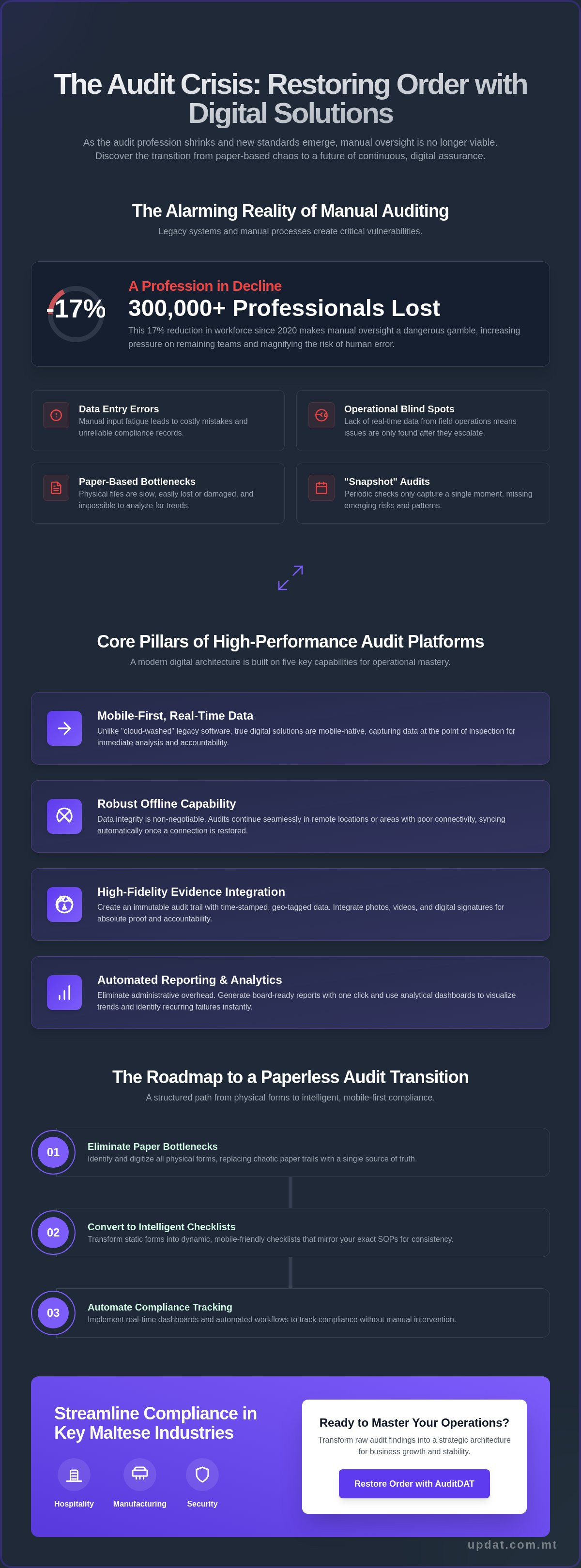
The audit profession has lost over 300,000 professionals since 2020, a 17% reduction that makes manual oversight a dangerous gamble. As the December 15, 2026, PCAOB standards approach, the pressure to maintain quality with fewer resources has never been higher. Implementing modern digital audit solutions isn't just a tech upgrade; it's a necessary restoration of order. You've likely felt the strain of manual data entry errors and the frustration of physical filing when you need instant visibility into field operations.
It's time to stop chasing paperwork and start mastering a digital-first architecture. This article shows you how to eliminate operational complexity through automated compliance tracking and real-time reporting. We'll explore how tools like AuditDAT create a centralized dashboard that improves team accountability and slashes administrative overhead. You'll discover the roadmap to transition from chaotic, backward-looking checks to a system of continuous assurance that simplifies every inspection and restores stability to your business.
Key Takeaways
• Recognize the difference between legacy software and modern, mobile-first ecosystems that prioritize real-time data capture.
• Discover how high-performance digital audit solutions maintain data integrity in remote locations through robust offline capabilities.
• Apply automated inspection frameworks to local industries like hospitality and manufacturing to streamline compliance with Maltese standards.
• Follow a structured roadmap to eliminate paper-based bottlenecks and convert physical forms into intelligent, mobile-friendly checklists.
• Leverage the synergy between AuditDAT and ActionDAT to transform raw audit findings into a strategic architecture for business growth.
The Evolution of Digital Audit Solutions in 2026
Operational oversight has undergone a fundamental transformation. In 2026, digital audit solutions function as integrated ecosystems rather than simple record-keeping tools. This shift marks the end of the "cloud-washed" era. Many businesses previously relied on legacy software that was merely old desktop code forced into a web browser. These systems lack the fluidity required for modern field operations. True digital-first architectures are mobile-native, allowing for real-time data capture and immediate analysis at the point of inspection.
The transition from periodic "snapshot" audits to continuous compliance monitoring is now a strategic necessity. Traditional audits only capture a single moment in time, often missing emerging risks. By utilizing automated workflows, companies eliminate the human error and administrative fatigue that characterize manual data entry. This proactive approach ensures that compliance isn't a stressful annual event but a steady, reliable state of being. It empowers managers to maintain high standards without the constant need for manual intervention.
From Paper Trails to Digital Architecture
Paper-based systems are a liability in a high-speed business environment. Physical documents are easily lost, damaged, or misfiled, creating significant gaps in your operational history. In Malta, where regulatory requirements for safety and quality are becoming more stringent, these gaps can lead to costly delays or fines. Digital systems replace this chaos with an immutable audit trail. Every entry is logged, providing a clear and indisputable record for regulatory bodies.
Standardized digital templates within AuditDAT restore order by removing ambiguity. Inspectors no longer have to guess which form to use or how to interpret a vague question. Every checklist is structured to mirror your specific SOPs, ensuring total consistency across different sites or teams. This digital architecture provides the stability needed for long-term growth and simplifies the process of proving compliance during official inspections.
The Role of Real-Time Data in Modern Compliance
Instant data synchronization is the heartbeat of modern operations. It prevents the "blind spots" that occur when information sits on a clipboard for days before being entered into a computer. When an inspector completes a task, the data is immediately available on a centralized dashboard. This level of transparency is a core component of Computer-Aided Audit Tools (CAATs), which have evolved to support complex, multi-site inspections.
Professional inspections now demand high-fidelity evidence. Time-stamped and geo-tagged data points provide objective proof of when and where an audit took place. This eliminates the risk of "desk-auditing" and ensures your team remains accountable. Moving from reactive fixing to proactive compliance means you identify and resolve issues before they escalate. It's about mastering your environment through precision and logic, using real-time insights to drive better business outcomes.
Core Pillars of High-Performance Audit Platforms
High-performance platforms rest on five foundational pillars that convert raw data into strategic intelligence. These systems prioritize the operational reality of your team rather than forcing them into rigid, outdated workflows. Modern digital audit solutions must offer more than just a digital version of a paper form. They function as a strategic architecture for your business, ensuring that every inspection contributes to long-term stability and growth.
Reliability in the field is non-negotiable. High-performance platforms include the following core capabilities:
Offline Capability
Fieldwork often occurs in environments with poor connectivity, such as warehouses or remote sites. Systems must cache data locally and sync automatically when a connection is restored to prevent data loss.
Evidence Integration
Absolute accountability requires objective proof. Supporting direct uploads of photos, videos, and digital signatures creates a transparent record that stands up to scrutiny during official inspections.
Automated Reporting
Generating board-ready documents with a single click eliminates hours of administrative overhead. This allows management to focus on decision-making rather than data entry.
Analytical Dashboards
Visualizing trends across multiple sites helps identify recurring operational failures. If a specific safety violation appears frequently in manufacturing plants across Malta, the data will highlight the pattern instantly.
Customizable Checklists and Inspection Flows
Rigid software fails because every industry has unique SOPs. A hospitality audit for a local boutique hotel differs fundamentally from a safety check in a heavy manufacturing plant. Logic-based questions streamline the auditor's path by hiding irrelevant sections based on previous answers. This keeps the focus on what matters. Version control is equally vital. It ensures every team member uses the most current, compliant template, eliminating the risk of using outdated or non-compliant forms.
Automated Workflows and Instant Alerts
Efficiency depends on the speed of response. When a system detects a non-compliance, it should trigger an immediate "action item." This removes the communication lag between field staff and management. Automated escalation paths ensure that critical issues reach the right supervisor without manual follow-up. Using integrated tools like ActionDAT allows your team to close the loop on deficiencies instantly. This no-nonsense approach to task management restores order to even the most complex environments by turning findings into finished tasks.
Industry-Specific Applications: Hospitality, Manufacturing, and Security
Many leaders mistakenly believe that auditing is a task reserved for financial departments. This narrow view ignores the massive operational benefits of modern digital audit solutions in the field. In high-pressure environments like a busy resort or a production line, these tools act as a strategic architect. They replace chaos with a structured flow of information. For Maltese businesses, staying ahead of local regulations requires more than just spreadsheets; it requires a system that removes complexity from the daily grind.
Operational auditing is about maintaining a steady foundation for growth. Whether you're managing a kitchen staff or a security team, the goal remains the same: total visibility. By digitizing your field inspections, you empower your team to focus on their core tasks rather than administrative hurdles. This shift doesn't just improve compliance; it transforms how your business functions on a fundamental level.
HACCP and Food Safety in Hospitality
Maintaining HACCP standards in a restaurant group shouldn't be a paper-heavy burden. Manual temperature logs are prone to falsification and error. Digital checklists automate these logs, ensuring hygiene standards remain consistent across all outlets. When national health inspectors visit, having a searchable digital history simplifies the process. It demonstrates professional control and protects your brand reputation from the fallout of a failed inspection. You're no longer just checking boxes; you're securing your business's future.
Quality Control and ISO Standards in Manufacturing
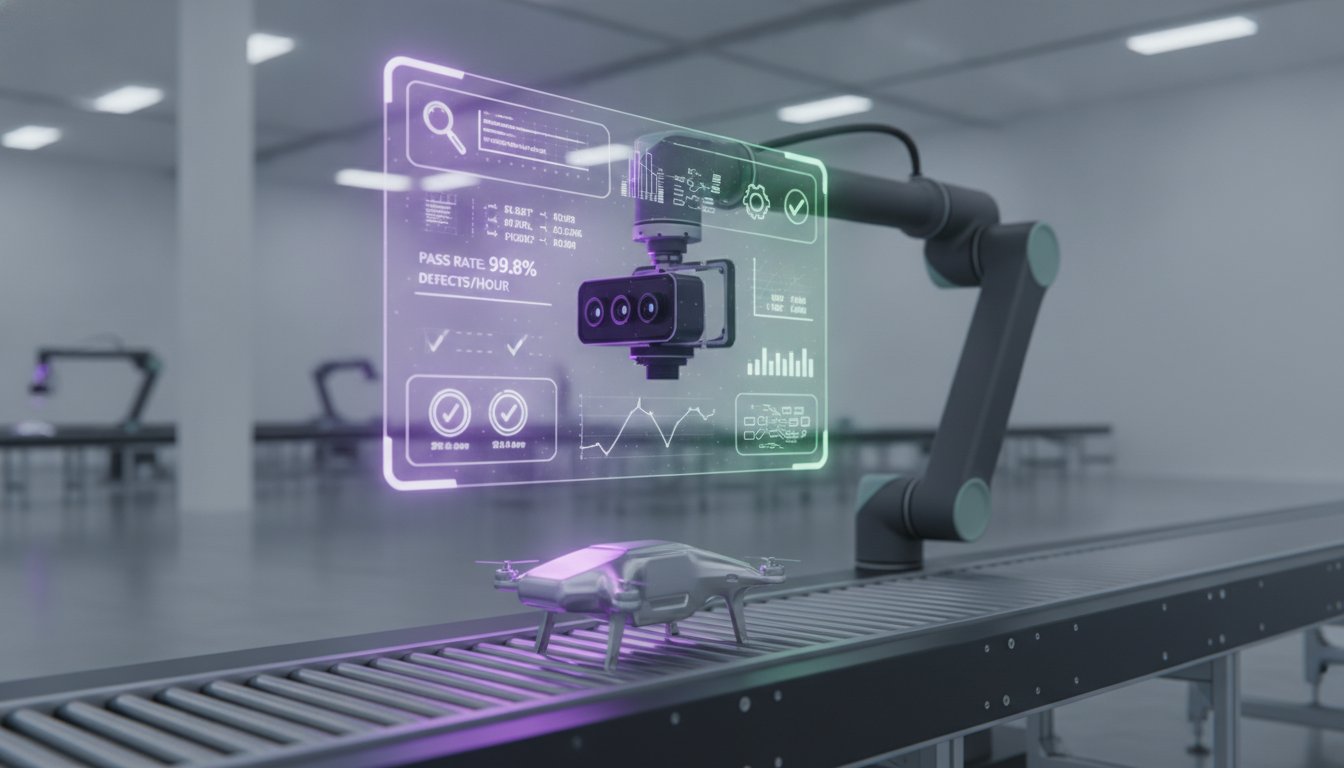
Manufacturing excellence depends on precise quality control. Moving shop-floor inspections and equipment maintenance logs to a digital platform ensures nothing is skipped. This data-driven approach supports ISO certification and renewal by providing a transparent record of compliance. Tracking non-conformities across large-scale production lines becomes effortless. You can identify equipment failures before they cause a shutdown, maintaining the steady rhythm of your operations and reducing costly downtime.
Site Inspections and Patrol Tracking for Security
Security firms rely on trust and accountability. Digital audits transform patrol reporting into a verified, real-time process. Guards log incidents and complete site inspections with time-stamped evidence and geo-tagged locations. This level of digital verification increases client confidence in your services. Management gains instant visibility into field personnel performance, ensuring that every patrol is conducted with the required logic and precision. It's a no-nonsense way to prove your value to stakeholders.
The Roadmap to a Paperless Audit Transition
Transitioning to paperless operations requires a logical, phased approach. It isn't about flipping a switch; it's about building a digital architecture that mirrors your business's specific needs. Implementing digital audit solutions starts with a clear-eyed assessment of your current bottlenecks. If you don't identify where the friction lies, you risk digitizing a broken process.
First, audit your existing audit process. Pinpoint exactly where paper or spreadsheets cause delays. Is it the manual transcription of field notes? The physical filing of site photos? Once these pain points are clear, move to template digitization. This involves more than just copying a form. It means creating intelligent, mobile-friendly checklists that use skip-logic to guide the user through a faster, more accurate inspection.
Second, implement a pilot phase. Choose one site or department to test the system before a full-scale rollout. This allows you to refine the inspection flows based on real-world feedback. Finally, use the data from the first month for continuous optimization. Refining your checklists based on actual field usage ensures the system remains efficient and relevant to your team's daily reality.
Overcoming the Resistance to Change
The most frequent objection to new technology is the belief that staff aren't tech-savvy enough. This is a misconception. Modern interfaces are designed for immediate utility and ease of use. They empower field staff by removing the heavy administrative burden of manual reporting. When a tool is easy to navigate, it becomes an asset rather than a chore. Position the platform as a way to reduce their daily workload. This shift in perspective is the key to successful adoption across all levels of the organization.
Ensuring Data Security and Compliance
Operational data is sensitive and requires high-level security. Secure, cloud-based storage ensures your records are protected and accessible only to authorized personnel. User permissions and detailed access logs provide a clear trail of who accessed information and when. This level of control is essential for maintaining compliance with local data protection standards. Working with a provider that offers reliable, Malta-based software support adds an extra layer of stability. You're gaining a partner that understands the local regulatory landscape and provides a steady foundation for your digital growth.
Ready to start your transition? Explore our digital audit solutions and see how we can streamline your operations today.
Elevating Operational Mastery with AuditDAT
AuditDAT serves as the definitive solution for organizations seeking to streamline compliance and restore operational order. It doesn't just record data; it acts as a strategic architect for your entire business environment. By centralizing your inspection processes, you create a single source of truth that radiates calm authority. You no longer need to cross-reference multiple spreadsheets or paper files to understand your status. Everything resides in one high-performance platform, providing the clarity needed to make informed, logical decisions.
Most digital audit solutions operate in isolation, but AuditDAT thrives within the broader UPDAT Technologies Ltd. ecosystem. This integration removes the friction between identifying a problem and fixing it. When an auditor flags a deficiency, the system doesn't just log it. It creates a seamless flow of information that drives immediate action. This holistic approach ensures that your findings lead to tangible improvements rather than just sitting in a report. It empowers your management team to master their environment with precision and logic.
The Power of Integrated Automation
The true value of a digital system lies in its ability to connect disparate data points. Within the UPDAT Technologies Ltd. architecture, an AuditDAT finding can automatically trigger an ActionDAT task. This ensures that non-compliance issues reach the right person with a clear deadline. You can also link audit performance to workforce management through TimeDAT. This level of transparency allows you to see how staffing levels impact your quality standards. An organized system provides a steady foundation for growth by ensuring every failure is identified and resolved without manual follow-up.
Professional Implementation and Support
Every business has unique requirements that off-the-shelf software might not fully address. We provide bespoke software development to tailor the platform to your specific industry standards and SOPs. Working with a national provider ensures you have access to experts who understand the nuances of the Maltese regulatory landscape. This local expertise, combined with reliable support, gives you the stability required to scale your operations with confidence. You aren't just buying software; you're gaining a strategic partner dedicated to your operational mastery.
Discover how AuditDAT can transform your operations
Mastering the Future of Operational Compliance
Modernizing your inspection framework is the only way to navigate the complexities of the 2026 regulatory landscape. By adopting digital audit solutions, you replace fragmented paper trails with a unified, high-performance architecture. This transition ensures your business remains resilient against talent shortages and evolving standards. You've seen how real-time data capture and automated reporting restore order to even the most demanding field operations. It's about moving from reactive fixing to a state of proactive, continuous assurance that scales with your growth.
Founded in 2019, UPDAT Technologies Ltd. focuses on Maltese operational efficiency through proprietary cloud-based platforms for HACCP, ISO, and Security. We provide the stability you need with bespoke development options for unique regulatory needs. It's time to empower your team with tools that turn findings into finished tasks. Our systems prioritize precision and logic, ensuring your business stays compliant without the administrative fatigue. Take the first step toward total operational mastery and build a foundation that lasts.
Request a Demo of AuditDAT to Streamline Your Compliance
Frequently Asked Questions
What are digital audit solutions and how do they differ from spreadsheets?
Digital audit solutions are integrated ecosystems designed for real-time data capture and automated compliance tracking. Unlike static spreadsheets, these platforms offer dynamic workflows, mandatory fields, and instant synchronization across your entire organization. Spreadsheets often suffer from version control issues and manual entry errors. A dedicated digital solution ensures data integrity and provides a centralized dashboard for immediate visibility into field operations, restoring order to your oversight process.
Can digital audit software work without an internet connection?
Yes, professional platforms like AuditDAT include robust offline capabilities to ensure data integrity in remote locations. Field workers can complete inspections in basements, warehouses, or areas with poor connectivity without interruption. The software caches all entries, photos, and signatures locally on the mobile device. Once a connection is restored, the system automatically synchronizes the data to the central server, ensuring no information is lost during the transition.
How much time can a business save by switching to digital audits?
Businesses typically eliminate hours of administrative overhead by removing the need for manual data transcription and physical filing. Automated reporting generates board-ready documents with a single click, which saves management significant time every week. While specific savings depend on your organization's scale, removing the communication lag between field staff and supervisors allows for faster resolution of non-compliance issues and more efficient resource allocation across your sites.
Is it difficult to transition from a paper-based audit system to a digital one?
The transition is a structured process that prioritizes staff empowerment and operational continuity. It begins with digitizing your existing templates into intelligent, mobile-friendly checklists that guide the user. A phased implementation approach allows your team to adapt to the user-friendly interface at a steady pace. Most users find that digital audit solutions actually reduce their daily workload, making the shift from paper a logical and welcomed improvement for everyone involved.
How do digital audit solutions ensure data security and regulatory compliance?
These solutions utilize secure, cloud-based storage and strict user permissions to protect sensitive operational data. Every action is time-stamped and geo-tagged, creating an immutable audit trail that satisfies regulatory bodies and internal auditors alike. In the Maltese market, having local software support ensures your system aligns with specific national requirements. This digital verification prevents data tampering and ensures that all records are stored in a centralized, compliant environment for long-term stability.
Can I customize the audit templates to fit my specific industry requirements?
Full configurability is a core pillar of high-performance audit platforms. You can tailor every checklist to mirror your specific SOPs, whether you're managing hospitality hygiene, manufacturing quality, or security patrols. Logic-based questions ensure that inspectors only see relevant fields, which streamlines the entire inspection flow. If your business has highly specialized needs, bespoke software development options are available to build a strategic architecture that fits your unique regulatory environment perfectly.
How does digital auditing improve team accountability?
Accountability increases through the use of mandatory evidence integration, such as time-stamped photos and digital signatures. Management can see exactly when and where an inspection took place, which eliminates the possibility of "desk-auditing" or falsified reports. Detailed access logs and analytical dashboards highlight performance trends across different teams or locations. This transparency encourages high standards and ensures that field personnel remain focused on their core responsibilities with clear, objective oversight.
What kind of reports can I generate with a digital audit platform?
You can generate a wide range of professional reports, from individual inspection summaries to high-level analytical trend reports for stakeholders. These documents are board-ready and can be exported instantly, removing the need for manual formatting. Visual dashboards allow you to identify recurring operational failures at a glance. By linking AuditDAT with ActionDAT, you can also report on the status of corrective actions, proving that deficiencies are being resolved with precision and logic.





%201.svg)
