

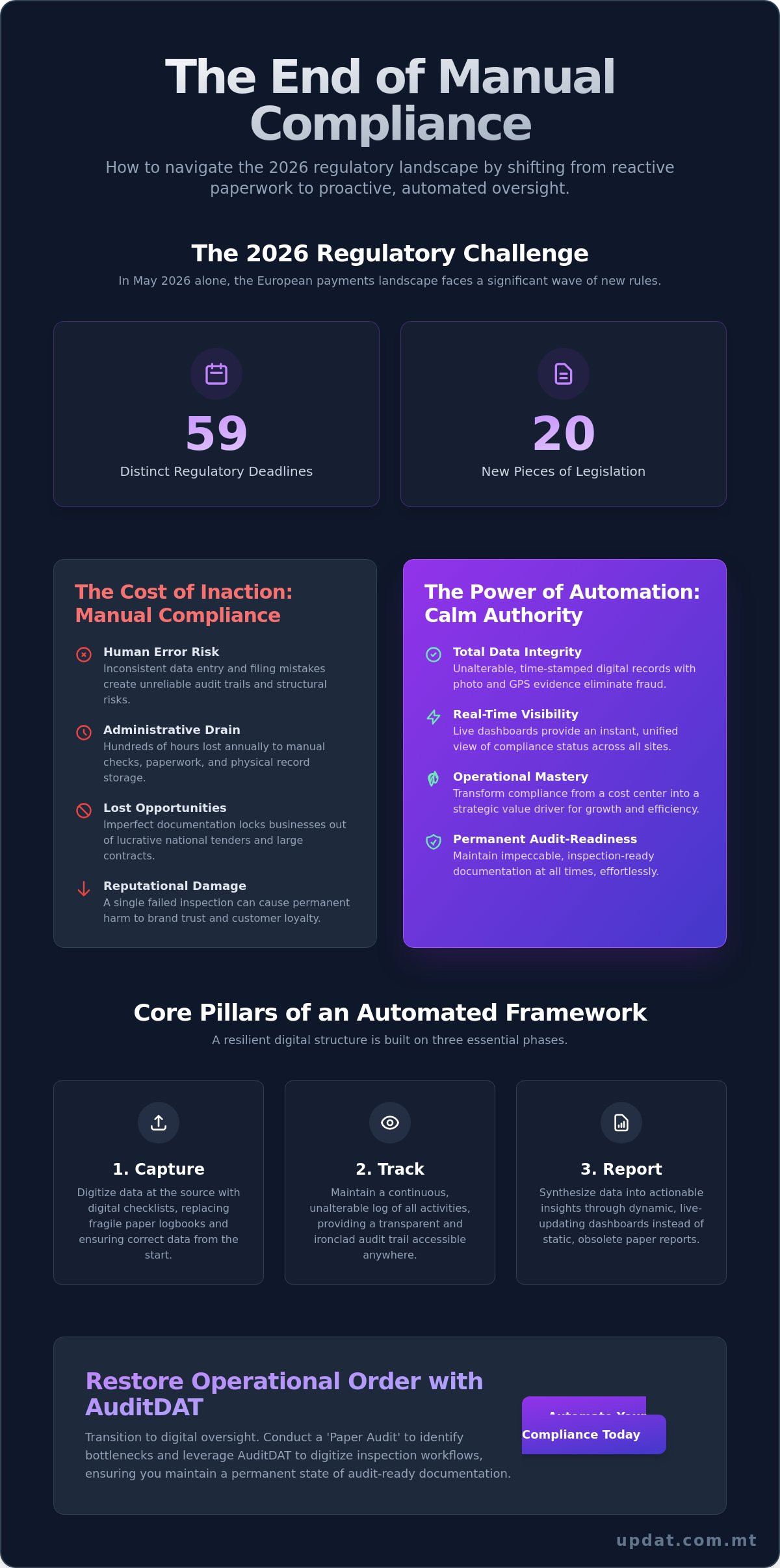
Did you know that in May 2026 alone, the European payments landscape faces 59 distinct regulatory deadlines and 20 new pieces of legislation entering into force? For many business leaders in Malta, these numbers represent more than just statistics. They represent a relentless administrative drain that makes automating regulatory compliance a necessity for survival rather than a luxury. You're likely familiar with the anxiety of upcoming inspections and the struggle of managing inconsistent reporting across different sites. It's easy to feel like you're drowning in paper-based audit trails while trying to maintain operational pace.
Managing these shifts manually is no longer a viable option; it's a structural risk. Transitioning to automated systems transforms this burden into a streamlined, risk-free foundation for business growth. This strategic shift moves your organization from reactive damage control to a position of calm authority. You'll discover how to eliminate manual data entry and maintain audit-ready documentation at all times. This guide outlines the path to real-time visibility and restored operational order, ensuring your systems remain a steady, reliable foundation for long-term success.
Key Takeaways
• Understand why 2026 regulations demand a transition from retrospective reporting to proactive, real-time data management.
• Master the mechanics of automating regulatory compliance by replacing manual logbooks with digital checklists for immediate accountability.
• Establish a robust framework built on the pillars of data integrity, access control, and sector-specific modules like HACCP.
• Implement a strategic transition by conducting a 'Paper Audit' to identify and eliminate manual administrative bottlenecks.
• Leverage AuditDAT to digitize inspection workflows and maintain a permanent state of audit-ready documentation.
The Strategic Importance of Regulatory Compliance in 2026
Compliance automation is the strategic use of technology to monitor and manage regulatory requirements without constant human intervention. By 2026, the regulatory environment has shifted toward a requirement for real-time visibility. Traditional, retrospective reporting is no longer sufficient for modern standards. This is true for both operational safety and specialized administrative areas where PS WebSolution streamlines complex regulatory processes. Using Regulatory technology (RegTech) allows businesses to maintain a permanent state of readiness. Automating regulatory compliance replaces the frantic chaos of manual filing with a sense of calm authority. It positions compliance as a cornerstone of brand reputation, ensuring that client trust is built on a verifiable foundation of operational excellence.
From Risk Mitigation to Operational Mastery
Many organizations view compliance as a necessary cost center that consumes time without providing a return. Shifting to an automated model changes this perception, turning compliance into a strategic value driver. The primary benefit is the total removal of human error in data collection and filing. When checklists are digital and time-stamped, the data is indisputable. This level of precision restores order in complex operations, especially for businesses managing multiple sites across Malta. You're no longer chasing paper trails across different locations. Instead, you're handed the keys to master your entire operational environment through a single, unified view. It's about moving from a defensive posture to one of complete operational mastery.
The Cost of Inaction: Beyond Simple Fines
Focusing only on potential fines ignores the deeper, hidden costs of manual audits. Businesses lose hundreds of hours each year to administrative labor and the physical storage of paper-based audit trails. These are inefficient uses of capital. In the Maltese hospitality and food sectors, the reputational damage from a single failed inspection is often permanent. News travels fast, and a lack of transparency can alienate partners and customers alike. Additionally, non-compliance significantly impacts your eligibility for national tenders. If your documentation isn't impeccable, you're effectively locked out of lucrative government contracts and large-scale procurement opportunities. The cost of inaction isn't just a line item on a balance sheet; it's the potential loss of your competitive standing in the market.
The Mechanics of Automating Regulatory Compliance
The architecture of an automated system is built on three distinct phases: capture, track, and report. Capture involves digitizing input at the source, ensuring data is logged correctly from the start. Tracking provides a continuous log of activities, while reporting synthesizes this data into actionable insights. This digital framework replaces the fragility of physical logbooks with a resilient digital structure. The logic of automating regulatory compliance lies in its ability to transform high-stakes oversight into a predictable, background process. Digital checklists ensure that every task is completed according to specific standards, creating immediate accountability at the point of action. When navigating automation and compliance, businesses find that cloud-based platforms offer the advantage of anywhere access. This means audit trails are available instantly, whether you're on-site at any facility or working remotely. Automated alerts further strengthen this foundation by flagging expiring certifications or missed inspections before they become liabilities.
Digitising the Audit Trail
Digital records offer a level of security that paper simply cannot match. By utilizing digital audit solutions, organizations create unalterable timestamps for every entry. This eliminates the possibility of backfilling records or pencil-whipping inspections. Modern systems integrate photo evidence and GPS tags directly into the workflow. This provides physical proof of conditions at the exact time of the check. Digital signatures finalize the process, ensuring true accountability for every team member involved. These features create a transparent, ironclad record that satisfies even the most rigorous regulatory inspections. It's about building a digital architecture that commands respect from auditors and stakeholders alike.
Real-Time Reporting and Visibility
Static paper reports are often obsolete by the time they're filed. In contrast, dynamic dashboards provide a live-updating view of your compliance status. Automating audit reports saves your management team hours of administrative preparation each week. Instead of manually compiling data from various sites, you can generate comprehensive summaries with a single click. The efficiency gained through automating regulatory compliance allows your team to focus on growth rather than paperwork. This visibility allows you to spot trends and systemic failures early. If a specific site consistently misses a cooling check, you can intervene before a violation occurs. Implementing a solution like AuditDAT ensures your reporting remains fluid and accurate while restoring operational order.
Core Pillars of an Effective Compliance Framework
A resilient business requires a structure that supports continuous growth without increasing risk. This structure is built on three universal pillars: Data Integrity, Access Control, and Audit Readiness. Data integrity ensures that your records are accurate, complete, and unalterable. Access control protects sensitive operational data by ensuring only authorized personnel can view or edit specific logs. Finally, audit readiness means your documentation is organized and accessible at any moment. Automating regulatory compliance serves as the foundation for these pillars, providing the digital infrastructure necessary to maintain them without manual oversight.
Implementing a strategic framework for compliance automation shifts your focus from reactive problem-solving to proactive management. Within this framework, task prioritization acts as the primary engine. It ensures that high-risk activities, such as safety inspections or legal filings, are completed according to strict timelines. Without digital prioritization, critical checks often get lost in the daily operational rush. A well-designed system flags these priorities, ensuring nothing is overlooked.
Operational Compliance in Hospitality and Manufacturing
Sector-specific requirements demand specialized modules rather than generic solutions. In the hospitality sector, HACCP automation is vital for ensuring food safety. Digital temperature logs eliminate the risk of manual error and provide an immediate alert if a cooling system fails. Similarly, manufacturing operations rely on digital checks to maintain ISO standard adherence. This level of precision is a key benefit of streamlining business operations with software. It allows manufacturers to scale their output while maintaining the rigorous quality control required by Maltese and EU regulations.
Security and Workforce Compliance
Workforce management is a critical component of any compliance framework. You must verify that your staff members possess the necessary certifications and training to perform their roles safely. In the security industry, tracking patrol consistency and guard certifications is essential for legal protection. Digital platforms ensure that these tasks don't fall through the cracks by providing automated reminders and clear accountability logs. Utilizing tools like TimeDAT or ActionDAT helps businesses meet national labor regulations while maintaining a disciplined, compliant workforce. This organized approach transforms your team into a reliable pillar of your operational architecture.
Strategic Implementation: Transitioning to Digital Oversight
Transitioning to digital oversight requires a deliberate, five-step strategy to ensure a seamless shift from legacy systems. Automating regulatory compliance is a significant operational upgrade that demands clarity before execution. Follow this structured path to move from administrative chaos to a foundation of order:
Step 1: Conduct a 'Paper Audit'.
Identify every physical logbook and filing cabinet. Pinpoint exactly where manual data entry creates bottlenecks or where information gaps frequently occur.
Step 2: Define Core Requirements.
List the specific Maltese and EU regulations your business must satisfy. Determine the exact frequency of every check, from daily temperature logs to annual safety certifications.
Step 3: Select a Modular Platform.
Choose a system like AuditDAT that offers scalability. You need a platform that handles current needs while allowing for the addition of modules like ActionDAT as your organization grows.
Step 4: Train on the 'Why'.
Focus staff training on the purpose of the shift. When employees understand that digital tools eliminate inspection anxiety and repetitive paperwork, adoption rates increase significantly.
Step 5: Review and Refine.
Use the data from your first 30 days to optimize your workflows. Automated systems provide the visibility needed to identify and fix inefficient processes quickly.
Overcoming the 'Paper-Based' Mindset
There is often a common fear that technology might replace human intuition or lead to micromanagement. In reality, digital tools empower your staff by removing the mental load of manual tracking. Employees no longer need to worry about missing a deadline or losing a physical record. This shift grants managers a sense of calm authority. You gain the confidence that every task is on track without needing to hover over your team. It replaces the stress of the unknown with the clarity of real-time data. This empowerment is a critical component of automating regulatory compliance effectively.
Choosing the Right Strategic Architect
Generic software rarely solves specific industry pain points. Unique compliance needs in sectors like manufacturing or hospitality often require a more tailored approach. Investing in custom software development malta ensures your digital architecture aligns perfectly with your existing workflows. Locally-supported SaaS platforms provide a distinct advantage for meeting national compliance standards and navigating the Maltese regulatory environment. Professional implementation support is vital for ensuring your system is configured for maximum efficiency from day one. To begin your transition and restore operational order, consult with the experts at AuditDAT to explore a solution built for your business.
AuditDAT: Restoring Operational Order through Automation
AuditDAT stands as the primary digital architecture for businesses seeking to master their regulatory obligations. It transforms the often-chaotic process of manual inspections into a structured, high-efficiency workflow. By automating regulatory compliance, the platform removes the complexity of paper-based tracking and replaces it with a permanent state of audit readiness. You no longer need to manage fragmented files across different sites. Instead, AuditDAT centralises every checklist, photo evidence, and digital signature into a single, unalterable record. This transition restores order to your operations, allowing you to focus on growth while the system manages the intricacies of oversight. The synergy between AuditDAT and a business task management platform ensures that compliance isn't an isolated activity. It becomes a core part of your daily operational rhythm, ensuring every safety check and regulatory filing is treated with the same priority as your commercial targets.
Key Features for National Compliance Success
Success in the Maltese market requires tools that adapt to specific local and EU mandates. AuditDAT provides customisable inspection templates that cater to diverse sectors, from food safety in hospitality to quality control in manufacturing. The platform includes an automated notification system that flags non-conformities the moment they occur. This allows management to intervene immediately, preventing minor issues from escalating into major violations. Additionally, high-level executive dashboards provide total visibility across multiple sites. You can monitor compliance status across Valletta, Sliema, and Qormi from a single screen. This bird's-eye view ensures that standards remain consistent across your entire organization, regardless of physical location.
The Result: A Future-Proof Business
Implementing AuditDAT delivers a tangible impact on your bottom line. You save hundreds of hours of administrative prep time and significantly reduce the risk of failed inspections. The result is total accountability at every level of your workforce. By automating regulatory compliance, you're not just buying software; you're investing in a resilient digital foundation. This foundation ensures your business remains adaptable to future legislative changes while maintaining the highest standards of operational excellence. You're handed the keys to master your own environment with confidence and clarity. It's time to move beyond the administrative drain of legacy systems. Empower your organization with a strategic architect that values logic, precision, and order above all else. Contact the AuditDAT team today to begin your journey toward a streamlined, risk-free future.
Mastering the Digital Architecture of 2026
The transition from manual logbooks to real-time digital oversight is now a prerequisite for business longevity. You've seen how automating regulatory compliance transforms high-stakes administrative burdens into a streamlined foundation for growth. By establishing core pillars like data integrity and audit readiness, you move your organization from reactive anxiety to calm, operational mastery. Founded in 2019 with deep Maltese operational expertise, we act as strategic architects for the hospitality, manufacturing, and security sectors. Our modular SaaS platforms, including AuditDAT, TimeDAT, and ActionDAT, provide the stability required to navigate a complex legislative landscape. You don't have to settle for the chaos of paper-based trails when a more efficient digital architecture is available. Reclaim your administrative time and focus on scaling your organization with confidence.
Restore order to your business operations with AuditDAT today.
Your journey toward total accountability starts with a single strategic shift. Take control of your operational environment and build a future-proof foundation today.
Frequently Asked Questions
What is the primary benefit of automating regulatory compliance?
The primary benefit is the restoration of operational order through real-time visibility and risk reduction. By automating regulatory compliance, you eliminate the administrative drain of manual data entry and ensure audit-ready documentation at all times. This shift allows management to move from reactive damage control to proactive oversight. It secures the business against potential violations while freeing up resources for strategic growth.
Can automated compliance software replace my compliance officer?
No, the software serves as a powerful tool that empowers your compliance officer rather than replacing them. It removes the burden of repetitive administrative tasks, allowing the officer to focus on high-level strategy and complex problem-solving. Think of it as providing your strategic architect with the digital infrastructure needed to master the entire operational environment with greater precision and far less manual effort.
Is it difficult to transition from paper-based audits to a digital system?
The transition is a structured process that becomes straightforward with the right implementation strategy. By conducting a 'Paper Audit' first, you identify specific bottlenecks and map them to digital workflows. Modular platforms like AuditDAT are designed for ease of use. This ensures that staff adapt quickly once they understand how the system simplifies their daily routines and removes the anxiety associated with upcoming inspections.
How does automation help in meeting HACCP standards in Malta?
Automation ensures adherence to HACCP standards by providing unalterable, time-stamped digital temperature logs and hygiene checklists. In the Maltese hospitality sector, this level of precision is vital for passing inspections and maintaining brand reputation. The system sends immediate alerts for non-conformities. This allows for corrective actions before food safety is compromised or regulatory fines are issued by local authorities.
What are the risks of using outdated manual compliance tracking?
Manual tracking carries significant risks, including human error, data loss, and inconsistent reporting across different sites. Missing a single cooling check or safety inspection can lead to permanent reputational damage or the loss of national tender eligibility. Without a digital audit trail, proving compliance to authorities becomes a stressful exercise that relies on incomplete or inaccurate paperwork, leaving your business vulnerable to penalties.
Can I customize an automated compliance platform for my specific industry?
Yes, professional platforms offer customisable inspection templates tailored to specific industry requirements. Whether you're in manufacturing, security, or hospitality, you can configure the digital architecture to match your unique workflows. For highly specialized needs, bespoke software development ensures that every regulatory nuance of your business is managed within a unified digital system, providing a tailored solution that fits your exact operational needs.
How does compliance automation improve team accountability?
Automating regulatory compliance
improves accountability by requiring digital signatures, photo evidence, and GPS tags for every completed task. This creates a transparent record of who performed a check and when it occurred. When tasks are logged in real-time, it removes the possibility of backfilling records. It ensures that every team member follows standardized procedures and maintains the high operational standards your business demands.
What should I look for in a compliance software provider?
Look for a provider with deep operational expertise and a track record of supporting local standards. A modular SaaS platform offers the flexibility to scale as your business grows. Ensure the provider offers professional implementation support and locally-supported tools like AuditDAT or ActionDAT. These systems understand the specific regulatory landscape in Malta, providing a steady, reliable foundation for long-term growth and stability.






%201.svg)
