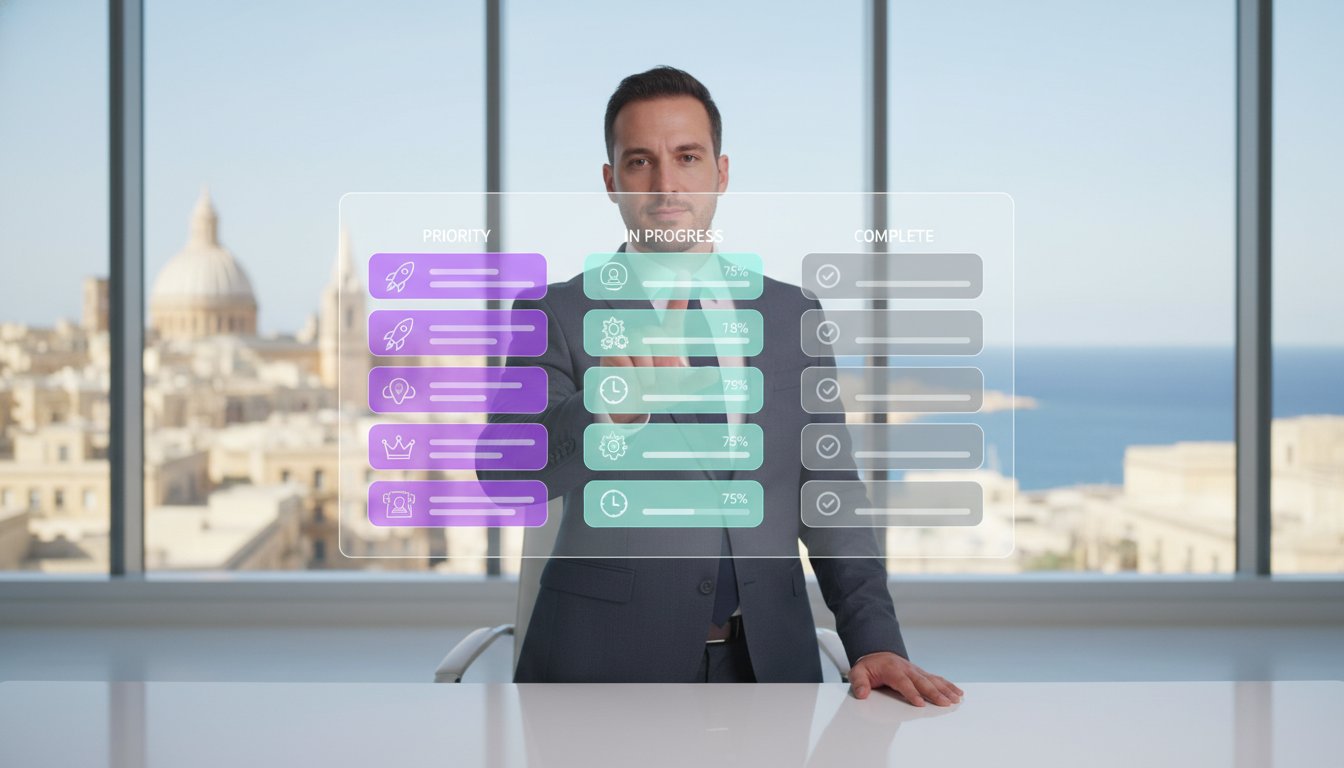
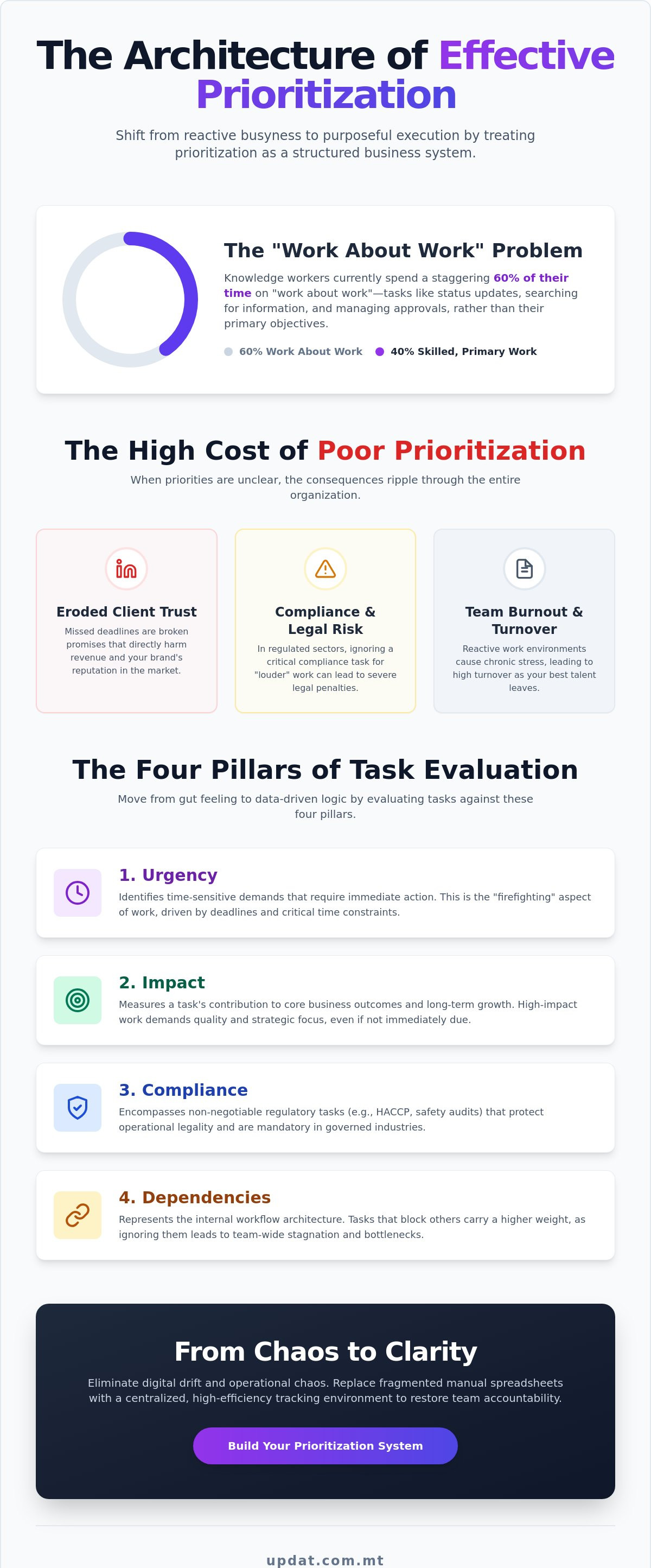
Knowledge workers currently spend 60% of their time on "work about work" rather than their primary objectives. It's a staggering drain on resources that often stems from a fundamental misunderstanding of how to prioritize work tasks effectively. You likely feel the weight of this inefficiency every time a critical deadline slips or a "loud" but low-value request derails your team's focus. It's frustrating to manage a high volume of operational demands when you lack a clear hierarchy of importance and team accountability.
This guide provides the strategic architecture needed to restore order. You'll master specific frameworks and digital tools like ActionDAT to eliminate manual complexity and ensure your most vital projects remain the priority. We will explore the four pillars of task evaluation and demonstrate how to build a scalable system for tracking team progress and reducing administrative stress. By the end of this article, you will have a clear execution order for your day and the tools to maintain operational excellence.
Key Takeaways
• Shift from reactive busyness to purposeful execution by viewing prioritization as a structured business architecture rather than a personal habit.
• Master proven frameworks like the Eisenhower Matrix and ABCDE Method to learn how to prioritize work tasks based on their true impact on core business outcomes.
• Eliminate digital drift and operational chaos by replacing fragmented manual spreadsheets with a centralized, high-efficiency tracking environment.
• Restore team accountability and ensure critical tasks never fall through the cracks using the strategic management capabilities of ActionDAT.
• Build a comprehensive view of your operational health by integrating task management with AuditDAT and TimeDAT for total organizational oversight.
Understanding Task Prioritization in a Modern Business Environment
Prioritization is the restoration of order within a complex operational environment. It's the deliberate act of distinguishing between "staying busy" and "executing with purpose." Many teams fall into the trap of high-volume activity that yields low-value results. This happens because "operational noise," which is the constant influx of emails, notifications, and minor requests, obscures critical business goals. Learning how to prioritize work tasks is the primary way to clear this fog. It establishes a foundation for workforce management where every action aligns with the company's long-term stability and growth.
Without a structured approach, teams rely on gut feeling or the "squeaky wheel" method. This lack of logic creates a vacuum of accountability. Utilizing established task prioritization methods allows a business to move from a defensive, reactive posture to an offensive, strategic one. It ensures that resources are allocated to the projects that drive progress rather than just those that feel urgent in the moment.
The Cost of Mismanaged Priorities
When a business fails to rank its obligations, the first casualty is often client trust. Missed deadlines aren't just administrative errors; they are broken promises that directly impact revenue and brand reputation. In highly regulated sectors, the stakes are even higher. Ignoring a critical compliance task because a team was distracted by "louder" work can lead to severe legal penalties. There is also a human cost. Reactive work environments, where everything is a priority, lead to chronic stress. This inevitably results in employee burnout and high turnover rates. Organizations lose their best talent when those individuals feel their efforts are being wasted on trivialities.
Prioritization vs. Task Management
It's vital to recognize that task management and prioritization are distinct disciplines. Task management is the "what." It's the inventory of work that needs to be done. Prioritization is the "when" and the "why." It's the strategic layer that dictates the order of operations. A strategic architect doesn't just list tasks; they design a workflow that maximizes efficiency. This architecture should be supported by technology. Modern software should do more than just hold a list. It should help automate the logic of what comes next. By integrating tools like ActionDAT, businesses can ensure that the execution order is based on data and impact rather than individual guesswork. This shift allows the team to focus on execution while the system maintains the order.
The Four Pillars of Task Evaluation
Effective evaluation requires a shift from gut feeling to data-driven logic. When deciding how to prioritize work tasks, you must look beyond the deadline. A sophisticated operational model relies on four distinct pillars: urgency, impact, compliance, and dependencies. These elements provide the structural framework needed to rank work with precision. Without them, your team is simply reacting to the most recent email rather than moving the business forward.
Urgency identifies time-sensitive demands that require immediate movement. It's the "firefighting" aspect of work. Impact, however, measures how a task contributes to core business outcomes and long-term growth. While urgency demands speed, impact demands quality. A task might not be due today, but if it's the key to a major contract, its impact is massive. Dependencies represent the internal architecture of your team. If one person's task blocks three others, that task carries a higher weight. Ignoring these bottlenecks leads to team-wide stagnation. By mapping these dependencies, you ensure that the workflow remains fluid and that no one is left waiting for a critical input.
Ranking by Regulatory Importance
Compliance is the pillar most often ignored by generic productivity guides. In industries governed by strict national standards, such as healthcare or hospitality, regulatory tasks are non-negotiable. HACCP protocols or safety audits must always take precedence over administrative work. Utilizing digital audit solutions ensures these items are never missed. These frameworks provide the foundation for maintaining standards while guarding the baseline of operational legality.
Calculating Resource Effort vs. Value
Strategic architects weigh the time required against the potential result. Schedule high-value, complex work during peak focus periods, usually the first few hours of the workday. To maintain momentum, integrate "quick wins" between larger projects. These are low-effort tasks that provide immediate satisfaction and keep the team moving. A useful framework for this is the Eisenhower Matrix. If your current tools don't support this nuance, exploring ActionDAT can help centralize these evaluations into a single, actionable dashboard.
Proven Methods for Prioritizing Work Tasks Effectively
Evaluation provides the logic, but execution requires a proven method. Once you understand the pillars of urgency and impact, you need a repeatable system to apply those values to your daily workflow. These methods transform a chaotic list of obligations into a structured path for progress. Mastering how to prioritize work tasks isn't about working harder; it's about applying a specific architecture to your decision-making process. By adopting a standardized approach, you remove the mental fatigue of constantly choosing what to do next.
The Eisenhower Matrix remains a foundational tool for this transformation. It forces you to categorize work into four quadrants based on urgency and importance. Tasks that are both urgent and important receive immediate attention. Those that are important but not urgent are scheduled for deep work. The ABCDE Method offers a different layer of precision by assigning letter grades based on the level of consequence. An "A" task carries significant consequences if not completed, while a "D" task is a candidate for delegation. For those who prefer a minimalist approach, the Ivy Lee Method dictates that you plan only your top six tasks for the following day. You work through them in strict order, never moving to the second until the first is finished.
Time blocking is the final defensive measure in this system. Research shows the average employee is interrupted every 2 minutes during core work hours. Time blocking protects your calendar by dedicating specific windows to high-level priorities. It prevents the "operational noise" mentioned earlier from fragmenting your focus. When you combine these methods, you create a resilient environment where critical work is protected from the flow of minor administrative demands.
Implementing the Eisenhower Matrix for Teams
Applying these methods at a workforce level requires more than just individual discipline. Managers should use the matrix to delegate tasks effectively across the entire team. Identify low-importance, high-urgency tasks that should be automated rather than just handed off to another person. This is where streamlining business operations with software becomes essential. Digital tools allow you to visualize these quadrants for the whole team, ensuring that high-impact work is always visible and assigned to the right resources.
The 1-3-5 Rule for Daily Momentum
The 1-3-5 Rule is an excellent way to maintain steady progress without over-commitment. Each day, commit to 1 big task, 3 medium tasks, and 5 small tasks. This ratio ensures you tackle a major project while still clearing the smaller administrative hurdles that often cause bottlenecks. You can adjust this ratio based on your industry. In high-compliance environments, your "big" task might be a comprehensive safety audit, while the smaller tasks focus on daily reporting. This structure prevents burnout and provides a clear sense of daily achievement.
Eliminating Manual Complexity: Moving to Digital Task Tracking
Relying on paper lists or scattered spreadsheets is a recipe for operational chaos. These manual systems lack the fluidity required to handle modern business demands. When tasks are spread across email, sticky notes, and various chat channels, "digital drift" occurs. Information becomes fragmented, and the context of a project is easily lost. This fragmentation makes it nearly impossible to understand how to prioritize work tasks with any degree of accuracy. A single source of truth is the only way to restore clarity and ensure nothing falls through the cracks.
Digital task tracking moves beyond the static nature of a manual list. It provides a dynamic environment where priorities shift based on real-time data. Automated reporting removes the guesswork from business decision-making. Instead of spending hours compiling status updates or chasing team members for progress, managers can view a live dashboard of operational health. This shift doesn't just save time; it ensures that every decision is backed by verified information. It transforms the management role from one of constant questioning to one of strategic oversight.
The Transition from Paper to Digital
Many leaders hesitate to switch because they fear software is too complex or will disrupt established habits. However, modern solutions prioritize intuitive design to ensure rapid adoption across all levels of the workforce. Unlike paper logs that can be lost, damaged, or altered, digital systems create a permanent audit trail. This level of transparency is essential for accountability and regulatory compliance. For businesses with highly specific requirements that generic tools cannot meet, custom software development in Malta can bridge the gap. It allows you to build the exact digital architecture your business requires to maintain its competitive edge.
Automating the Prioritization Process
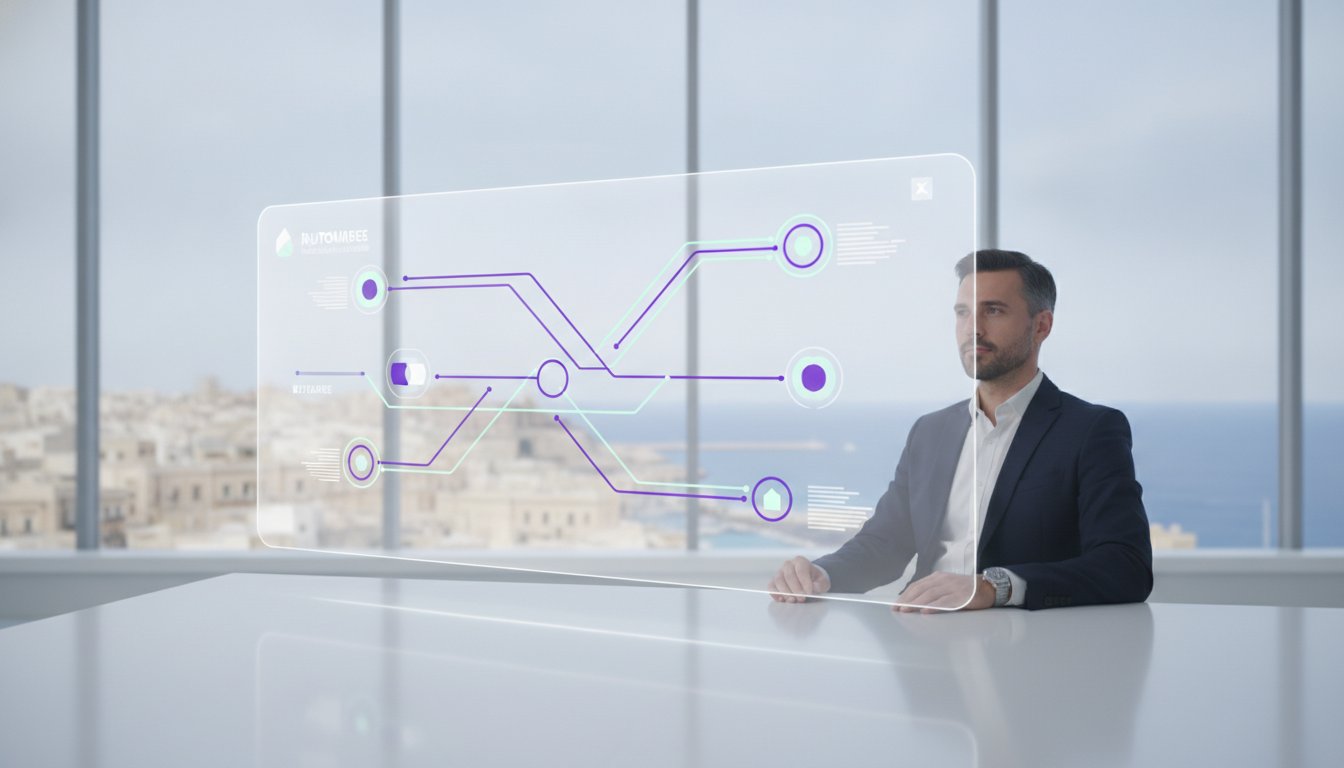
The true power of digital tracking lies in its ability to automate logic. Software can auto-rank tasks based on pre-set compliance rules or specific business impact metrics. Real-time notifications alert team members to urgent, high-impact items instantly, preventing delays. This significantly reduces the mental load on staff. They no longer have to struggle with the daily choice of how to prioritize work tasks; the system provides the order. By removing this cognitive burden, you empower your workforce to focus entirely on execution rather than administration. To see how these systems can transform your workflow, explore the possibilities at updat.com.mt and start centralizing your operations today.
Mastering Team Accountability with ActionDAT
ActionDAT serves as the definitive architecture for high-level task tracking and prioritization. While previous sections explored the logic of how to prioritize work tasks, this platform provides the physical digital environment to execute those strategies. It moves beyond simple checklists by acting as a central command center where every operational action is visible and accounted for. This system ensures that your team doesn't just understand their priorities; they have the tools to own them. By centralizing assignments, you eliminate the ambiguity that leads to missed deadlines and fragmented workflows.
The true power of this platform lies in its seamless integration with TimeDAT and AuditDAT. This creates a holistic view of your business health. For example, a compliance gap identified in AuditDAT can automatically trigger a high-priority task in ActionDAT. Meanwhile, resource data from TimeDAT ensures that these tasks are assigned to team members who have the capacity to execute them. This interconnected ecosystem removes the manual work of transferring data between departments. It provides a steady, reliable foundation for long-term growth by ensuring that your most critical objectives are always at the forefront of the team's focus.
Real-Time Visibility into Project Progress
Managers require more than just status updates; they need immediate insight into where work is stalling. ActionDAT provides sophisticated dashboard views that allow you to identify bottlenecks before they impact your bottom line. The interface is intentionally designed for high-speed industries, opting for a no-nonsense layout that prioritizes quick scanning and rapid comprehension. You can use these data-driven insights to adjust priorities on the fly, ensuring that resources are always flowing toward the most impactful projects. This level of transparency restores order and allows for a proactive management style.
Building a Culture of Operational Order
Standardizing how your team tracks work leads to a culture of precision and accountability. When everyone uses the same system to understand how to prioritize work tasks, alignment with core business goals becomes automatic. ActionDAT prevents tasks from falling through the cracks using automated reminders and precise status tracking. This isn't just about micro-management; it's about empowerment. It gives your workforce the clarity they need to perform at their best without the stress of administrative chaos. Discover how ActionDAT can transform your daily operations and help you achieve true operational excellence.
Restoring Operational Order Through Strategic Action
Mastering the architecture of your workflow requires more than just a list of duties. It demands a logical framework that distinguishes between operational noise and high-value objectives. You've explored the pillars of evaluation and the methods needed to protect your time from fragmentation. By understanding how to prioritize work tasks through a digital-first approach, you move from a reactive state to one of total command. This shift ensures that your most critical business goals remain the primary focus of every team member.
UPDAT Technologies Ltd. was founded in 2019 to address the specific operational needs of Maltese businesses. Our systems are trusted across the hospitality, manufacturing, and security sectors to maintain stability and compliance. Whether you require a ready-to-use platform or the expertise of our bespoke software developers, we provide the steady foundation needed for long-term growth. Master your operational environment with ActionDAT. Take the first step toward eliminating chaos and achieving lasting excellence today.
Frequently Asked Questions
What is the most effective way to prioritize work tasks?
The most effective way to how to prioritize work tasks is to evaluate each obligation based on its contribution to core business outcomes and regulatory requirements. This involves moving beyond simple to-do lists and adopting a structured framework like the Eisenhower Matrix. By categorizing tasks into four quadrants, you can distinguish between true priorities and minor distractions that don't drive growth.
How do I handle urgent tasks that interrupt my planned schedule?
Address urgent interruptions by quickly assessing their true impact before you deviate from your primary schedule. If a task takes less than two minutes, complete it immediately; otherwise, log it in a centralized system like ActionDAT for later review. This approach prevents operational noise from derailing high-value work and maintains the integrity of your daily execution order.
Can software really help with task prioritization?
Software provides the digital architecture needed to automate the logic of prioritization and ensure team-wide alignment. Unlike paper logs, a platform like ActionDAT offers real-time visibility into project progress and automatically flags high-impact items. It removes the mental burden of choosing what to do next by presenting work in a pre-ranked, data-driven order that maximizes efficiency.
How do I prioritize tasks when everything seems important?
When all tasks appear critical, you must learn how to prioritize work tasks by ranking them according to the severity of the consequences if they remain unfinished. Assign letter grades to each item using the ABCDE method, where "A" tasks are non-negotiable. Focusing on dependencies also helps; identify which tasks block other team members to determine the most logical starting point.
What is the difference between urgent and important tasks?
Urgent tasks demand an immediate response, often due to external deadlines or sudden operational failures. Important tasks are those that contribute significantly to your long-term business growth and strategic stability. High-efficiency teams prioritize important work during peak focus hours to prevent reactive firefighting from consuming the entire workday and stalling progress on core objectives.
How can I ensure my team follows the same prioritization rules?
Establish a culture of accountability by standardizing your prioritization rules within a shared digital environment. Using a platform like ActionDAT ensures everyone follows the same ranking logic and compliance protocols. This transparency allows managers to monitor progress and intervene only when bottlenecks appear, fostering a sense of ownership and clarity across the entire workforce.
What are the best tools for task tracking in 2026?
The best tools in 2026 are those that integrate task management with broader operational data like audits and time tracking. ActionDAT is a premier choice for businesses seeking a holistic view of their efficiency. It works alongside AuditDAT and TimeDAT to provide a comprehensive, no-nonsense solution for tracking progress and maintaining high standards of organizational accountability.
How often should I review and update my task priorities?
Conduct a brief daily review each morning to adjust for new developments and ensure your execution order remains valid. A more thorough weekly audit is necessary to align your immediate tasks with broader business objectives. This regular rhythm ensures your team remains agile and responsive to shifting operational demands without losing sight of long-term strategic growth.




%201.svg)
