
88% of organizations have already adopted AI in at least one business function, yet many leadership teams still find themselves buried under a mountain of administrative debt. Learning how to automate manual tasks is no longer a futuristic goal; it's the foundational requirement for any business that values precision over chaos. You've likely felt the sting of frequent human errors in reporting or the constant drain of manual time tracking. These aren't just minor annoyances. They're structural cracks that threaten your regulatory compliance and limit your visibility into what your team actually achieves each day.
You deserve an operational environment that works for you, not against you. This guide shows you how to master the architecture of business efficiency by identifying, mapping, and digitizing your most repetitive workflows. We'll move from the broad strategy of process mining to the specific application of tools like AuditDAT and TimeDAT. By the end of this article, you'll have a clear roadmap to restore order, free your staff for high-value work, and ensure 100% accuracy in every audit you perform.
Key Takeaways
• Shift from reactive firefighting to proactive operational mastery by treating automation as the systematic removal of low-value manual intervention.
• Learn how to automate manual tasks by identifying high-volume, repetitive workflows where human error carries significant regulatory or financial risks.
• Implement a structured 5-step framework that prioritizes mapping and standardizing your current workflows before any digital tools are introduced.
• Overcome common digital transformation hurdles by addressing cost misconceptions and managing staff transitions with clear, logical change management strategies.
• Leverage specialized tools like AuditDAT and TimeDAT to transform inspections and time tracking into real-time assets that ensure total compliance.
Understanding the Architecture of Business Process Automation
Automation isn't merely a collection of software tools. It's a strategic digital architecture designed for the systematic removal of repetitive, low-value manual intervention. When you transition away from manual workflows, you stop reacting to daily operational crises. This shift from "firefighting" to proactive operational mastery allows leadership to focus on growth rather than maintenance. By June 2026, digitizing workflows has become a baseline requirement for competitive stability. The global Business Process Automation (BPA) market is currently projected to reach up to $22.3 billion, reflecting a massive corporate move toward standardized efficiency.
Reliable business intelligence depends entirely on the quality of your underlying processes. Manual data entry is inherently prone to variation, which creates "dirty" data that skews your reporting. Automated systems capture information at the source, ensuring every data point is clean, consistent, and actionable. This creates a steady foundation for decision-making. Mastering how to automate manual tasks is the first step toward building a business that scales without increasing its administrative burden.
The Cost of Maintaining Manual Workflows
Manual systems carry heavy hidden costs that extend far beyond simple labor hours. Administrative overhead acts as a constant drain on company morale. High-performing staff members often feel stifled by repetitive data entry and redundant reporting cycles. This frustration leads to burnout and high turnover rates. Beyond morale, the risk of human error in compliance-heavy sectors is a significant liability. A single reporting mistake can lead to regulatory fines or failed audits. Paper-based systems and disconnected spreadsheets create data silos. These silos trap information in isolated pockets, preventing you from seeing the full picture of your team's tasks and overall productivity. Without visibility, you can't optimize.
SaaS vs. Bespoke: Choosing Your Foundation
Selecting the right foundation for your digital transformation is a critical strategic choice. Off-the-shelf SaaS platforms are excellent for standardized tasks. For example, using a tool like TimeDAT allows for immediate, accurate time tracking without the need for complex internal builds. These platforms offer rapid deployment and predictable costs. However, unique business operations often reach a point where standard tools fall short. In these cases, investing in custom software development is the best way to maintain a competitive advantage.
Many successful organizations now favor a hybrid approach. They use modular SaaS tools for common functions while building bespoke layers for their proprietary workflows. This allows for a flexible, adaptable ecosystem that grows with the company. Knowing how to automate manual tasks effectively requires evaluating whether a task is a standard industry function or a unique part of your value proposition. Use SaaS for the former and bespoke solutions for the latter to restore total operational order.
Identifying the Right Candidates for Automation
Not every manual process requires immediate digitisation. To maximize your return on investment, you must prioritize workflows that offer the greatest impact on operational stability. Focus on high-volume, repetitive tasks that follow a rigid "if-this-then-that" logic. These are the prime candidates for anyone learning how to automate manual tasks. When a process is predictable, it is programmable. Conversely, tasks that require nuanced human judgment or creative problem-solving should remain under direct human oversight.
Prioritize processes where human error carries high regulatory or financial consequences. A single missed decimal point or a forgotten signature can derail a project or trigger a costly investigation. You should also target workflows that require coordination between multiple departments or staff members. Hand-offs are where information typically gets lost. Finally, look for tasks that generate significant amounts of data. If your team spends hours compiling reports from various spreadsheets, that process is a drain on your strategic resources.
Compliance and Audit Reporting
Manual inspections are frequently the primary source of compliance failure. Relying on paper checklists or physical logbooks creates a lag between an incident occurring and leadership becoming aware of it. This delay is a liability. By implementing digital audit solutions, you move from periodic, reactive checks to continuous monitoring. Tools like AuditDAT allow you to capture data in real-time. This ensures that every inspection is a verified, timestamped compliance asset rather than a forgotten piece of paper. This level of precision restores order to even the most complex regulatory environments.
Workforce and Attendance Management
Traditional attendance tracking is often riddled with friction. Paper-based sign-in sheets and manual roster management create a complex web of payroll preparation that invites error. These systems lack the accountability needed for modern operations. When you understand how to automate manual tasks like time tracking, you eliminate the administrative burden of cross-referencing hours worked with payroll records. Solutions like TimeDAT provide instant visibility into team tasks and attendance. This automation ensures 100% accuracy in time tracking, freeing your HR and management teams to focus on staff development rather than auditing timecards. If you're ready to remove this complexity, start your transition to digital operations today.
A 5-Step Framework to Automate Manual Tasks
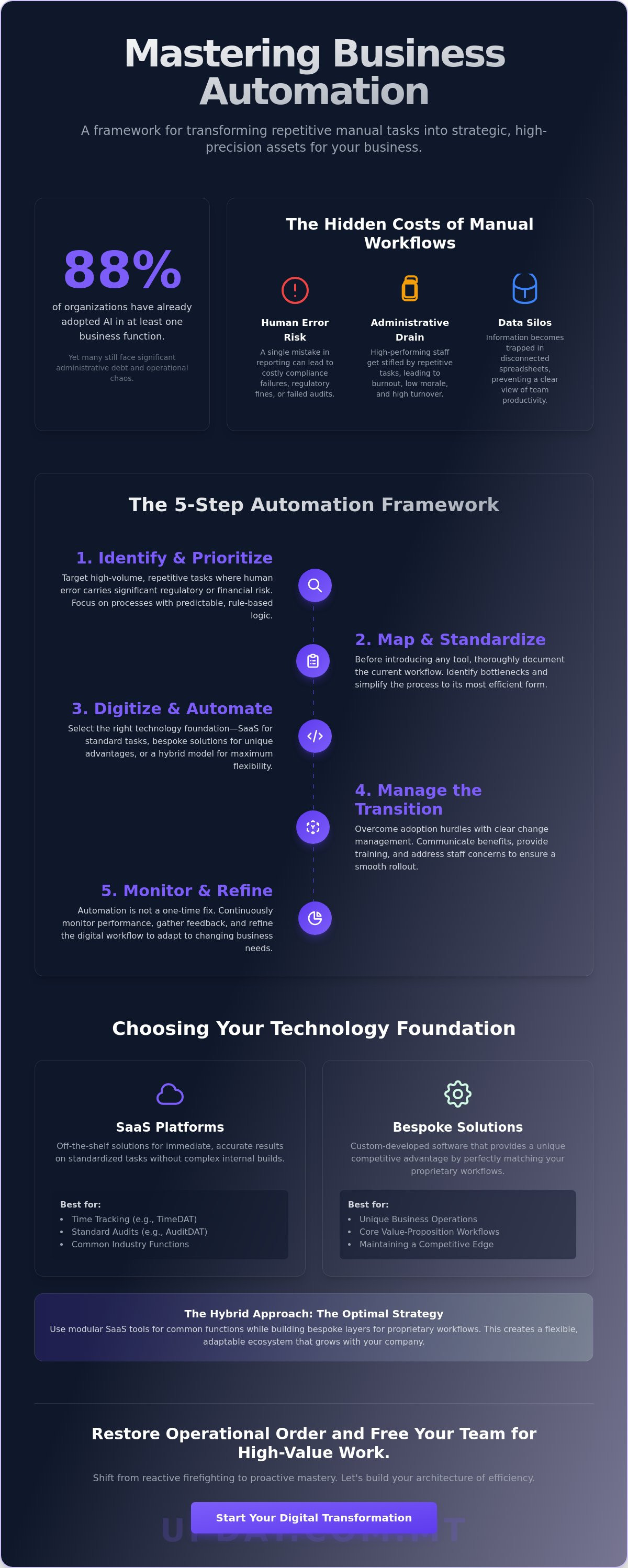
Transitioning from manual labor to digital precision requires a disciplined approach. You can't simply layer software over existing chaos and expect clarity. A structured framework ensures that your transition is sustainable and scalable. Understanding how to automate manual tasks effectively means treating your business as a logical architecture where every component must fit perfectly. This process removes the guesswork and replaces it with a predictable, high-performance system.
Step 1 & 2: Mapping and Standardisation
Automating a broken process only creates faster mistakes. Before you introduce technology, you must visualize your current "as-is" workflows. Create a detailed flowchart that identifies every touchpoint, decision node, and dependency within the process. This visual map often reveals redundant steps or "bottlenecks" that serve no strategic purpose. Standardise the workflow by eliminating these inefficiencies first. If a step doesn't add value or ensure compliance, it shouldn't exist in your digital future. Clean logic is the prerequisite for clean automation.
Step 3: Tool Selection and Implementation
The architecture of your business determines the tools you need. You must match the platform to your specific industry requirements rather than forcing your operations to fit a generic tool. For quality assurance and regulatory inspections, AuditDAT provides the specialized structure needed to maintain high-level compliance without technical complexity. Ensure your chosen platform integrates seamlessly with your existing business systems to avoid creating new data silos. Prioritise user-friendly interfaces. If your staff finds the tool difficult to navigate, they'll revert to manual workarounds, which compromises the integrity of your data.
Once you've selected your foundation, execute a pilot phase. Use a small, controlled environment to test the automation against edge cases. These are the rare scenarios that often break rigid systems. This phase allows you to refine the logic before a full-scale rollout. Finally, monitor performance using real-world data. Automation isn't a "set and forget" project. It's a living system that requires periodic refinement to adapt to shifting operational needs. This iterative cycle is the key to mastering how to automate manual tasks for long-term growth and operational order.
Overcoming Barriers to Digital Transformation
Many leaders hesitate to digitise because they believe automation requires a massive upfront capital investment. This is a common misconception. In reality, the rise of "no-code" and "low-code" platforms has democratized access to high-level efficiency. You don't need a sprawling IT department to understand how to automate manual tasks effectively. These modern solutions allow for rapid deployment and immediate utility, often with minimal initial costs compared to traditional enterprise software builds. Speed is a strategic advantage; the faster you implement these systems, the sooner you realize their return on investment.
Digital transformation is as much about people as it is about platforms. Success depends on navigating the friction between legacy habits and new, optimized systems. By choosing adaptable, intuitive tools, you reduce the technical barriers that often stall progress. This approach ensures that your transition to a digital architecture is smooth, predictable, and sustainable. It's about building a foundation that supports long-term growth without introducing unnecessary technical debt.
Managing the 'Human Element' of Change
Staff resistance is usually rooted in the fear of replacement. To ensure successful adoption, you must frame automation as a tool for empowerment rather than a substitute for human talent. When you remove the burden of repetitive data entry, you allow your team to focus on high-value work that requires judgment and creativity. Clear communication and comprehensive training are essential during this phase. You aren't just installing software; you're creating a culture of continuous operational improvement where every employee is equipped to master their own environment. Empowerment leads to higher morale and better retention.
Ensuring Regulatory and Data Security
Security is a non-negotiable component of any digital architecture. Transitioning away from paper-based systems actually enhances your security posture when done correctly. It's critical to prioritize automating regulatory compliance through platforms that offer robust encryption and granular access controls. This ensures that sensitive data remains protected while remaining accessible only to authorized personnel. Cloud-based solutions provide a level of data redundancy that physical logbooks can't match.
A digital system provides a clear, immutable audit trail. External inspectors can verify your operational integrity in seconds rather than hours. This level of transparency builds trust and stabilizes your business against shifting regulatory requirements. To secure your operations and begin your digital journey, register for your professional operational account today.
Restoring Operational Order with UPDAT Technologies
UPDAT Technologies acts as a strategic architect for organizations ready to transition from manual chaos to digital precision. We provide the structural foundation needed to master how to automate manual tasks without the complexity often associated with traditional enterprise software. Our modular ecosystem is designed to remove friction, restore order, and empower your team to focus on high-value growth. By integrating our specialized tools, you transform your business from a reactive environment into a proactive, data-driven operation.
AuditDAT is the cornerstone of this transformation for quality assurance and regulatory oversight. It captures inspections in real-time, turning them into verifiable compliance assets that are instantly accessible for review. For the administrative side of your business, TimeDAT eliminates the heavy overhead of manual payroll preparation. It ensures total accuracy in time tracking, removing the risk of human error in attendance records. To maintain team accountability, ActionDAT provides a clear framework for task mastery. It ensures that every operational requirement is tracked, executed, and documented with absolute clarity.
Tailored Solutions for National Industries
Local businesses face unique regulatory and operational challenges that generic global platforms often overlook. Within the manufacturing sector, our tools streamline complex safety inspections and equipment maintenance logs. In the hospitality industry, they ensure consistent service standards and labor compliance across multiple shifts. Working with a local technology partner means your digital architecture is built with an understanding of the Maltese market. It's time to restore order to your specific business environment with solutions that reflect your operational reality.
Next Steps: From Manual to Mastered
Mastering how to automate manual tasks begins with a simple audit of your current workflows. Identify the "quick wins"—those high-frequency tasks that currently drain your team's energy and focus. Once you've mapped these touchpoints, the path to digitisation becomes clear. We invite you to experience the tangible impact of well-organized systems firsthand. Request a platform demonstration to see how our tools integrate with your unique operations. Investing in operational efficiency isn't just a technical upgrade; it's a commitment to long-term stability and scalable growth. Stop managing complexity and start mastering your environment today.
Master Your Operational Architecture
Operational order isn't a byproduct of effort; it's the result of a deliberate digital architecture. You've seen how mapping your workflows and standardizing logic are the prerequisites for any successful transformation. By mastering how to automate manual tasks, you move beyond the daily drain of administrative debt and secure your business against regulatory risk. Whether you're optimizing inspections with AuditDAT or eliminating payroll friction with TimeDAT, the goal remains the same: total clarity and precision.
We specialize in delivering these results across the hospitality, manufacturing, and security sectors. Our expertise in ActionDAT and bespoke software development ensures that even your most unique business needs are met with a stable, scalable solution. It's time to stop reacting to complexity and start leading with data-driven confidence. Your path from manual labor to operational mastery starts with a single strategic choice.
Book a demo to see how UPDAT can restore order to your operations. Take control of your environment and empower your team to focus on what truly drives growth.
Frequently Asked Questions
What is the easiest manual task to start automating first?
Data entry for attendance and time tracking is typically the most straightforward entry point for any business. These tasks are high-volume and follow a rigid, predictable logic. Starting here provides immediate visibility into labor costs and removes the administrative burden of manual cross-referencing without requiring a complete overhaul of your core operations.
How much does it cost to automate business processes in 2026?
Costs vary based on the complexity and scale of your digital architecture. In 2026, the market is segmented into DIY tools costing under $100 per month, mid-market managed services, and enterprise platforms that can exceed $10,000 annually. Choosing a modular solution allows you to scale your investment as your operational needs grow and your efficiency increases.
Do I need a developer to automate my manual daily workflows?
You don't necessarily need a developer for standard operational tasks. Modern "no-code" or "low-code" platforms allow leadership to configure workflows and capture data directly. However, bespoke software development becomes essential when your unique business processes require a customized foundation that off-the-shelf tools cannot support. This ensures your digital systems match your specific value proposition.
Can I automate tasks if I currently use a paper-based system?
You can transition from paper-based systems by digitizing your data capture at the source. This involves replacing physical logbooks with digital interfaces like AuditDAT. Moving your records into a structured digital format is the essential first step in learning how to automate manual tasks effectively across your entire organization.
How long does it typically take to see results from automation?
You'll often see immediate improvements in data accuracy and reporting speed within the first week. Most organizations realize significant administrative time savings and a reduction in human error within 30 days of implementation. The long-term impact becomes evident as your team shifts their focus toward high-value strategic work instead of repetitive maintenance.
Is my data safe when moving manual records to a cloud-based platform?
Cloud-based platforms offer superior security and redundancy compared to physical records. Professional systems utilize robust encryption and granular access controls to protect sensitive information from unauthorized access. This digital transition ensures a clear, immutable audit trail that satisfies both internal security standards and external regulatory requirements for your industry.
What happens if an automated process encounters an error?
Professional automated systems include a "human-in-the-loop" design for exception handling. When the software identifies a data point that falls outside of pre-defined logical parameters, it flags the entry for manual review. This approach maintains operational fluidity while ensuring that your how to automate manual tasks strategy remains grounded in absolute precision and human oversight.
How do I ensure my staff actually use the new automated tools?
Staff adoption depends on clear communication and the selection of intuitive, user-friendly tools. Frame the transition as a way to remove the burden of repetitive work rather than a replacement of human roles. Providing comprehensive training and demonstrating immediate "quick wins" ensures your team feels empowered to master their new digital environment.





%201.svg)
