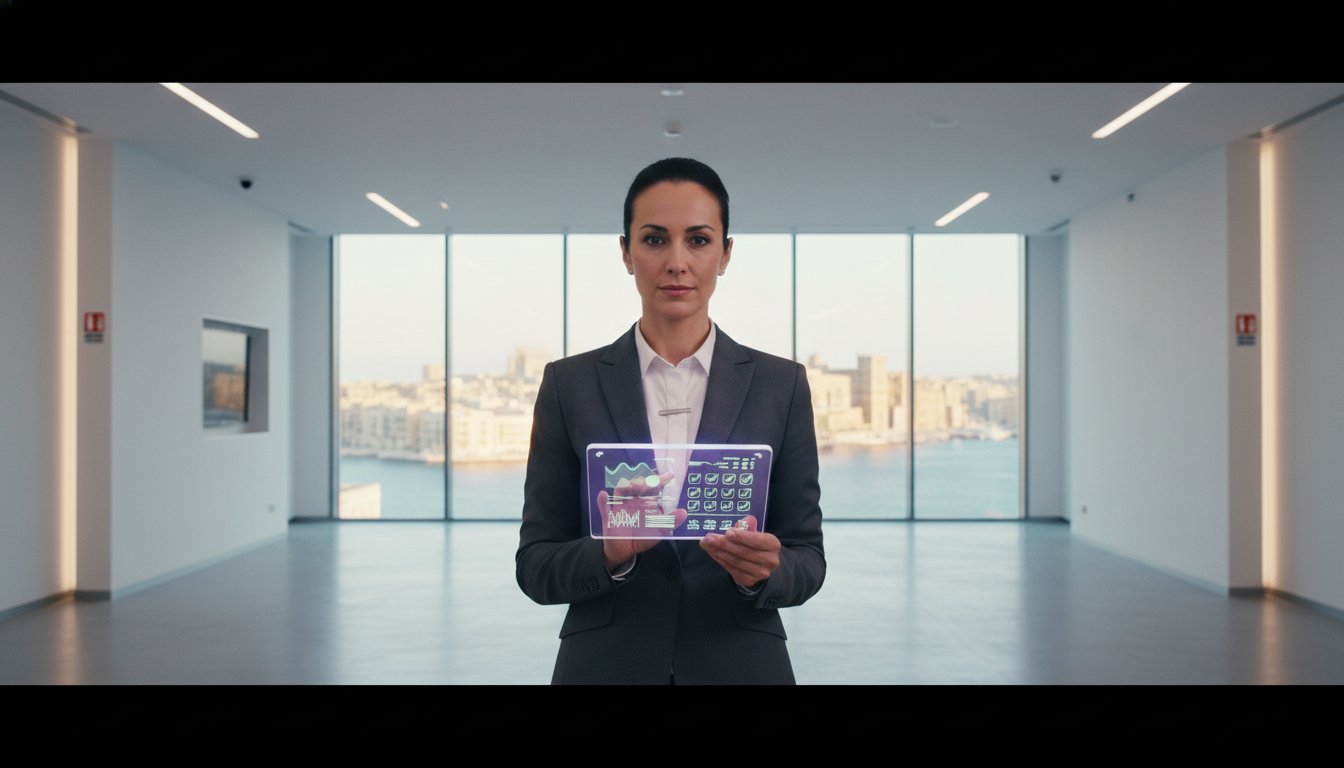
With the arrival of the Tourism Accommodation Regulations 2026 in Malta, a single licensing oversight can now lead to a three year disqualification from the market. This regulatory shift has turned manual record-keeping from a minor inconvenience into a significant business risk. Integrating a dedicated hospitality compliance management software is the most effective way to protect your license while eliminating the hours lost to paper checklists and data entry. It's about moving away from reactive firefighting and toward a state of permanent audit-readiness.
You're likely tired of the administrative friction caused by inaccurate attendance tracking and the constant anxiety of an upcoming inspection. We're here to show you how to transform compliance from a manual burden into a streamlined engine for operational efficiency and reclaimed executive time. In this guide, we'll explore how digital tools like AuditDAT and TimeDAT provide real-time visibility across all departments and generate automated reports for inspectors instantly. You'll learn how to master your operational environment by replacing complexity with automated order.
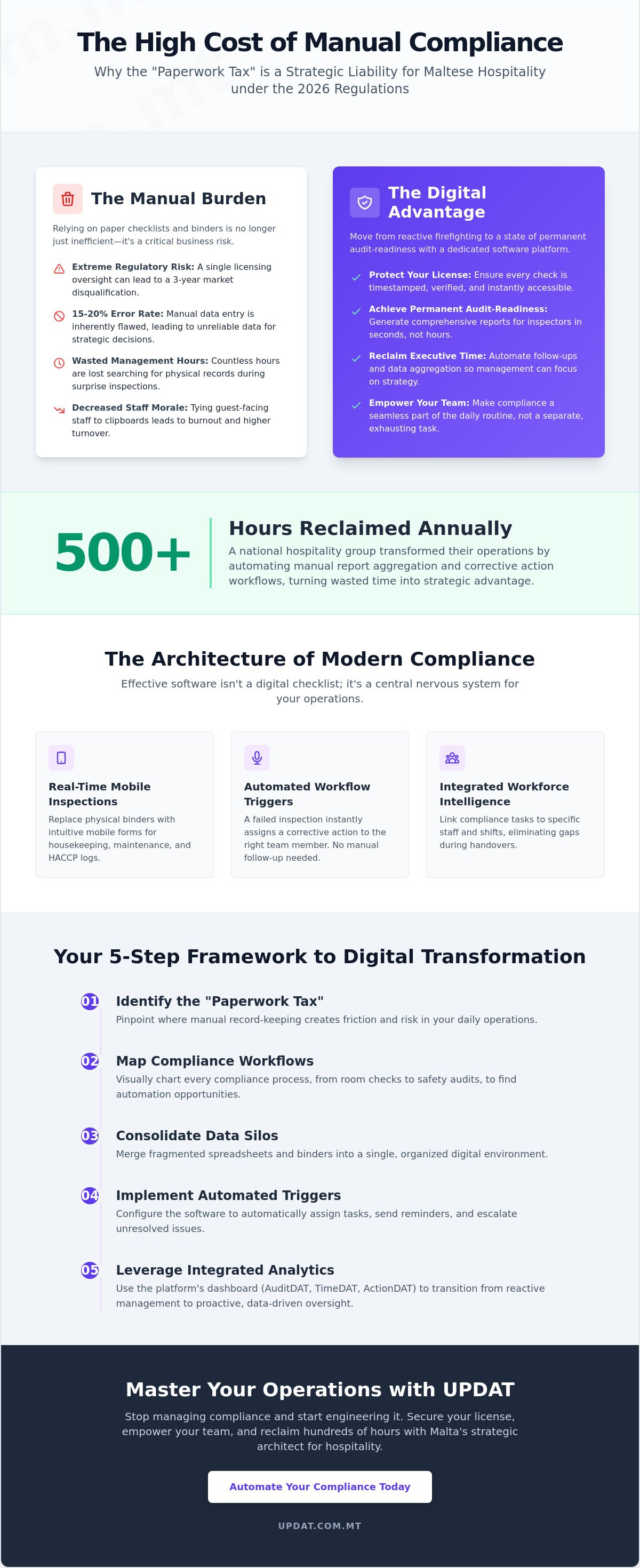
Key Takeaways
• Identify the hidden "Paperwork Tax" and understand how manual record-keeping creates friction between operational intent and recorded execution.
• Discover how hospitality compliance management software replaces physical binders with real-time mobile inspections and automated workflow triggers.
• Review how a national hospitality group reclaimed over 500 hours annually by automating their manual report aggregation and corrective actions.
• Apply a proven 5-step framework to map your compliance workflows and consolidate fragmented data silos into a single, organized environment.
• Leverage the integrated architecture of AuditDAT, TimeDAT, and ActionDAT to transition from reactive firefighting to permanent audit-readiness.
The Cost of Manual Compliance: Why Administrative Overhead Stifles Hospitality
Administrative overhead represents the friction between operational intent and recorded execution. In a busy hotel, your intent is to maintain a safe and sanitized environment. Execution is the act of cleaning or inspecting. Overhead is the manual recording of that act on a paper log that eventually disappears into a dusty binder. This "Paperwork Tax" consumes significant resources through printing costs, physical storage requirements, and the labor hours required to audit records manually. Relying on paper-based systems in 2026 is no longer just an inefficiency; it's a strategic liability that prevents scaling. Adopting a robust hospitality compliance management software removes these barriers, allowing your team to focus on the service that defines your brand.
Staff morale suffers when guest-facing employees are tethered to clipboards. High-performing teams want to focus on guest experience, not administrative drudgery. When manual recording becomes a primary part of the workday, burnout and turnover rates increase. Modern software solutions restore order by digitizing these workflows, making compliance a seamless part of the daily routine rather than a separate, exhausting task.
The Hidden Drain on Management Resources
Management time is a hotel's most valuable asset. During a surprise inspection, managers often lose hours retrieving physical records from back-office archives. Manual data entry is inherently flawed. Industry data suggests that manual compliance reporting often suffers from a 15-20% error rate. These inaccuracies aren't just clerical errors. They represent a fundamental barrier to scaling operations because management cannot trust the data used to make strategic decisions. Digital systems eliminate this uncertainty by providing a clean, searchable database of all operational actions.
Regulatory Complexity in the Maltese Market
The Maltese hospitality sector faces a more rigorous landscape following the Tourism Accommodation Regulations 2026. Maintaining high standards for health and safety compliance is now a non-negotiable requirement for license retention. "Pencil-whipping" paper logs, which is the practice of quickly ticking boxes without performing the actual check, creates massive legal liability for hotel owners. Modern Regulatory compliance standards increasingly favor digital-first reporting. This shift ensures data integrity and provides authorities with the transparency required in a modern economy. Using specialized hospitality compliance management software ensures that every check is timestamped and verified, protecting your business from the risks of fraudulent or missing documentation.
Core Features of Hospitality Compliance Management Software
Effective hospitality compliance management software isn't just a digital version of a paper checklist. It's a strategic architecture that connects every department to a central source of truth. By moving from physical binders to real-time mobile inspections, operators gain immediate visibility into their facility's status. For instance, AuditDAT doesn't just record a failed inspection; it initiates automated workflow triggers that assign corrective actions to the relevant team member instantly. This removes the need for manual follow-up emails or verbal reminders, ensuring that issues are resolved before they escalate into regulatory violations.
Integrated workforce intelligence represents the next evolution in operational control. By linking compliance checks to specific staff shifts, management can verify that critical tasks are performed by the right person at the right time. This synchronization eliminates the "administrative gap" where tasks fall through the cracks during shift handovers. When every action is logged and timestamped, the business builds a permanent, irrefutable record of its commitment to excellence.
Digitizing the Front and Back of House
Automation should extend across all operational touchpoints to be truly effective. Housekeeping room checks and maintenance walk-throughs become faster and more accurate when performed via mobile devices. In the kitchen, digital HACCP logs ensure food safety compliance without the mess and unreliability of manual logs. Utilizing professional digital audit solutions allows groups to standardize quality across multiple properties. This ensures that a high standard of service remains consistent regardless of the specific location or team on duty.
Synchronizing Compliance with Workforce Management
The most significant reduction in administrative overhead comes from the synergy between compliance audits and accurate time tracking for employees. A deep understanding of Hospitality Labor and Employment Law is essential for managing a modern workforce, and digital tools provide the data needed to remain compliant with evolving regulations. For example, TimeDAT reduces payroll friction by verifying staff location and activity during audits. When tasks are automatically assigned based on the active roster, managers spend less time on oversight and more on high-level strategy. If you're ready to modernize your operations, you can start your digital transition today.
Real-time reporting dashboards serve as the final piece of this architecture. They eliminate the need for weekly manual report compilation, providing executives with instant access to compliance data across all departments. This transparency allows for faster decision-making and ensures that the business is always ready for a surprise inspection without any last-minute panic or preparation.
Case Study: Reclaiming 500+ Hours Through Digital Transformation
A national hospitality group in Malta recently demonstrated the tangible impact of moving away from legacy systems. Managing a diverse portfolio of outlets, the group's leadership found themselves trapped in a cycle of manual report aggregation. Every month, regional managers spent 40 hours solely on collecting, verifying, and filing paper reports from physical binders. This "Paperwork Tax" created a massive lag between identifying an operational failure and implementing a fix. Decisions were being made on data that was often weeks old, leaving the business vulnerable to both service dips and regulatory scrutiny.
The implementation of a unified task and audit ecosystem changed their operational trajectory. By integrating hospitality compliance management software, the group replaced fragmented paper logs with a centralized digital architecture. This transition wasn't merely about going paperless; it was a strategic move to restore order and reclaim executive time for high-level business development. The results were immediate and measurable, leading to a 75% reduction in the total administrative time spent on compliance tracking across the entire organization.
Eliminating the Data Entry Bottleneck
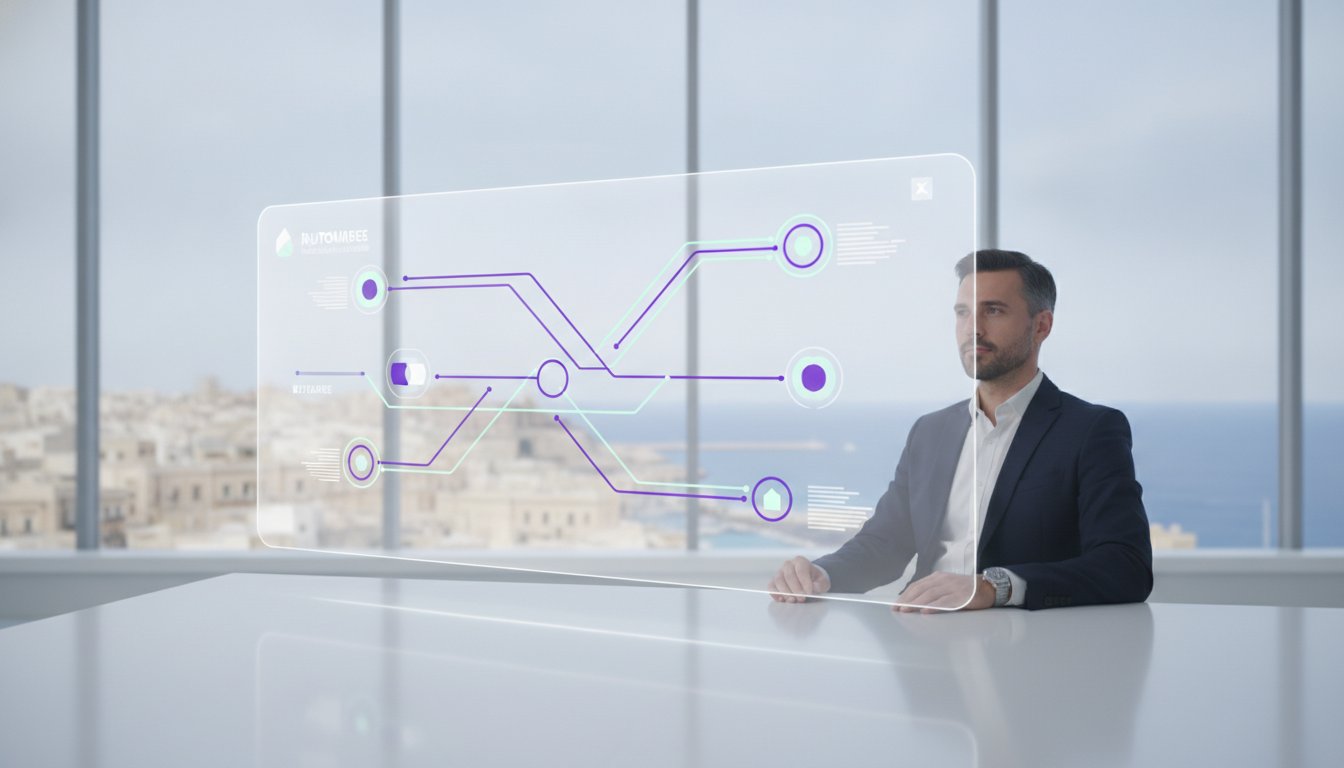
The group shifted from cumbersome paper checklists to mobile-first data capture. Staff members now log inspections and safety checks directly through their devices, providing instant visibility to the head office. This shift eliminated the data entry bottleneck that previously stalled their reporting cycle. Automated notifications replaced the need for manual follow-up emails for non-compliance issues. If a kitchen temperature check fails or a maintenance task is missed, the system triggers a corrective action instantly. This level of automation allows management to focus on guest satisfaction and service quality rather than chasing missing signatures or verifying the accuracy of handwritten logs.
Financial Impact of Operational Precision
Precision in data recording leads to direct financial gains. By automating the timesheet approval workflow through TimeDAT, the group significantly reduced labor costs associated with payroll disputes and manual verification. Real-time visibility also acted as a critical shield against regulatory penalties. Under the Tourism Accommodation Regulations 2026, missing or inaccurate compliance logs can lead to severe consequences, including the potential for license disqualification. The ROI of hospitality software is most evident in the 500+ executive hours reclaimed annually. With the administrative burden lifted, leadership can finally prioritize strategic expansion and brand consistency over back-office paperwork.
A 5-Step Framework for Reducing Administrative Overhead
Transitioning from manual paper systems to a digital architecture requires a structured approach. It's not enough to simply buy a tool; you must redesign your workflows to prioritize speed and accuracy. Implementing a professional hospitality compliance management software provides the foundation for this transformation. By following a clear, five-step framework, you can systematically remove the friction that slows down your operations and inflates your back-office costs.
Step 1: Map the Compliance Workflow.
Trace every safety check and audit from the kitchen floor to the executive boardroom. Identify every manual touchpoint where data is delayed, lost, or requires physical retrieval.
Step 2: Consolidate Data Silos.
Move all safety, quality, and staff data into a single digital environment. This removes the friction of searching through disparate physical binders and ensures a single source of truth.
Step 3: Deploy Mobile-First Audits.
Capture data at the source using mobile devices. This eliminates the need for double-entry and ensures that management has access to real-time information.
Step 4: Automate the Reporting Cycle.
Schedule the instant delivery of compliance summaries to stakeholders. Management should receive actionable insights automatically, not spend hours compiling them manually.
Step 5: Refine via Analytics.
Use trend data to identify recurring operational failures. This allows you to shift from reacting to problems to preventing them through data-driven process refinement.
Overcoming Implementation Resistance
Success depends on high adoption rates among your staff. Focus on UI/UX simplicity to ensure that non-technical team members feel confident using the system. It's vital to frame the software as a tool that makes their job easier by removing the burden of paperwork. When staff see that digital logging is faster than manual entry, resistance fades. Ongoing training plays a key role in ensuring these administrative savings remain consistent over the long term.
Choosing Between Off-the-Shelf and Bespoke Solutions
Standard platforms like AuditDAT provide powerful, ready-to-use features for most hospitality needs. However, complex multi-site operations with unique architectural requirements may benefit from custom software development in Malta. Prioritize integration capabilities to ensure a no-nonsense data flow between your compliance, workforce, and payroll systems. If you're ready to remove complexity and restore order to your business, you can modernize your compliance workflow today.
Why UPDAT is the Strategic Architect for Maltese Hospitality
UPDAT Technologies Ltd. acts as a strategic architect for the Maltese hospitality sector. We don't just provide software; we restore operational order. By integrating the specialized power of AuditDAT, TimeDAT, and ActionDAT, UPDAT offers a comprehensive ecosystem that addresses every facet of compliance and workforce management. This isn't about mere digital tools. It's about empowering leaders to stop managing paperwork and start leading their teams with absolute confidence. Our approach focuses on the removal of administrative friction, allowing you to master your operational environment through logic and precision.
Local regulatory expertise remains our core foundation. Navigating the Tourism Accommodation Regulations 2026 requires more than a generic checklist. It demands a deep understanding of the Maltese landscape and the specific requirements set by national authorities. Our hospitality compliance management software is built with these nuances in mind, ensuring your business remains permanently audit-ready. We provide the steady, reliable foundation needed for long-term growth in a market that no longer tolerates manual inefficiency.
The Result-Oriented Advantage
Removing complexity is the first step toward sustainable growth. Standardized, automated workflows ensure that every task, from a routine fire safety check to a complex kitchen audit, is performed with precision. This architecture scales effortlessly. It provides the same level of rigorous control to a boutique heritage hotel in any location across the islands as it does to a large-scale national resort. Having a single source of truth for all operations provides a sense of calm authority. It eliminates guesswork and allows you to make strategic decisions based on verified, real-time data rather than outdated paper logs.
Master Your Operational Environment
Mastering your environment requires a deliberate shift toward operational excellence. When your compliance is automated, you reclaim the mental bandwidth needed to focus on guest experience and brand expansion. The transition from a manual burden to a streamlined engine is a strategic choice that defines the industry leaders of 2026. You can register for the platform today to begin your digital transformation. To see the impact of these tools firsthand, request a demo to see AuditDAT in action and discover how a unified digital architecture can secure the future of your business.
Secure Your Operational Future and Restore Order
Transitioning from manual binders to a digital architecture is the most effective lever for reducing administrative overhead. You've seen how national hospitality groups reclaim hundreds of hours by eliminating the "Paperwork Tax" through automation. By leveraging specialized modules for HACCP, health and safety, and workforce management, you transform compliance from a manual burden into a streamlined engine for growth.
Implementing a professional hospitality compliance management software provides the precision needed to navigate the Maltese regulatory landscape with ease. UPDAT delivers the national support and local expertise required to ensure your business remains permanently audit-ready. It's time to move beyond the friction of manual data entry and embrace a system designed for high-level efficiency. This shift doesn't just save time; it empowers you to lead with the calm authority that comes from total organization.
Register now to start reducing your administrative overhead and reclaim your executive time. Secure your operational future and begin your journey toward true operational excellence today. We're ready to help you master your environment.
Frequently Asked Questions
How does hospitality compliance software actually reduce administrative overhead?
It reduces overhead by automating the collection, verification, and storage of operational data. Instead of manually auditing physical binders, management receives automated summaries and real-time alerts for non-compliance. This eliminates the "Paperwork Tax" by removing the need for physical filing and manual report aggregation.
What is the most common source of administrative friction in Maltese hotels?
The reliance on manual paper-based checklists and physical record storage is the primary source of friction. These systems require significant labor hours for physical retrieval during inspections and often lead to data gaps. Moving to a digital architecture restores order and ensures that records are instantly accessible for regulatory authorities.
Can digital audits help with HACCP and food safety inspections?
Yes, digital audits provide timestamped and verifiable logs for critical kitchen checks and hygiene standards. AuditDAT includes specialized modules for HACCP that ensure your food safety records are always accurate and ready for inspection. This level of precision protects your license and eliminates the risks associated with handwritten logs.
Is it difficult to train hospitality staff on new compliance software?
No, provided the software is designed with mobile-first UI/UX simplicity. Tools like AuditDAT are built for non-technical staff to use during their normal routines, making it faster than teaching complex manual filing systems. Effective training focuses on how the tool makes the staff's daily tasks easier and more organized.
How much time can we expect to save by automating our reporting?
National hospitality groups in Malta have reported a 75% reduction in the total time spent on compliance tracking. This often translates to reclaiming 40 or more executive hours per month by eliminating manual data entry and report compilation. These reclaimed hours allow leadership to focus on guest satisfaction and strategic growth.
Does hospitality software integrate with existing payroll systems?
Yes, integration is a core feature of a modern operational ecosystem. Tools like TimeDAT verify staff activity and location during compliance audits, providing clean data that flows directly into payroll workflows. This synchronization reduces payroll friction and eliminates disputes by providing an irrefutable record of worked hours and completed tasks.
What is the difference between a generic audit tool and a hospitality-specific one?
A dedicated hospitality compliance management software includes specialized logic for HACCP, housekeeping, and local Tourism Accommodation Regulations. Generic tools lack these industry-specific modules and often require expensive customization to meet the unique needs of a hotel environment. Specialized software provides a steady, reliable foundation from day one.
How do I conduct an audit of my current administrative costs?
Start by mapping every manual touchpoint in your compliance workflow, from the floor to the boardroom. Track the specific hours your team spends printing checklists, filing reports, and chasing missing signatures over a standard 30 day period. This data identifies your baseline administrative overhead and highlights the most significant bottlenecks in your current operation.



%201.svg)
