
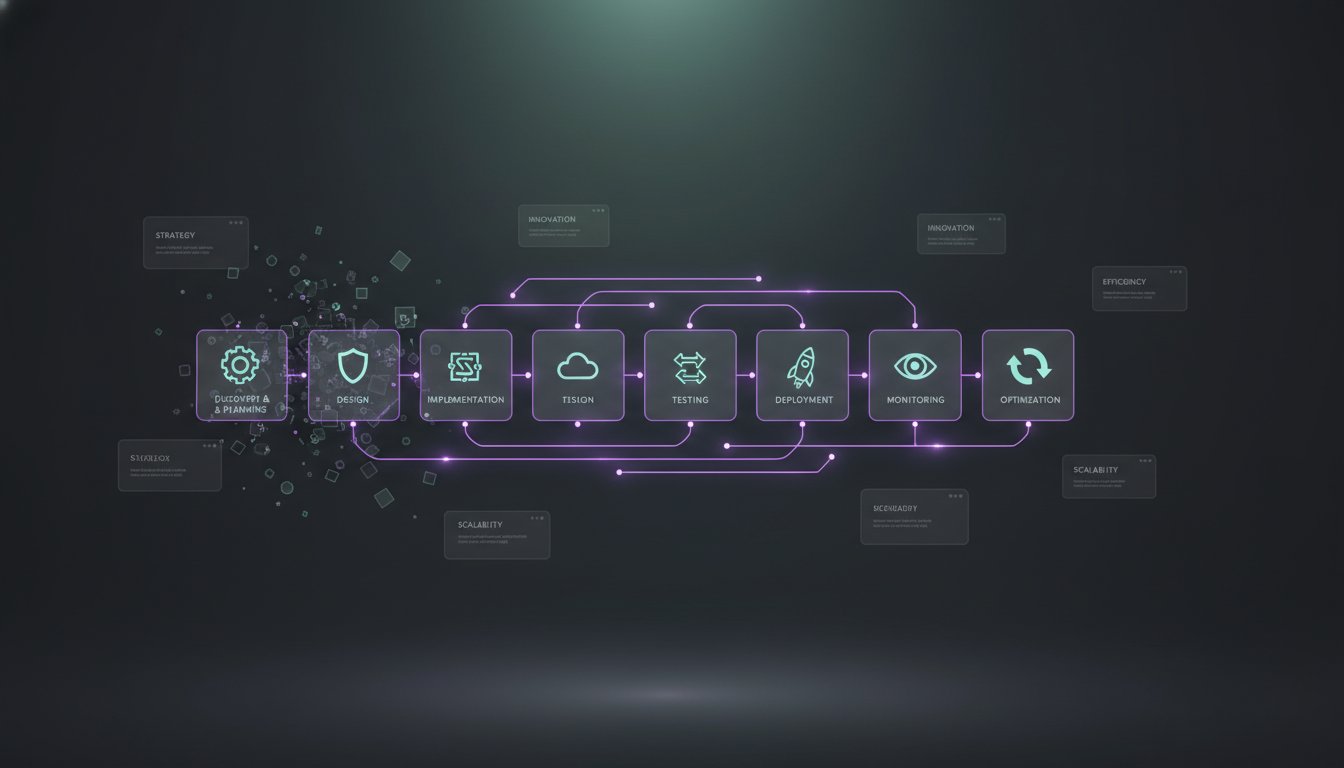
Your software architecture is your business architecture. Most organizations treat the custom software development lifecycle as a technical checklist, yet it's actually a strategic blueprint for restoring operational order. You've likely experienced the drag of inefficient manual workflows or the limitations of generic platforms that don't respect your specific business rules. It's common to fear that a high-cost digital project might fail to deliver the precision your team needs to scale.
Mastering these development phases allows you to transform your operations with absolute clarity. This guide provides a clear roadmap for digital transformation, ensuring your systems reduce administrative overhead instead of adding to it. We'll explore how to navigate modern requirements, including the 2026 transparency standards for AI and the shift toward cloud-native platforms which Gartner predicts will host 95% of new workloads this year. You'll learn how to build bespoke software development solutions that grow alongside your business while maintaining a steady, reliable foundation.
Key Takeaways
• Understand why the custom software development lifecycle serves as a strategic framework to restore order rather than just a technical checklist.
• Discover how bespoke software development eliminates the friction of forcing your unique business rules into generic, off-the-shelf platforms.
• Follow the seven essential phases of development to move from initial consultation to a scalable and high-performance digital architecture.
• Learn to embed security and regulatory compliance directly into your software foundation to ensure long-term stability and legal adherence.
• Identify how a structured lifecycle reduces administrative overhead and empowers your team to master their own operational environment.
What is the Custom Software Development Lifecycle (CSDLC)?
The custom software development lifecycle is not a technical manual or a simple coding schedule. It is a strategic framework designed to build, deploy, and maintain bespoke solutions that mirror your unique business logic. While off-the-shelf products require you to bend your operations to fit rigid, generic rules, a custom approach ensures the technology adapts to you. This process replaces manual complexity with digital order, acting as the structural foundation for your entire organization. Think of it as the digital architecture of a modern business; it provides the stability needed for rapid scaling and long-term efficiency.
A disciplined Systems development life cycle focuses on the removal of friction. By following a structured path, you move away from fragmented workflows toward a unified system that works with precision. This isn't just about writing code. It's about engineering a strategic asset that restores order to your daily operations. When you master the custom software development lifecycle, you gain the keys to your own operational environment, ensuring that every digital tool you use serves a specific, documented purpose.
The Core Purpose of a Structured Lifecycle
A structured lifecycle prioritizes predictability. By breaking development into modular phases, you minimize project risk and prevent the high-cost failures often associated with unplanned software projects. Each phase acts as a checkpoint for quality and alignment. This ensures that every line of code serves a specific operational goal rather than just adding "features" for the sake of complexity. This disciplined rhythm creates technical stability. It allows your business to grow without the fear of outgrowing its tools, as the software is built to be as fluid and adaptable as the market itself.
Why Business Leaders Must Understand the Process
Modern leadership requires a shift from "buying a tool" to "building a strategic asset." When you understand the development process, you bridge the gap between your high-level vision and technical execution. This alignment is critical for achieving operational excellence. A well-defined process creates immediate accountability and reduces administrative overhead by eliminating the need for constant rework. It ensures that your investment delivers tangible value, transforming software from a cost center into a powerful engine for growth. By engaging with the lifecycle, you ensure that the final product isn't just functional, it's transformative.
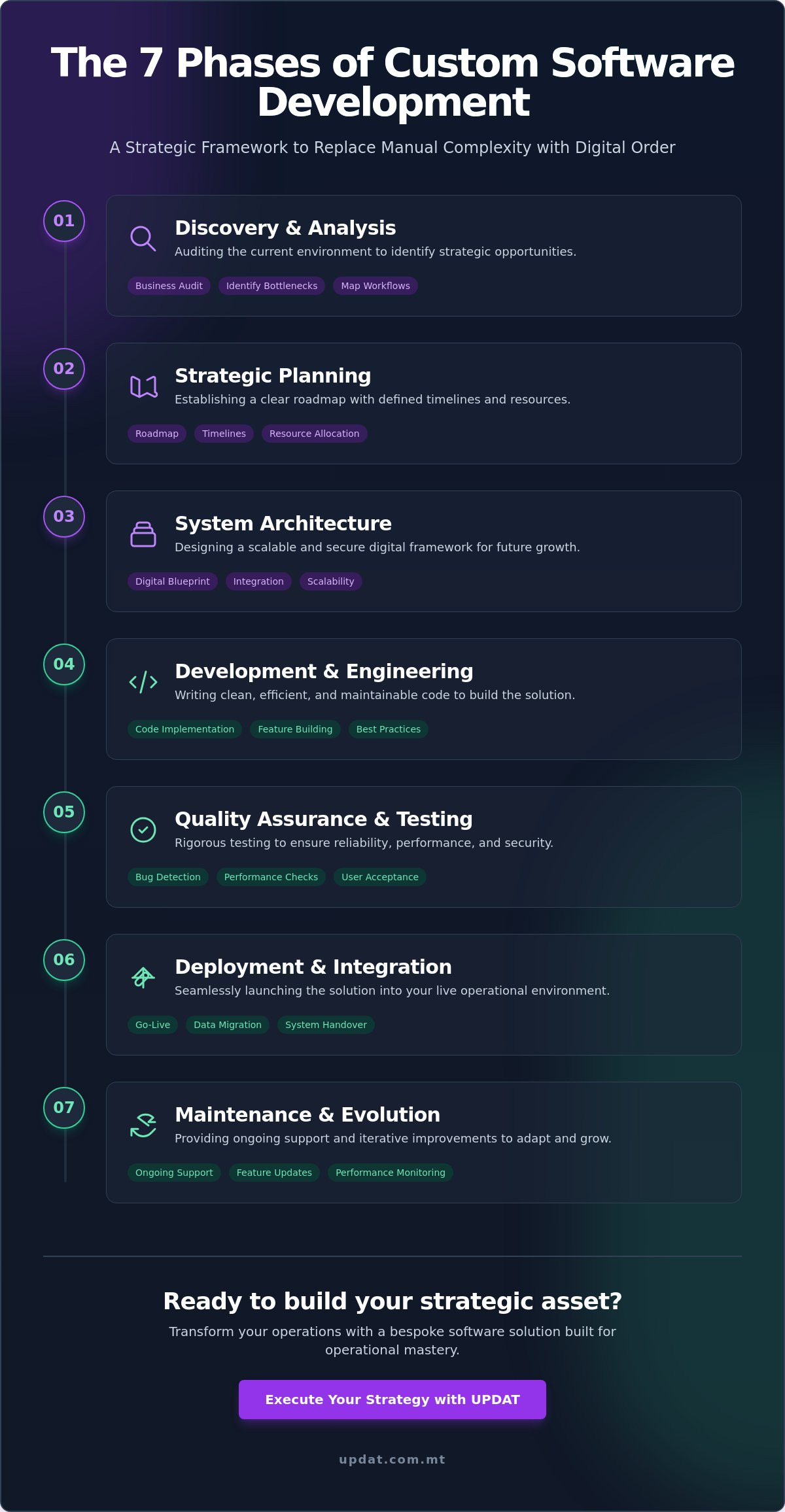
The 7 Essential Phases of a Successful Development Lifecycle
Navigating the custom software development lifecycle requires more than technical skill; it demands a no-nonsense commitment to operational precision. This journey is a strategic investment in order. It moves your business away from fragmented workarounds toward a unified, high-performance environment. Unlike static off-the-shelf products, this lifecycle is iterative. It allows for constant adaptation as your market evolves. Meticulous documentation at every stage ensures your digital assets remain future-proof, manageable, and fully transparent for your internal teams.
A disciplined approach ensures that your software isn't just a collection of features, but a cohesive system that drives results. By following a structured path, you eliminate the ambiguity that often leads to project delays and budget overruns. This process provides a steady, reliable foundation for long-term growth, allowing you to focus on your core business while your technology works silently in the background to maintain order.
Phase 1 to 3: Discovery, Planning, and Architecture
Success begins with a comprehensive audit of your current environment. The Discovery phase identifies manual bottlenecks and digitization opportunities that generic tools often ignore. It is a business audit first and a technical requirement session second. Planning follows, establishing a clear roadmap with defined timelines and resource allocation for total clarity. This stage provides the strategic direction needed to move forward without hesitation. Finally, the Architecture phase designs the digital framework. This stage ensures your new solution integrates seamlessly with existing systems, adhering to the foundational principles of a professional software development lifecycle (SDLC). Building a solid core now prevents expensive rework later.
Phase 4 to 7: Development, Testing, Deployment, and Evolution
Development is the phase of active movement. Functional code is written in disciplined sprints, allowing for regular feedback and rapid adjustments. This modular approach ensures that the project stays aligned with your operational goals. Once the build is complete, the focus shifts to Testing. Rigorous quality assurance ensures reliability and performance under real-world conditions. We don't just check if it works; we check if it excels under pressure. Deployment marks the moment of transition, but it isn't the finish line. The Evolution phase is where true mastery happens. Software must scale alongside your growth to remain effective. Industry standards indicate that annual maintenance and updates typically require 15% to 20% of the initial development cost, reflecting the necessity of continuous refinement. Choosing bespoke software development ensures you have a system that lives and grows with your organization. You can begin your operational transformation by formalizing your requirements today.
CSDLC vs. Off-the-Shelf Software: Building for Operational Mastery
The temptation to purchase a ready-made platform is understandable. Off-the-shelf software promises immediate deployment and lower upfront costs. However, this convenience often comes at the expense of your operational integrity. Generic tools are built for the average user, not for your specific business logic. This forces your team to bend their proven workflows to fit the rigid constraints of a pre-packaged tool. When you follow a dedicated custom software development lifecycle, you reverse this dynamic. You build a system that adapts to your business, ensuring that your digital tools serve as a competitive advantage rather than a restrictive bottleneck.
Choosing between these paths requires a clear understanding of your long-term goals. If your operations rely on unique rules or high-precision data handling, a generic solution will eventually fail you. You can explore the specific criteria for this decision in our guide on when to build custom software. By prioritizing a bespoke approach, you ensure that every phase of the development process is aligned with the restoration of order across your entire organization.
The Hidden Costs of Generic Solutions
Generic software often carries invisible burdens that erode your efficiency over time. The most significant of these is administrative overhead. When a tool lacks a specific feature, your staff must invent manual "workarounds" to bridge the gap. These fragmented processes create data silos and increase the risk of human error. Integration is another common pain point. Moving legacy data into a rigid third-party platform is frequently complex and expensive. Furthermore, you lack ownership over the software roadmap. If the provider decides to retire a feature your team depends on, or changes their interface entirely, your operations are left vulnerable. You are a passenger on someone else's technical journey, with no control over the destination or the speed of progress.
The Long-Term Value of Bespoke Architecture
Bespoke architecture provides total control over the user experience for both your staff and your clients. This precision allows you to automate unique business rules that your competitors simply cannot match. While 75% of new enterprise applications are expected to utilize low-code or no-code technologies by 2026, high-stakes operations still require the deep customization only found in the custom software development lifecycle. Bespoke systems allow for seamless scaling without the friction of escalating per-user licensing fees. As your headcount grows, your software costs remain predictable. This financial stability, combined with the ability to integrate with any internal system, transforms your software into a permanent strategic asset that supports your growth rather than taxing it.
Integrating Compliance and Security into the Software Lifecycle
Security is never a final layer or an afterthought. Within a professional custom software development lifecycle, security serves as the foundational architecture. You don't just build for functionality; you build for resilience. For businesses in Malta, this means moving beyond basic firewalls to a system where protection is baked into every sprint. Complexity is the primary enemy of security. By following a structured process, you replace fragmented manual checks with automated, digital safeguards that restore order to your risk management strategy.
Digital audits and automated reporting are essential for modern operational mastery. These tools reduce legal risk by providing a clear, immutable trail of data. Solutions like AuditDAT demonstrate how built-in compliance mastery transforms a burden into a strategic asset. Instead of fearing a regulatory inspection, you approach it with the calm authority of someone who owns a fully transparent digital environment. This shift allows your team to focus on growth while the software maintains the integrity of your digital perimeter.
Security-First Development (DevSecOps)
Adopting a DevSecOps approach means integrating vulnerability scanning and data encryption at the architecture stage. You identify threats before the first line of code is even written. This is critical for maintaining data integrity in high-stakes sectors like manufacturing and hospitality. By aligning with the OWASP Top 10 2025 standards, your software remains protected against the most current cyber threats. Regular system updates are not just maintenance; they're active movements to secure your business against evolving risks. This disciplined focus ensures your software remains a steady foundation rather than a point of failure.
Meeting Regulatory Standards in Malta
The Maltese business environment requires strict adherence to diverse legal frameworks. A bespoke custom software development lifecycle allows you to meet GDPR, HACCP, and GxP requirements natively. As of June 2026, companies must also comply with specific transparency requirements for high-risk AI systems under the EU AI Act. Custom solutions facilitate Governance, Risk, and Compliance by automating the documentation of training data and decision logic. Partnering with a local strategic architect ensures these national and European regulatory nuances are respected from day one. You gain a tool that doesn't just work; it complies by design. You can start building your secure digital architecture to ensure your operations remain both efficient and legally sound.
Executing Your Bespoke Strategy with UPDAT Technologies Ltd.
Success in digital transformation requires more than technical ability; it demands a partnership with a strategic architect who understands your operational environment. UPDAT Technologies Ltd. specializes in guiding businesses through the full custom software development lifecycle to replace fragmented, paper-based chaos with digital precision. Based in Malta, we provide the localized expertise necessary to navigate both technical and regulatory hurdles. This execution phase is where your vision is translated into a high-performance system that restores order to your daily workflows.
The UPDAT Approach to Custom Solutions
Our methodology centers on results-oriented development that removes unnecessary business complexity. We maintain a sense of calm authority throughout the project, acting as a steady foundation for your long-term growth. Our existing platforms, such as TimeDAT, represent the practical application of this lifecycle. They show how bespoke logic can solve specific industry pain points while maintaining a professional and intuitive user experience. When you work with UPDAT Technologies Ltd., you aren't just getting a developer; you're gaining a strategic partner committed to your operational mastery.
Begin Your Digital Transformation
Every inefficient workflow is a signal that your current tools are failing to bridge the cracks in your operations. These gaps lead to administrative overhead and lost productivity that generic software simply cannot fix. By engaging with a disciplined custom software development lifecycle, you ensure that your new digital architecture is built for stability and precision. Choosing a partner like UPDAT Technologies Ltd. ensures that your investment is protected by a team that values logic and order above all else. You can book a demo to see how we build for excellence and start your journey toward a more efficient, standardized business environment.
Reclaim Your Operational Order
Mastery over your operational environment is no longer a luxury; it's a requirement for those who refuse to be limited by generic software. By embracing the custom software development lifecycle, you've moved from being a passive user of technology to a strategic architect of your own success. You now have the roadmap to eliminate manual drag and replace it with a system that respects your unique business rules. This shift from complexity to clarity provides the foundation for long-term technical stability.
UPDAT Technologies Ltd. stands ready to execute this vision with you. We bring a no-nonsense approach to bespoke architecture, ensuring that every phase of development delivers the stability and clarity your business deserves. Our expertise in the Maltese regulatory landscape and our track record in sectors like hospitality ensure your digital transformation is both secure and legally sound. It's time to bridge the gaps in your current systems and restore total order to your operations.
Request a Strategic Consultation and Demo to see how we build for excellence. Your transition to a more efficient, high-performance future begins today.
Frequently Asked Questions
What is the custom software development lifecycle (CSDLC)?
The custom software development lifecycle is a strategic framework designed to build and maintain bespoke solutions that mirror your unique business logic. It replaces manual complexity with digital order by providing a clear, modular roadmap for project execution. Unlike generic software, this lifecycle ensures the technology adapts to your workflows rather than forcing you to adapt to a tool. It acts as the digital architecture of your modern enterprise.
How long does a typical custom software development project take?
Timelines vary based on the complexity of the operational environment and the specific features required. A basic application might reach deployment in a few months, while complex enterprise platforms require a longer, more detailed commitment. The planning phase of the custom software development lifecycle establishes clear milestones to ensure predictability. This steady rhythm allows your business to maintain its daily momentum while the new digital foundation is carefully constructed.
Is custom software development better than buying a SaaS subscription?
Custom development is superior when your business relies on unique rules that generic SaaS platforms cannot accommodate. While subscriptions offer immediate access, they often force you into inefficient workarounds and lack long-term ownership. Bespoke architecture provides total control over the user experience and roadmap. This eliminates per-user licensing friction and ensures your digital tools remain a permanent strategic asset rather than a recurring administrative tax.
What are the most critical phases of the software development lifecycle?
Discovery and Architecture are the most critical phases for ensuring long-term project success. The Discovery phase identifies manual bottlenecks and digitization opportunities that generic tools often ignore. Architecture creates the digital framework that ensures seamless integration with your existing systems. These foundational steps prevent expensive rework and align technical execution with your high-level vision. Without these phases, even the most functional code can fail to deliver tangible operational value.
How much does it cost to build custom software in Malta?
Project costs are determined by the scope of the business rules and the complexity of the digital architecture. While basic applications require a smaller initial investment, large-scale enterprise platforms for midsize organizations involve a more comprehensive budget. It's standard to allocate an additional 15% to 20% of the initial cost for annual maintenance and evolution. This investment ensures your software remains a high-performance asset that scales alongside your growth.
What is the role of the business owner during the SDLC?
The business owner acts as the strategic visionary who defines the operational goals and business rules. Your primary role is to ensure the development team understands the nuances of your workflows and the specific pain points that need resolution. Active participation during the discovery and testing phases is essential for aligning the technical output with your organizational vision. This collaboration ensures the final product restores order and delivers the precision your team needs to scale.
How do you ensure security during the development process?
Security is integrated into the foundation of the lifecycle through a DevSecOps approach. This involves vulnerability scanning and data encryption at the architecture stage rather than as an afterthought. By adhering to the OWASP Top 10 2025 standards, your software remains protected against modern cyber threats. Regular updates and rigorous quality assurance further secure your digital perimeter. This disciplined focus ensures your data remains immutable and your operations stay protected from external risks.
Can custom software be integrated with my existing legacy systems?
Seamless integration with legacy systems is a primary advantage of the bespoke development process. Custom solutions are designed to act as the connective tissue for your organization, bridging the gaps between fragmented data silos. This removes the friction of manual data entry and ensures a fluid transition from old processes to new digital environments. By respecting your existing architecture, bespoke software restores order without requiring a complete overhaul of your proven operational foundations.




%201.svg)
