
With 68.3% of Maltese enterprises now leveraging AI and cloud technologies, the era of the paper clipboard is officially over. As industrial production faces new pressures in 2026, implementing the right manufacturing compliance software malta has become the difference between operational stagnation and strategic growth. You've likely felt the frustration of chasing down inaccurate data from manual checklists or the looming anxiety of a surprise ISO or GxP audit. It's exhausting to spend hours on manual reporting when your primary focus should be on the plant floor.
This guide shows you exactly how to transition from those tedious manual processes to automated digital systems that ensure zero-error quality control. We'll explore how real-time visibility and automated audit reports can eliminate administrative overhead while keeping you ahead of new 2026 regulations, such as the updated safety standards for hazardous chemicals under Legal Notice 165. You'll learn to master your operational environment by replacing complexity with a steady, reliable foundation for long-term growth. We'll examine the specific steps required to digitize your audits and maintain continuous compliance without interrupting your production schedule.
Key Takeaways
• Transition from manual checklists to automated digital systems to eliminate data inaccuracies and streamline your quality control processes.
• Identify the core technical requirements for manufacturing compliance software malta to ensure your facility aligns with MCCAA and EU regulatory standards.
• Map your existing paper-based architecture into a digital framework to pinpoint critical data leaks and improve operational transparency.
• Apply proven strategies to manage software rollouts effectively without disrupting production schedules or triggering employee resistance.
• Utilize AuditDAT as a strategic architect to automate your reporting and gain real-time visibility into your plant's compliance status.
The Landscape of Manufacturing Compliance in Malta (2026)
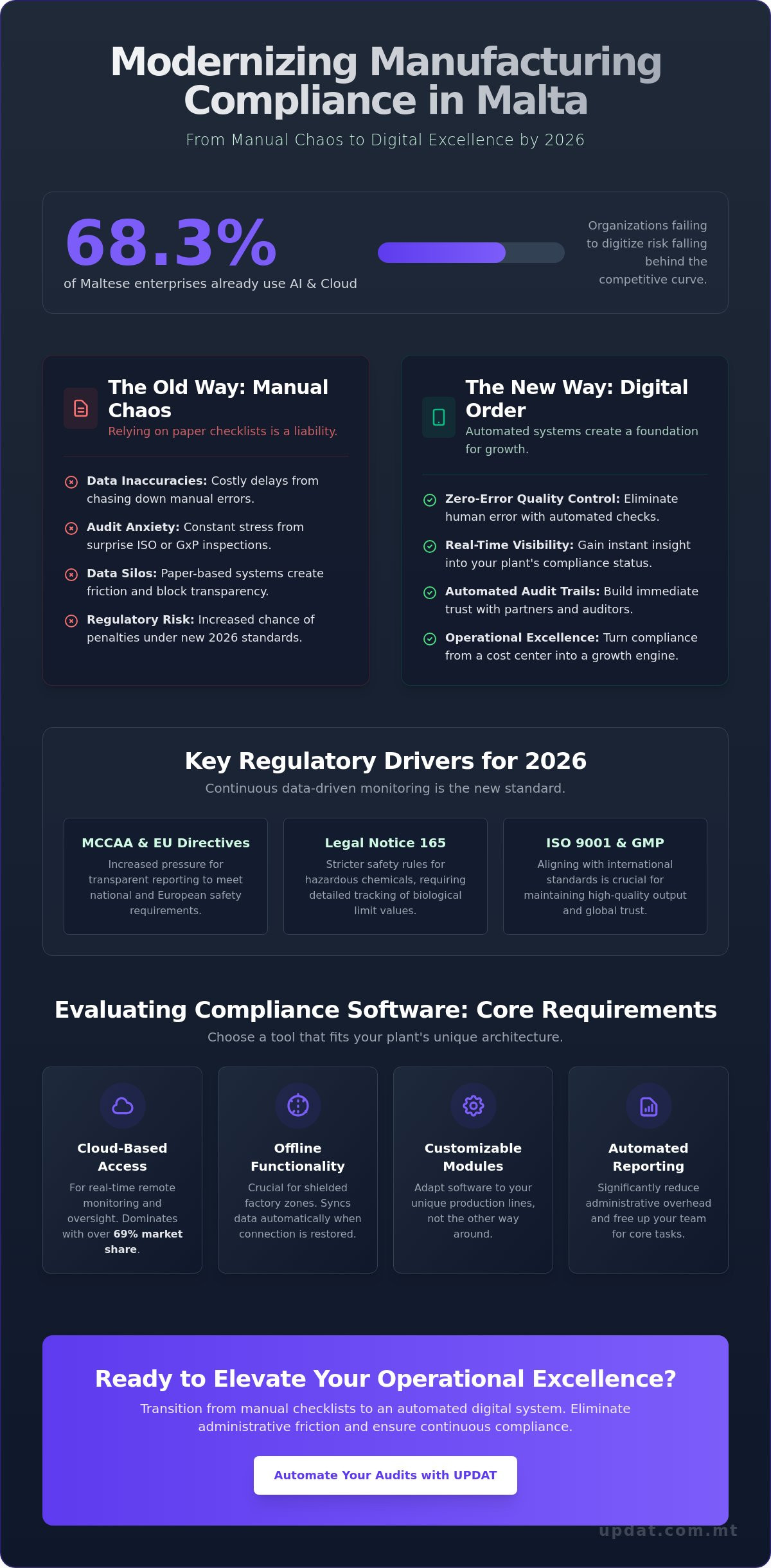
The industrial sector in Malta is undergoing a fundamental transformation. Regulatory oversight is shifting from periodic inspections to continuous, data-driven monitoring. Locally, the Malta Competition and Consumer Affairs Authority (MCCAA) oversees these standards, ensuring that local production meets both national and European safety requirements. Relying on manual, paper-based audit systems has become a significant liability. These outdated methods create data silos and increase the risk of human error, which can lead to costly delays or regulatory penalties. Modern operations now require the precision of Good Manufacturing Practice (GMP) to maintain high-quality output and align with international standards like ISO 9001.
Efficiency is no longer optional. With manufacturing output declining by 4.7% in March 2026, facilities must optimize every process to remain competitive. Digital systems provide the clarity needed to identify bottlenecks and ensure every resource is used effectively. Choosing the right manufacturing compliance software malta is the first step toward a paperless plant floor that commands respect from global auditors.
Regulatory Drivers for Maltese Manufacturers
EU-wide supply chain and quality directives are forcing local plants to adopt more transparent reporting methods. Exporters face increasing pressure to provide real-time data to international partners. The cost of manual errors in regulatory reporting is climbing. For instance, Legal Notice 165 of 2026 introduces stricter safety requirements for hazardous chemicals. Tracking biological limit values, such as the new lead exposure limits, requires a level of detail that paper checklists simply cannot provide. Integrating robust manufacturing compliance software malta allows facilities to capture this data instantly, ensuring they remain compliant as standards evolve. Organizations that fail to digitize risk falling behind the 68.3% of Maltese enterprises already leveraging AI and cloud technologies.
The Move Toward Operational Excellence
True operational success requires moving beyond "check-box compliance." Proactive quality management treats regulatory requirements as a baseline for growth rather than a hurdle to clear. Digital audit trails build immediate trust with international partners by proving consistency and reliability. This transition transforms compliance from a cost center into a strategic engine for operational excellence solutions. By digitizing workflows, manufacturers eliminate the administrative friction that slows down production. Standardized workflows ensure that every batch meets the highest standards, protecting both the brand's reputation and its bottom line. Order replaces chaos when data is centralized and accessible.
How to Evaluate Manufacturing Compliance Software for Your Facility
Selecting the right manufacturing compliance software malta is a strategic decision that goes beyond simple digital checklists. It requires a tool that fits the unique physical and digital architecture of your plant. For many Maltese SMEs, the choice between cloud-based and on-premise solutions depends on existing IT infrastructure and the need for rapid deployment. Cloud solutions currently dominate the market, holding over 69% of the deployment share, as they offer lower maintenance costs and allow for remote oversight from any location.
A manufacturing-ready tool must handle the specific challenges of the industrial environment. Prioritize these core technical requirements during your evaluation:
• Cloud-based accessibility for real-time remote monitoring.
• Offline functionality for shielded factory zones or basements with poor connectivity.
• Customizable modules that adapt to your unique production lines rather than forcing you into rigid templates.
• Automated reporting features to significantly reduce administrative overhead.
Verify if the system includes robust offline capabilities. Large industrial units or shielded production zones often have unreliable Wi-Fi. You need a system that allows auditors to complete their work without interruption, syncing data automatically once a connection is restored. Beyond connectivity, the right manufacturing compliance software malta should include integrated task tracking. This ensures every corrective action is assigned to a specific owner and tracked until resolution, turning a standard audit into a loop of continuous improvement.
Critical Features for Quality Assurance
Effective quality control relies on indisputable evidence. High-quality tools incorporate photo evidence and automatic time-stamping into every digital audit. This creates a transparent record that aligns with EU Good Manufacturing Practice (GMP) standards. Automated report generation removes the burden of manual data entry, saving your team hundreds of administrative hours annually. For those in highly regulated sectors, these features are the foundation of GxP compliance and quality assurance. Precision in data collection prevents the small errors that lead to audit failure.
Scalability and Local Support
Production lines evolve, and your software should scale alongside them without requiring a total system overhaul. Maltese businesses benefit significantly from local expertise during this transition. A local partner understands the specific regulatory landscape and can offer rapid on-site implementation and training. Consider how a platform like AuditDAT provides the flexibility needed for diverse manufacturing scales, from specialized boutique units to large industrial exporters. Experts who understand the Maltese industrial context can help you map your existing paper checklists into a digital architecture that actually works on the shop floor. If you're ready to modernize your operations, you can start your digital transition today.
Step-by-Step: Implementing Digital Quality Control Workflows
Implementation begins with a rigorous audit of your current manual environment. You must pinpoint exactly where data leaks occur. Transcription errors, illegible handwriting, and misplaced clipboards are the primary culprits that compromise your data integrity. Transitioning to manufacturing compliance software malta allows you to seal these leaks by capturing data directly at the source. This shifts the burden of proof from a pile of papers to a secure, digital record that's instantly accessible.
Once you've identified your pain points, map your existing paper checklists into a digital architecture. Don't simply copy the old format. Use this opportunity to streamline your workflows. Replace open-ended notes with standardized, binary questions where possible. This ensures consistency across different shifts and operators. A successful digital workflow transition is the key to 2026 manufacturing success, providing the structural stability needed for long-term growth.
Mapping Manual Processes to Digital Tools
Focus your initial efforts on high-risk areas of the production line. These zones require the most frequent monitoring and are often the focus of regulatory scrutiny. When mapping your digital architecture, align your questions with Malta's Good Manufacturing Practice Guidelines to ensure every data point serves a regulatory purpose. This precision eliminates unnecessary administrative work while guaranteeing that you capture all essential safety and quality metrics. Training staff on a mobile-first interface ensures they can complete these checks without leaving their stations.
Automating the Inspection Cycle
Order is maintained through consistency. Configure your system to run on automated schedules for recurring inspections and safety checks. Set up immediate triggers for automatic alerts. If an inspection is missed or a critical failure occurs, the right people are notified instantly. This proactive approach prevents small issues from becoming systemic failures. Use data dashboards to spot trends in quality failures before they impact your yield. For a deeper look at this process, consult our guide on how to transition to digital audits. It's about moving from reactive fixes to a steady state of operational mastery.
Finally, establish a closed-loop system for resolving non-conformities. When a failure is logged, the software should automatically generate a corrective action task. Tools like ActionDAT ensure these tasks are tracked until they're fully resolved. This creates an unbreakable chain of accountability. High adoption rates follow when the system is easy to use and provides immediate utility to the operators on the floor. By removing complexity, you empower your team to maintain the highest standards of quality control without the administrative drag of manual reporting.
Overcoming Common Implementation Hurdles in Production
Production managers often view digital transformation with a mixture of hope and hesitation. The primary fear is production downtime. You can't afford to halt a line for days just to install a new reporting system. Resistance often stems from the perceived complexity of new manufacturing compliance software malta, especially if previous digital attempts felt clunky or unintuitive. Change is difficult when it feels like an added burden rather than a tool for empowerment. To succeed, you must demonstrate immediate utility and clear movement toward a more organized plant floor.
Shared devices are common on the factory floor, which raises concerns about data integrity and security. You need a system where individual accountability is baked into the architecture. Modern manufacturing compliance software malta must facilitate this transition by allowing for a hybrid period where digital records gradually replace paper logs. This overlap period ensures that no data is lost while your team builds confidence in the new digital workflow. Order follows clarity; once the team sees the reduction in manual reporting, resistance typically dissolves.
Minimising Operational Disruption
Phased rollouts are the most effective way to manage a digital shift. Start with a single production line or a specific high-risk zone. This contained approach allows you to refine your digital architecture without affecting the entire facility. Use a "no-nonsense" software interface to keep staff training rapid and focused. Tools like AuditDAT are designed specifically for these high-pressure environments. They prioritize speed and ease of use, ensuring that your operators spend less time on screens and more time on production. By removing unnecessary narrative filler, the software mirrors the efficiency you expect from your machinery.
Integrating with Workforce Management
Accountability is the bedrock of compliance. You must ensure that only qualified, trained personnel are performing specific inspections. There is a natural synergy between compliance audits and staff scheduling that many facilities overlook. By integrating your audit trails with workforce data, you create a steady, reliable foundation for growth. Utilizing a tool like TimeDAT allows you to manage workforce accountability alongside your quality checks. This ensures that the right person is in the right place at the right time. If you're ready to eliminate production friction and restore order to your facility, you can register for your digital environment today. Precision and logic are your best allies in maintaining long-term operational excellence.
Elevating Operational Excellence with AuditDAT
AuditDAT serves as the strategic architect for your facility's digital transformation. It replaces the chaos of manual tracking with a structured, high-level overview of your entire compliance status. By centralizing data, you gain the clarity needed to make informed decisions without wading through folders of paper checklists. This is where order replaces complexity. It's about handing you the keys to master your own environment through a system that values logic and precision above all else.
Automated reporting is the core benefit that restores time to your leadership team. Instead of spending hours compiling data for an MCCAA or ISO review, the system generates comprehensive reports in seconds. This results-oriented approach ensures that you're always audit-ready, even during surprise inspections. Implementing the right manufacturing compliance software malta turns compliance from a recurring headache into a steady, reliable process. You'll find that administrative overhead drops significantly when the software handles the heavy lifting of data aggregation and formatting.
Tailored Solutions for the Manufacturing Sector
Every production facility has unique pain points that off-the-shelf software often ignores. AuditDAT adapts to these specific requirements, whether you're managing hazardous chemicals or complex pharmaceutical cleanrooms. Digitizing these workflows increases overall business accountability by creating a transparent, unalterable trail of activity. It's a no-nonsense approach to quality control that prioritizes immediate utility. Explore our specific manufacturing industry solutions to see how we address the intricacies of the Maltese industrial landscape. Our platform is built to be a reliable foundation for your long-term growth.
Taking the Next Strategic Step
Moving from reactive fixes to proactive mastery is the hallmark of a world-class operation. You don't have to wait for a failure to improve your systems. With real-time visibility, you can identify risks before they impact your production yield or safety record. This shift in strategy empowers your team to maintain high standards with less effort. It's the difference between struggling with complexity and embracing a fluid, adaptable digital architecture. We invite you to experience how this tailored solution can restore order to your facility. Request a demo to see AuditDAT in action and take the first step toward zero-error quality control.
Future-Proof Your Facility with Digital Mastery
Transitioning to a digital-first environment is the most effective way to secure your plant's future in 2026. You've seen how automated reporting removes administrative drag and how real-time data builds trust with international partners. By replacing paper logs with robust manufacturing compliance software malta, you eliminate the risk of audit failure and empower your team to focus on production. It's a shift from a reactive state of check-box compliance to a proactive model of operational excellence that drives long-term growth.
AuditDAT is Maltese-built for local regulatory mastery and is already trusted across the manufacturing, hospitality, and security sectors. Its cloud-based reliability and offline capabilities ensure that your data remains secure and accessible in any factory environment. You don't have to navigate these regulatory changes alone. Take the next strategic step toward a zero-error plant floor today. Master your manufacturing compliance with a bespoke AuditDAT demo. Your facility deserves the stability and clarity that only a well-organized digital system can provide.
Frequently Asked Questions
What is the most important feature of manufacturing compliance software?
The most important feature is real-time data visibility combined with automated audit trails. This allows managers to identify quality deviations instantly rather than waiting for manual reports to be compiled. By capturing data at the source, you ensure higher accuracy and immediate accountability across the plant floor. It's the foundation of a proactive quality management strategy that replaces chaos with order.
How does digital compliance software help with ISO 9001 certification in Malta?
Digital systems provide the standardized workflows and immutable records essential for ISO 9001 certification. Auditors require evidence of consistent processes and evidence-based decision-making. Utilizing manufacturing compliance software malta ensures that every safety check and quality inspection is time-stamped and verified. This level of organization demonstrates a high degree of operational control to external certifying bodies and international partners.
Can compliance software integrate with our existing manufacturing systems?
Yes, modern platforms can integrate with your existing ERP or manufacturing execution systems. While some solutions offer standard APIs, our Bespoke Software Development services ensure a seamless connection between your legacy hardware and new digital audit tools. This creates a unified data environment where information flows freely between production and compliance. It removes the need for double data entry and reduces human error.
Is it difficult to train factory staff to use digital audit tools?
Training is straightforward when using mobile-first interfaces designed for the industrial environment. Most operators are already familiar with smartphone technology, making the transition from paper to tablet intuitive. We focus on "no-nonsense" designs that prioritize speed and clarity. This approach ensures high adoption rates and minimal resistance from the workforce during the initial rollout phase as they see the immediate utility.
How does AuditDAT handle corrective and preventive actions (CAPA)?
AuditDAT manages corrective and preventive actions (CAPA) through integration with ActionDAT. When an auditor logs a non-conformity, the system automatically triggers a corrective task assigned to a specific owner. This ensures that every failure is tracked through to resolution. It creates a closed-loop system that prevents small quality issues from becoming systemic failures, maintaining a steady and reliable foundation for growth.
What are the risks of continuing with paper-based audits in 2026?
Continuing with paper-based audits in 2026 exposes your facility to significant risks, including data inaccuracies and potential audit failure. Manual systems often lead to "lost" data or delayed reporting that prevents timely intervention. As 68.3% of Maltese enterprises adopt cloud technologies, relying on paper puts you at a competitive disadvantage. You risk falling behind both local competitors and international regulatory standards like GxP.
Does the software work offline in areas with poor connectivity?
Yes, the software includes robust offline capabilities for areas with poor connectivity. Auditors can complete inspections in shielded factory zones or basements without a live internet connection. The system stores the data locally on the device and syncs it automatically once a connection is restored. This ensures that production audits are never interrupted by technical limitations, maintaining the fluidity of your digital architecture.
How long does it typically take to implement a digital compliance system?
Implementation typically follows a phased approach to minimize production downtime. While a full system rollout depends on the facility's scale, an initial production line can often be digitized within a few weeks. This modular strategy allows you to refine your digital architecture in a controlled environment before scaling across the plant. It ensures a steady, reliable transition that respects your existing production schedules and restores order.






%201.svg)
