Accountability isn't a personality trait; it's the logical result of a digital architecture that eliminates ambiguity through real-time verification. You've likely experienced the friction of operational drag when ownership remains vague or when you lack the right improve team accountability software to bridge the gap between intent and execution. It's exhausting to manage the administrative weight of manual reporting while trying to maintain project momentum. Many leaders find themselves trapped in a cycle of micromanagement simply because their current systems lack the clarity to function independently.
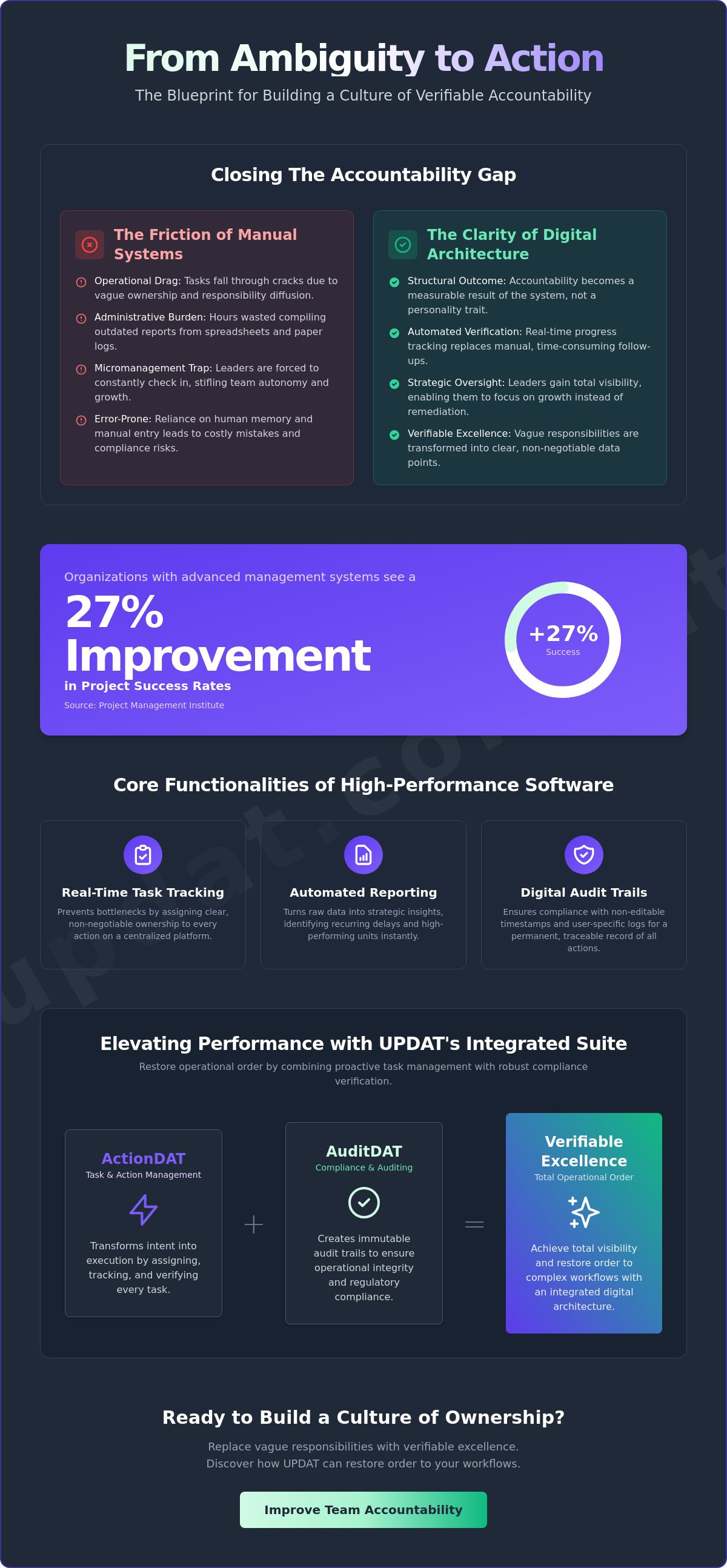
Organizations that adopt advanced management systems see a 27% improvement in project success rates, according to the Project Management Institute. You'll discover how to transition from chasing updates to mastering your operational environment through integrated task tracking and automated reporting. This article outlines the strategic steps to build a culture of ownership and achieve total visibility across your 2026 projects. We'll explore how digital tools like ActionDAT and AuditDAT transform vague responsibilities into measurable excellence and restore order to your workflows.
Key Takeaways
• Define accountability as a structural outcome to ensure measurable alignment between ownership and results across your organization.
• Identify the core functionalities needed to improve team accountability software, specifically focusing on real-time task tracking and automated audit trails.
• Review sector-specific applications in hospitality and security to see how digital architecture maintains compliance and operational integrity.
• Reduce administrative friction by auditing manual workflows and establishing clear, measurable completion criteria for every recurring task.
• Restore operational order using the integrated synergy of AuditDAT and ActionDAT to replace vague responsibilities with verifiable excellence.
Defining Team Accountability in a Digital-First Environment
In 2026, the concept of Defining Accountability has evolved from a vague leadership ideal into a precise technical requirement. Modern accountability is the measurable alignment of outcomes with specific owners. It isn't about hope or verbal agreements. It's about the digital architecture that supports every action within an organization. We've moved past the era of passive monitoring, where managers checked in once a week to see what happened. Today, high-performance teams rely on active systems that verify progress in real time. This shift allows leaders to focus on growth rather than remediation.
Manual systems like spreadsheets and paper logs are the primary drivers of accountability failure. These tools create operational debt because they rely on human memory and manual entry, both of which are prone to error. When expectations aren't hardcoded into a workflow, they become suggestions rather than requirements. This lack of clarity has a significant psychological impact. Teams that understand exactly what's expected of them perform with higher confidence and less stress. Clarity is the foundation of morale, and digital systems provide the steady foundation needed for long-term growth.
The Accountability Gap: Why Tasks Fall Through the Cracks
Large, multi-layered organizations often suffer from responsibility diffusion. When multiple stakeholders are "involved" in a process without a primary owner, no one truly feels responsible for the result. Vague goal-setting creates a vacuum where tasks disappear, leading to technical debt and missed deadlines. The administrative friction of manual reporting cycles only worsens the problem. Managers spend hours compiling data that's already outdated, leaving little time for actual leadership. Using the right tools to improve team accountability software helps close this gap by assigning clear, non-negotiable ownership to every action within a centralized platform.
Moving Beyond Micromanagement to Strategic Oversight
Effective leadership requires moving away from the "eyes-on" approach of micromanagement. Instead, leaders should focus on strategic oversight by defining clear "done" criteria within their digital platforms. Transparency allows for a culture of self-management where every team member can see their contribution to the larger goal. Systems like AuditDAT and broader operational excellence frameworks provide the visibility needed to trust your team without hovering. When you improve team accountability software, you replace constant check-ins with real-time status updates.
Accountability software is a strategic tool for restoring operational order by transforming vague responsibilities into verifiable data points.
Core Functionalities of High-Performance Accountability Software
High-performance systems aren't just digital checklists; they're the central nervous system of a modern organization. They provide real-time task tracking that prevents operational bottlenecks before they occur. By prioritizing actions based on urgency and impact, these platforms ensure that resources stay aligned with the most critical business needs. The ability to improve team accountability software lies in its capacity to transform raw activity into structured, verifiable data. Investing in the right tools to improve team accountability software is no longer optional for firms seeking to scale efficiently in 2026.
Beyond simple task lists, these systems offer customizable reporting modules. These modules turn raw data into strategic insights, allowing you to identify recurring delays or high-performing units instantly. When every action is captured digitally, reporting becomes an automated byproduct of work rather than a separate administrative burden. This level of automation is essential for maintaining order in complex environments where manual oversight is no longer feasible. It's about creating a system that works for you, not the other way around.
Digital Audit Trails and Compliance Tracking
A robust accountability system must include non-editable timestamps and user-specific logs. These features are the foundation of digital audit solutions, ensuring that every entry is permanent and traceable. By eliminating the human error factor in inspections, you protect your organization from liability and internal negligence. Linking task completion directly to governance, risk, and compliance frameworks ensures that your team remains audit-ready at all times. It's a proactive approach to risk management that replaces reactive scrambling with steady, reliable documentation.
Workforce Integration and Automated Workflows
Efficiency increases when you sync workforce management software with daily action items. This integration ensures that staff scheduling matches task demand, preventing overstaffing or service gaps during peak hours. Automated workflows can trigger payroll processing based on verified attendance and task completion, removing the need for manual cross-referencing. Exception-based reporting further reduces administrative overhead by only flagging issues that require managerial intervention. You can start standardizing your workflows today to see these efficiencies in action. This streamlined approach lets you manage by exception rather than by constant surveillance.
Real-World Examples: Accountability Across Diverse Sectors
While previous sections established the theoretical framework of digital architecture, its impact is most visible in physical operations. In sectors where safety and compliance are non-negotiable, the ability to improve team accountability software directly correlates with risk reduction. Facilities management firms, for instance, use these systems to track preventative maintenance schedules. By ensuring every asset check is logged and verified, these organizations extend asset life and avoid the chaos of emergency repairs. This shift from reactive to proactive management restores order to complex environments.
Accountability is often viewed through the lens of software development, but its true value lies in standardizing physical workflows. When you improve team accountability software, you're investing in the structural integrity of your entire operation. This is particularly true in manufacturing, where quality control must remain consistent across multi-shift operations. Digital systems ensure that the same high standards are met at 3 AM as they are at 3 PM, providing a steady foundation for long-term growth.
Hospitality and Food Safety Excellence
Digitized kitchen checklists represent a fundamental shift in food safety management. Leaders use AuditDAT to automate temperature logs and hygiene checks, replacing unreliable paper binders. Digital verification prevents costly health and safety fines by providing an unalterable record of compliance. Moving to hospitality-specific compliance ensures that every HACCP requirement is met without the burden of manual oversight. It's a transition that empowers staff to focus on service while the system handles the documentation.
Security and Patrol Accountability
Security services thrive on trust, which is built through verifiable presence. Organizations can now ensure guard integrity through GPS-stamped task completion and real-time logs. This level of transparency eliminates "pencil whipping," where reports are falsified after a shift. Instant incident reporting allows for an immediate response, significantly boosting client confidence in security services. By removing the ambiguity of patrol routes, you create a culture of ownership among your security personnel.
Manufacturing and Quality Assurance
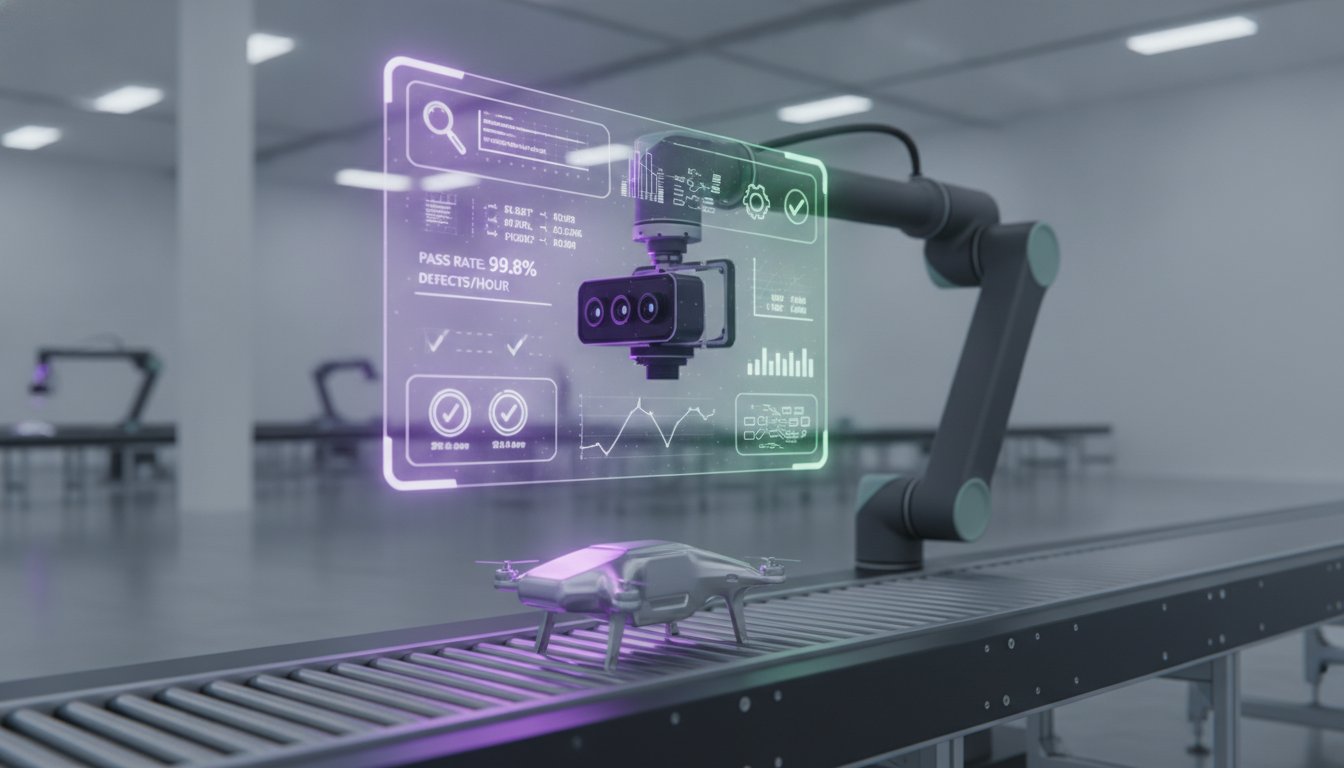
On the production floor, standardizing GXP compliance is critical for maintaining market reputation. Real-time alerts notify managers of deviations immediately, preventing minor defects from escalating into major recalls. This proactive approach boosts overall manufacturing efficiency by keeping the line moving without sacrificing quality. The result is a more fluid, adaptable production environment that responds to data rather than guesswork.
Strategic Implementation: From Paper-Based Friction to Digital Clarity
Moving from paper-based systems to digital architecture isn't just a software swap; it's a structural renovation. You must audit your current manual workflows to identify high-friction touchpoints where data is lost or delayed. These bottlenecks often occur during shift handovers or in the gap between field inspections and office reporting. Define measurable "done" criteria for every recurring task to remove subjectivity from the process. This level of precision ensures that expectations are never misinterpreted by your team. Choosing to improve team accountability software requires a platform that adapts to your specific operational DNA rather than forcing you into a rigid template.
Sometimes off-the-shelf tools don't fit unique industrial requirements or complex regulatory needs. Selecting a platform that offers bespoke software development for unique requirements allows you to build a system that matches your specific business logic. A phased rollout is the most effective way to manage this transition. Start with high-impact modules, such as safety inspections or time tracking, before moving toward full-scale integration. This modular approach provides early wins and allows for continuous refinement through workforce analytics and feedback loops. It's about building momentum through small, verifiable successes.
Mapping Your Operational Architecture
The transition from "we think it's done" to "we know it's done" requires a clear digital mirror of your physical operation. You can use ActionDAT to mirror your existing hierarchy, ensuring that the software reflects how your business actually functions. Single-threaded ownership ensures that every task is assigned to a single, identifiable individual, eliminating the ambiguity of group responsibility. This clarity empowers employees to take full ownership of their specific contributions to the organization's goals.
Overcoming Team Resistance to Change
Change often meets friction, but you can mitigate this by framing the software as a tool for staff protection. It provides an unalterable record that proves work was completed correctly, protecting employees from unfair blame or liability. A user-friendly interface is essential for ensuring high adoption rates, particularly for non-technical staff in industrial environments. Training strategies should focus on immediate utility rather than abstract features. Show your team how the system makes their daily routine easier and more organized. When staff see the personal benefits of digital clarity, resistance naturally fades.
Ready to modernize your operations? Register your organization today to begin your transition from manual friction to digital order.
Elevating Performance with UPDAT’s Integrated Solution Suite
The true value of a digital system lies in the synergy between its components. When you choose to improve team accountability software, you're looking for more than isolated features. You need an environment where time tracking informs task priority and audit logs verify operational compliance. The combination of AuditDAT, TimeDAT, and ActionDAT creates this ecosystem, restoring order to even the most fragmented workflows. This integrated approach allows your business to move from "off-the-shelf" limitations to bespoke operational excellence that fits your specific business logic.
As a Maltese-developed platform, UPDAT offers the distinct advantage of national support and a deep understanding of local regulatory requirements. We don't just provide software; we provide a reliable foundation for long-term growth. Future-proofing your business for 2026 means embracing automated reporting that satisfies both internal governance and external regulatory bodies. It's about building a digital architecture that adapts as quickly as your industry does. By choosing to improve team accountability software through an integrated suite, you eliminate the friction of managing multiple disconnected vendors.
The Power of Integrated Data
Siloed tools fail because they offer a fractured view of performance. If your attendance data doesn't talk to your task completion logs, you can't accurately measure productivity or identify bottlenecks. Integrated systems eliminate these blind spots to significantly improve operational excellence across every department. You gain a 360-degree view of your organization, allowing you to make data-driven decisions with total confidence. To see how this synergy works for your specific business model, you can request a demo for a personalized consultation.
Your Strategic Partner in Transformation
UPDAT acts as a strategic architect for your digital transition. We recognize that every organization has unique pain points, from compliance risks to heavy administrative burdens. Our commitment to local industry standards ensures that your transition remains seamless and legally sound. We help you replace the chaos of manual reporting with the clarity of automated, real-time insights. This transformation empowers your leadership to focus on strategy while the system ensures task integrity. Restore order to your operations today and provide your team with the tools they need to achieve measurable excellence.
Mastering Operational Integrity in 2026
Transitioning from fragmented manual logs to a unified digital architecture is the most effective way to eliminate operational drag and restore order. You've seen how precise "done" criteria and real-time verification transform vague responsibilities into measurable results. By choosing to improve team accountability software, you're not just tracking tasks; you're building a steady foundation for scalable growth and long-term stability. UPDAT provides specialized solutions designed for the unique demands of hospitality, security, and manufacturing environments. Our Maltese-based support and development team ensures your system remains aligned with local standards while delivering proven results in reducing administrative overhead.
The keys to mastering your operational environment are now within reach. It's time to replace the friction of manual reporting with the clarity of automated systems that empower every level of your organization. You can restore operational order with a personalized AuditDAT and ActionDAT demo today. Take the first step toward a culture of ownership and high-level efficiency. Your path to measurable excellence starts with a single, strategic decision.
Frequently Asked Questions
What is team accountability software and how does it differ from simple task lists?
Team accountability software provides a verifiable record of ownership and completion rather than just a list of items. Simple task lists lack the non-editable audit trails and automated escalations required for professional governance. This architecture ensures that every action is traceable to a specific owner and time. It transforms vague intentions into measurable operational data that you can use for strategic decision-making.
Will accountability software make my employees feel micromanaged?
Employees typically feel more empowered than micromanaged when you use the right systems to improve team accountability software. Clear digital expectations remove the need for constant verbal check-ins and subjective performance reviews. The software acts as a shield for staff by providing unalterable proof that they've completed their work correctly. It shifts the focus from surveillance to objective results and professional clarity.
How does digital task tracking improve regulatory compliance in Malta?
Digital task tracking ensures that your business meets specific Maltese regulatory standards through automated record-keeping. Systems like AuditDAT provide non-editable timestamps that are essential for food safety (HACCP) or security licensing requirements. These logs eliminate the risks associated with lost paperwork or falsified reports. Your organization remains audit-ready at all times without the need for manual preparation or administrative stress.
Can software help reduce administrative time spent on payroll and reporting?
Integrated systems significantly reduce administrative overhead by automating the collection of attendance and task data. When you improve team accountability software by syncing it with TimeDAT, payroll processing becomes a byproduct of verified work. This automation removes the need for manual cross-referencing and error-prone data entry. Managers can then reallocate their time to strategic oversight rather than chasing manual reports.
Is it possible to integrate accountability software with existing manual processes?
It's entirely possible to digitize your existing manual workflows by mirroring your current organizational hierarchy in the software. You don't need to overhaul your entire operation overnight. A phased implementation allows you to start with high-friction areas, like hygiene logs or patrol reports, before expanding. This approach ensures that the digital system enhances your proven processes rather than complicating them with unnecessary steps.
What features should I look for when choosing software for a manufacturing or security team?
Manufacturing and security teams require features like GPS-stamped verification, real-time incident reporting, and unalterable audit logs. Look for mobile-first interfaces that work reliably in industrial environments. The ability to trigger instant alerts for deviations or missed patrols is critical for maintaining site integrity. These features ensure that your physical operations are as transparent and verifiable as your digital ones.
How quickly can a team transition from paper-based audits to a digital system?
Transition speed depends on your team's size and the complexity of your current manual logs. Most organizations see immediate improvements in visibility within the first week of a modular rollout. Starting with a single department allows you to refine the digital "done" criteria before a full-scale launch. This steady progression minimizes disruption while building staff confidence in the reliability of the new system.
Does UPDAT offer custom features for specific industry requirements?
UPDAT specializes in Bespoke Software Development to address unique industry challenges that off-the-shelf tools cannot solve. We act as a strategic architect to build custom modules that fit your specific operational DNA. Whether you require unique manufacturing QC parameters or specialized security reporting, our Maltese-based team develops the exact features you need. This ensures your digital architecture grows alongside your organization.



%201.svg)
